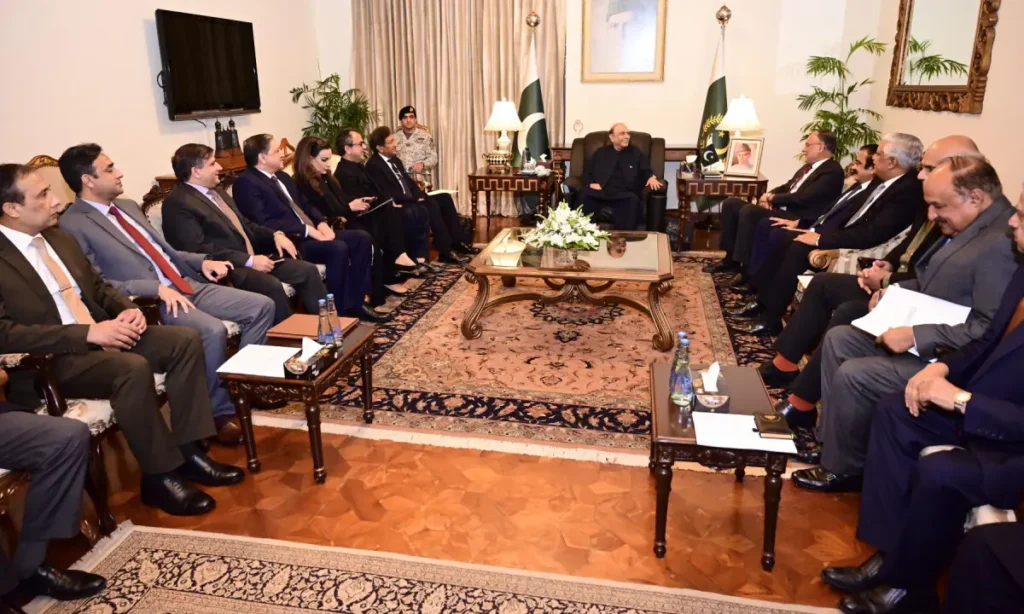
President Asif Ali Zardari on Wednesday directed that all possible efforts be made to minimise loadshedding across the country, according to a statement issued by the President’s Secretariat.
He issued the directive while chairing a meeting on water resource management at Aiwan-i-Sadr, the statement said, adding that the president also addressed the issue of energy shortfalls linked to the regional situation.
President Zardari “stressed that any load management should be carried out strictly in a transparent and declared manner, in line with prior public announcements, so that citizens are fully informed and disruption is reduced”, the statement added.
The president’s directive came a day after the government announced more than two hours of daily loadshedding during peak hours in a bid to prevent a sharp increase in electricity tariffs.
The move is linked to the suspension of liquefied natural gas (LNG) imports following the force majeure declared by Qatar due to attacks on its gas field amid the US-Israel war on Iran. Qatar is the main LNG supplier to Pakistan under two long-term contracts envisaging up to 1,000 million cubic feet per day.
The Power Division said it was capable of meeting full demand but this had negative consequences.
“The main challenge at present is during peak hours from 5pm to 1am. During this time, demand increases significantly, mainly due to reduced hydel generation. Relying on expensive fuels to meet this demand could lead to a substantial increase in electricity prices,” it said.
President expresses concern over ‘weaponisation of water’
The meeting at Aiwan-i-Sadr also reviewed issues related to water availability, governance and regional developments affecting Pakistan’s water security, the statement by the President’s Secretariat said.
It said President Zardari expressed concern over the “weaponisation of water by India by suspending the Indus Waters Treaty (IWT)”.
In April 2025, the Indian government announced a unilateral suspension of its obligations under the IWT following the attack on tourists in occupied Kashmir’s Pahalgam that killed 26 — an incident New Delhi blamed on Islamabad without evidence.
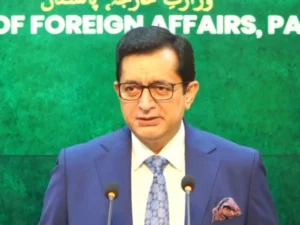
Pakistan has denied involvement in the attack, with the foreign ministry questioning the credibility of India’s account of the events and saying it was “replete with fabrications”.
The president noted that the attempt to “use water as a political tool is a matter of serious consequence”, the statement said.
It added that he emphasised the importance of safeguarding Pakistan’s water rights and ensuring that all necessary diplomatic and legal measures were pursued.
President Zardari also directed authorities to accelerate water conservation efforts across the country.
“He called for the swift implementation of rainwater harvesting initiatives at domestic, commercial, and industrial levels, and directed that construction of small dams, recharge wells, and water storage infrastructure be expedited.”
President Zardari emphasised that conserving water was a “national imperative”, particularly in the current regional climate.
The statement said that the meeting also discussed broader regional developments.
“President Zardari noted that stability in the region remains essential and expressed confidence that, with constructive engagement and sustained efforts by Pakistan, a workable path forward in the evolving situation involving Iran could be achieved,” it stated.