• Diplomats see high chances of final agreement despite hiccups
• Insist both sides want to avoid open-ended conflict
• Nuclear issues likely to be handled in later negotiations
• Ex-envoy Munir Akram says gaps are more about narrative than substance
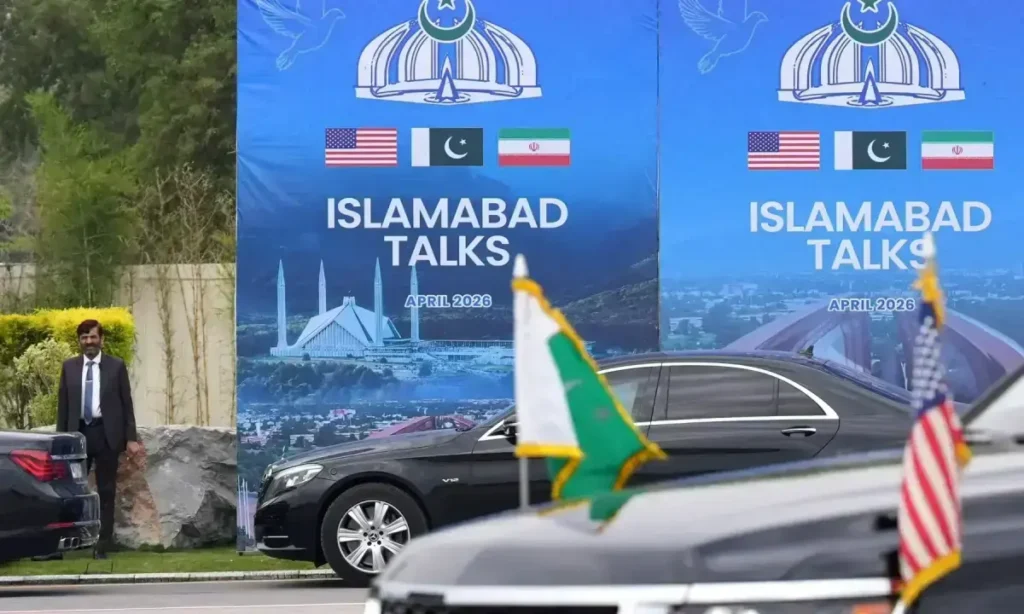
WASHINGTON: Islamabad remains a leading contender to host the formal signing ceremony of a possible US-Iran peace agreement if negotiators succeed in finalising a deal, diplomatic sources said.
Diplomatic sources at the United Nations and in Washington told Dawn that prospects for a final agreement remained high despite delays in completing the draft.
“Nine out of 10,” a senior diplomat said when asked to assess the likelihood of a final agreement being signed. “But I cannot say when it will happen.”
Another senior diplomat said Islamabad’s role in facilitating the initial contacts between Washington and Tehran had strengthened its credentials as a possible host.
“Iranians cannot come to Washington, and Americans cannot go to Tehran because the two countries do not have diplomatic relations,” the diplomat said. “If the signing takes place in a third capital, Islamabad would be a natural choice because it hosted the first round of talks.”
The assessment comes as reports in major US media outlets suggest Washington and Tehran have converged on several key elements of a potential settlement, including reopening the Strait of Hormuz and extending the current ceasefire while negotiations continue on more contentious issues.
Recent reports in The Washington Post and Reuters indicate that negotiators have developed a framework for a broader agreement, although significant differences remain over implementation and sequencing.
Diplomatic sources said both sides had increasingly concluded that prolonging the conflict would impose unacceptable costs.
According to officials familiar with the negotiations, the Trump administration determined early in the conflict that air power alone would not achieve all of Washington’s objectives and that a prolonged military campaign risked becoming politically costly at home.
The sources said Tehran had reached a similar conclusion. While Iranian officials view their ability to withstand months of military pressure as a strategic achievement, they also recognise that a prolonged conflict would further damage an economy already weakened by war and sanctions while accelerating the destruction of critical infrastructure.
“Neither side wants an open-ended conflict,” one source said. “Both recognise that the current stalemate carries growing political, economic and strategic costs.”
Diplomats said this shared assessment had created momentum for a negotiated settlement.
Although details of the proposal have not been made public, diplomatic sources familiar with the discussions described several of its key elements to Dawn.
According to these sources, the agreement would effectively end the US-Israeli military campaign against Iran in exchange for Tehran reopening the Strait of Hormuz, the strategic waterway it has kept closed since the early stages of the conflict, disrupting global energy supplies and trade.
The sources said Iran would also provide assurances that it would not seek to develop nuclear weapons, while some of the most contentious issues, including the future structure of its nuclear programme and the disposition of its enriched uranium stockpile, would be addressed in subsequent rounds of negotiations.
Several of these elements broadly correspond with details reported by Reuters and The Washington Post, which said negotiators were working on a framework that would reopen the Strait of Hormuz while deferring some nuclear issues to later stages of the process.
Former Pakistani ambassador to the UN Munir Akram said many of the demands publicly outlined by President Donald Trump appeared to overlap with provisions already under discussion.
“The differences are largely about narrative rather than substance,” Mr Akram said during a television interview on Saturday. “Both sides want an agreement they can present as a victory.”
He predicted that negotiators would eventually narrow the remaining gaps and reach a settlement.
Diplomats cautioned, however, that important obstacles remained.
Several pointed to Israeli military operations in southern Lebanon as a major concern for Tehran, which is seeking an immediate halt to those operations as part of a regional settlement.
Mr Akram argued that continued delays in reaching an agreement were hurting Iran’s allies in Lebanon by giving Israel additional time to consolidate its position in the south.
“This issue alone has the potential to complicate the peace process,” one diplomatic source said. Sources also said Washington remained concerned about the security of its Gulf allies. While the conflict exposed some of Iran’s vulnerabilities, diplomats noted that Tehran’s ability to withstand sustained military pressure had also heightened anxiety among Arab states in the region.
According to the sources, some Gulf governments have begun exploring closer ties with Iran as a hedge against future instability, prompting Washington to reaffirm its long-term military commitment to the region.
“The United States wants to strengthen, not reduce, its military presence in the Gulf,” a diplomatic source said. “That is not an issue on which Washington is prepared to compromise.”
Diplomats monitoring the negotiations said that while disagreements remained over sequencing, security guarantees and political messaging, there was growing confidence that both Washington and Tehran now viewed a negotiated settlement as preferable to a prolonged conflict whose costs continued to mount for all sides.
If an agreement is reached, Pakistan remains among the most likely venues for a formal signing ceremony, they added.
Published in Dawn, May 31st, 2026