
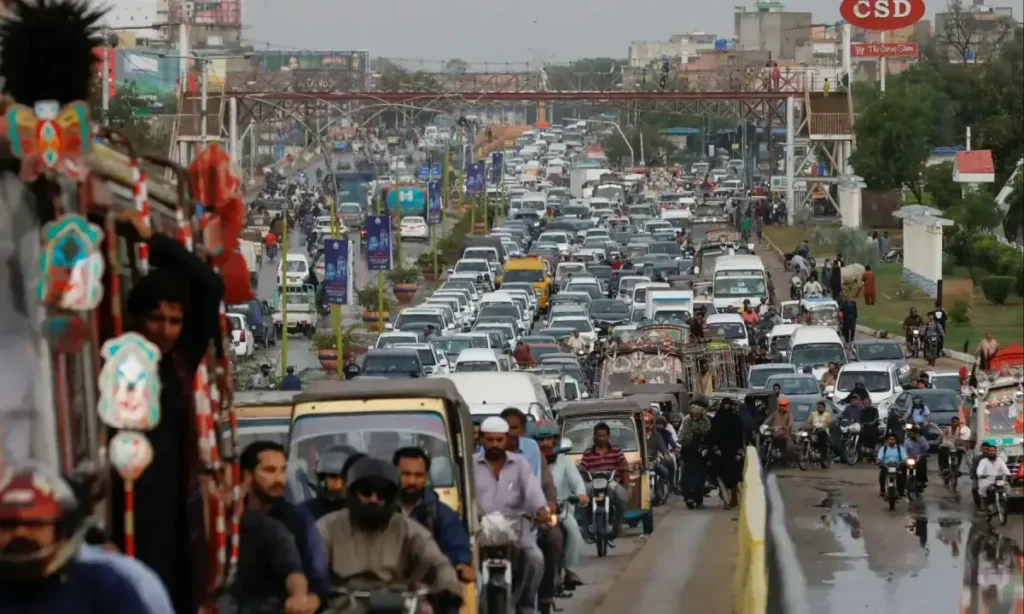
WORLD Population Day has traditionally prompted discussions on population growth and fertility rates. This year’s theme, ‘Realising the hopes and aspirations of young people — today and for the future’, invites a different conversation. It reminds governments that population policy should begin not with numbers, but with people.
The aim is not simply to influence how many children are born, but to ensure that every young person has the opportunity to make informed choices about education, employment, marriage and parenthood. Experience shows that these choices are closely linked to access to healthcare, quality education, economic security and gender equality. When such conditions improve, demographic outcomes improve as well.
Population policy, therefore, is ultimately about expanding people’s choices rather than merely managing population trends. That shift in perspective is particularly relevant for Pakistan. Public debate often revolves around census figures, fertility rates and warnings about a rapidly expanding population. While these are valid concerns, they risk obscuring a basic question: are Pakistan’s young people able to realise their aspirations? For millions, the answer remains no.
The barriers begin early and reinforce one another. Children who leave school prematurely face diminished prospects, while young adults enter a labour market that cannot offer enough stable, productive employment. Many women continue to encounter obstacles to education, healthcare and participation in decisions that shape their own futures. Reproductive healthcare and family planning services remain unevenly available, especially in underserved communities, limiting informed choice rather than expanding it. Aspirations are constrained long before adulthood by poverty, unequal opportunity and weak public services.
These shortcomings represent failures of governance whose effects extend beyond individuals to families, communities and the country’s long-term development. The resulting costs lie in not just lost economic potential, but also in diminished public trust, widening inequality and the sense among many young Pakistanis that opportunity lies elsewhere.
There is also a danger in viewing population solely through the lens of numbers. Governments become preoccupied with fertility targets, growth rates and census projections, while losing sight of the lives behind the statistics. Young people do not aspire to improve demographic indicators; they aspire to complete their education, secure work, choose when to marry, decide freely whether and when to have children, and build a stable future. Their hopes should be seen as practical benchmarks against which public policy itself is measured.
Population policy should be judged by the extent to which it enlarges those freedoms. If Pakistan succeeds in doing so, healthier demographic trends are likely to follow. If it does not succeed, no amount of concern over rising numbers will compensate for opportunities never created.
Published in Dawn, July 11th, 2026