
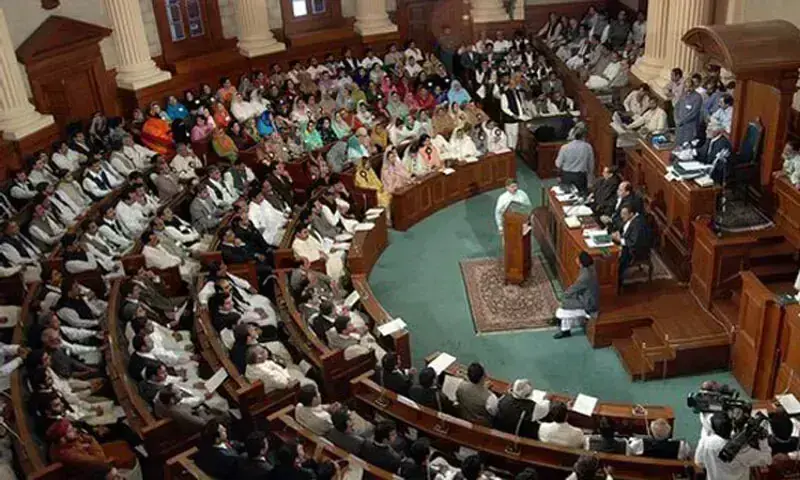
LAHORE: Human rights defenders and activists gathered at the Human Rights Commission of Pakistan on Thursday to discuss the Punjab Control of Habitual Offenders and Anti-Social Behaviour Bill, 2026, raising concerns that, if implemented, the proposed law would turn the whole Punjab into an open jail.
“The objective of the Bill is to stop any statements against the security forces, followed by a hierarchy of sensitivity. Azma Bokhari and Marriyum Aurangzeb had complaints written to the NCCIA, they went to high court, directions were issued to the NCCIA but they were not satisfied. The objectives they wanted to achieve against those who had made their memes or defamed them were not achieved,” says lawyer Asad Jamal. Those people, he said, were not punished by the NCCIA because it had its own limitations and objectives.
“Now they want to establish a parallel institution in Punjab and they are moving towards it,” Jamal declared. Secondly, he added, the Crime Control Department (CCD) had brought a bad name to the government though at a certain level, it had also got approval among the common folks. So it’s an issue to give a cover to the CCD which is killing people on mere allegations and it has killed hundreds with impunity, he added.
Asad Jamal said the proposed law defined “habitual offender” as “against whom a criminal case has been registered and a report under Section 173 has been submitted”, which means a challan in common terms. He said that challan does not mean that a person is a convict but just an accused under criminal procedures act but an accused is innocent till proven guilty; however, this law would make the accused guilty till proven otherwise, turning the criminal law upside down. He added that the second category is that of the person who has been arrested for more than once under any of the offences enumerated in the schedule, which also includes anti-terrorism act and anti-narcotics law.
“After the implementation of the law, the whole Punjab would turn into an open jail. The concept of pervasive punishment is what this law envisages. All the people who are suspects in view of the state, those who have a different and so-called anti-national opinion on sensitive issues, those who have a different ideology from the state and challenge the accepted norms would be targeted either as anti-social elements or habitual offenders,” Jamal warned.
Lawyer Ali Javed said the bill is not making a paradigm shift as its architecture is based on the criminal tribes act, which was used to suppress the natives by the British. “The state punishes people when they commit a crime but under this law, action would be taken preemptively.”
Adnan Sattar, a professor of law at Lums, said the government comes up with repressive laws all the time but this proposed law takes the repression to another level. “Mostly laws have some saving grace to strike a balance but that’s missing in this law.”
He said it makes it necessary for the human rights defenders to be more introspective, adding that the process had started during the hybrid regime after the ouster of Imran Khan government when human rights organisations didn’t resist.
Opposition MPA Sheikh Imtiaz Mehmood said the bureaucracy is not dependable and called for reforms in bureaucracy before introducing any such laws. He called bureaucrats “real habitual offenders”. Giving his own example, he said he had no case against him before entering politics but was now implicated in 23 cases, all done by the officers.
He highlighted that the bill goes against at least 14 or 15 articles of the constitution. He said that interestingly, the PML-N colleagues in the assembly also themselves had informed the opposition about the issues with the law before the leader of the opposition raised it on the floor of the House.
The speakers said that the law is going to be a tool to control political opponents, particularly the PTI and labour unions. They said there was a state capture of all institutions, including the judiciary.
HRCP Director Farah Zia, Hussain Naqi, Salima Hashmi, Bushra Khalique and Arshad Dogar also spoke.
Published in Dawn, July 10th, 2026