Govt working to rationalise power costs for consumers without rooftop solar systems, he says
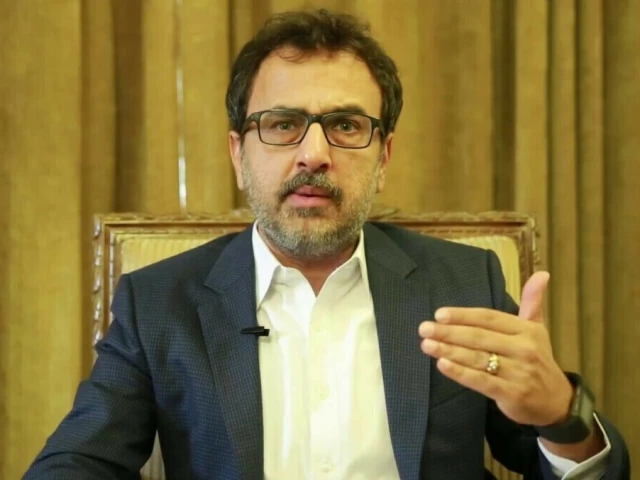
Energy Minister Awais Ahmad Leghari. PHOTO: FILE
Power Minister Awais Ahmed Khan Leghari said on Wednesday that Pakistan was steadily reducing its dependence on imported fuel for electricity generation, with the share of indigenous energy sources expected to rise significantly over the next four to five years.
Responding to a calling attention notice regarding drastic changes in the net-metering policy for solar prosumers and the proposal to impose an 18% tax on solar panels, he said 74% of the electricity currently generated in the country was being produced from local sources, while only 26% depended on imported coal and gas.
He said the share of locally sourced energy was projected to increase to nearly 96% in the coming years, adding that Pakistan’s reliance on imported fuel was continuously declining.
The minister said the government had completed a detailed study, initiated several months ago, regarding the conversion of imported coal-based power plants to locally produced Thar coal. He termed the initiative both feasible and economically viable.
He said the move would not only help reduce electricity prices but would also further decrease the country’s dependence on imported fuel.
Leghari said wind and solar energy could not fully replace base-load power plants, adding that every country required reliable base-load generation capacity.
He said Pakistan would continue to rely on fossil fuel-based plants and hydropower to ensure energy stability, and also added that the government was not discouraging renewable energy projects, further saying that the sector continued to witness strong growth in the country.
Read: No new imported fuel-based IPPs
He said the government was working to rationalise electricity costs to ensure fairness for consumers who could not install rooftop solar systems and assured lawmakers that under the new prosumer regulations introduced by the government, investment in solar energy remained financially attractive for consumers.
The minister said that even under the revised net-metering regulations, if a consumer invested Rs100,000 in a solar system, the investment could be recovered within three years, which he described as a healthy rate of return, and the number of applications for solar net metering had continued to rise at the same pace as before, despite regulatory changes introduced in recent months, he said.
He added that the growth of solar net-metering consumers in the country was continuing steadily alongside broader efforts for cost rationalisation in the power sector, and added that the government had reviewed net-metering regulations in line with directives and ensured full protection for existing consumers who had already invested under previously agreed terms and conditions.
He said the sanctity of contracts signed with existing net-metering consumers had been maintained, with no changes made to their terms and conditions, and further clarified that revised regulations would apply only to new consumers joining in the future, who would move from net metering to net billing under the new framework.
The minister said electricity purchased from future prosumers would be bought at the average energy price of the national grid, currently around Rs9.80 per unit.
Read more: Pakistan turns to spot LNG market again
He explained that the grid’s average electricity cost was calculated by combining multiple energy sources, including coal, diesel, furnace oil, gas, imported coal, local coal, nuclear and hydropower.
Leghari said the government’s decision had been misunderstood in some quarters, with concerns that consumers might shift towards battery storage systems and also said that the investment in batteries should be viewed positively for both the national grid and consumers.
The minister warned that if prosumer regulations and buyback rates had not been revised, consumers not using net metering would have faced an additional burden of nearly Rs3 per unit and the financial impact on ordinary consumers could have increased to around Rs35 billion annually if corrective measures had not been introduced.
He said extensive consultations were held over nearly a year before finalising revisions to prosumer and net-metering regulations, and further added that the matter was first discussed at the Economic Coordination Committee (ECC), later taken to the federal cabinet, and further deliberated upon on the prime minister’s direction.
He said consultations were also held with solar associations, consumers and stakeholders, who recommended the gradual implementation of changes.
He said Pakistan originally launched net-metering regulations during the PML-N government in 2017–18 to encourage solar investment through attractive buyback rates, and that the framework had undergone several revisions since then and solar infrastructure costs had declined globally, while Pakistan had seen a sharp rise in solar adoption over the past few years.
He said Pakistan currently had between 23,000 and 24,000 megawatts of installed solar capacity, including around 8,000MW under net metering.
Leghari said government policies had enabled what he termed a “green revolution” in the country, without international climate financing support and citizens invested in solar systems through personal savings and loans due to rising electricity prices.
He said renewable energy growth would continue as long as it remained incentivised.
On load-shedding, he said Pakistan had around 14,000 electricity feeders, with 11,500 operating without load-shedding. He said load-shedding of between two and 16 hours was being carried out on the remaining feeders due to theft and losses.
He said the government was launching a programme to shift load management from feeder level to transformer level within a year and the goal was to reduce unnecessary outages by targeting high-loss areas more precisely.
Highlighting clean energy goals, he said renewable and clean energy currently accounted for around 55% of the national grid’s energy mix, with a target of nearly 96% by 2032 and he also criticised the lack of international financial support for Pakistan’s climate efforts, despite the country being among the most affected by climate change.