When European lawmakers talk about labour abuse in the garment trade, Pakistan is too often cast as the defendant before any evidence is heard. A serious child-labour problem in one corner of the economy becomes, in the retelling, a verdict on an entire export industry. That is not regulation. It is collective punishment by reputation.
Europe is right to insist that the clothes, towels and bed linen entering its market are not produced through child labour, forced labour, unsafe workplaces or environmental abuse. Pakistan should not seek exemption from those standards. It should, however, challenge the habit of turning legitimate concerns into sweeping judgments about an entire industry.
Regulation must follow evidence, not inherited stereotypes about manufacturing in the developing world.
That distinction matters more now, not less. The European Parliament’s June 2026 briefing on textile trade placed labour and sustainability conditions in supplier countries under renewed scrutiny. The EU’s revised Generalised Scheme of Preferences, applicable from January 1, 2027, will expand the relevant conventions from 27 to 32, strengthen monitoring, and introduce an urgent withdrawal route for serious and systemic violations.
Pakistan should prepare for that higher bar. But a higher bar must still be applied through verifiable evidence, not country branding.
Not an industry-specific problem
Pakistan continues to face a serious national child-labour problem, particularly in informal, poorly documented and difficult-to-regulate activities. That reality must be confronted, not concealed.
But a national social challenge cannot automatically be attributed to export-oriented textile factories that operate within formal supply chains, undergo buyer inspections and depend on continued access to tightly regulated markets. The existence of child labour somewhere in the economy is not proof that it is embedded in every industry, or in every exported product.
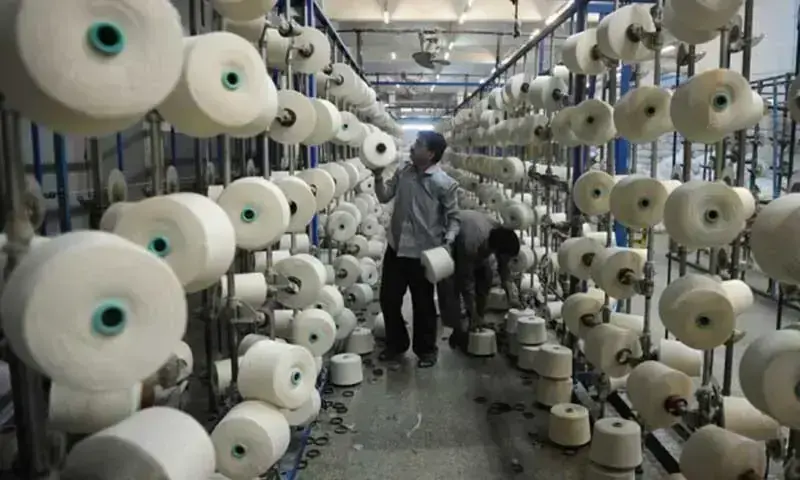
Pakistan’s export textile sector is in fact among the most scrutinised parts of its economy. Its larger manufacturers operate under domestic labour law, international buyer codes, third-party certifications and the EU’s GSP+ conditionality, and are increasingly covered by human-rights due-diligence, traceability and environmental reporting requirements.
The ILO-IFC Better Work Pakistan programme, established in 2022, assesses factories, provides advisory support and trains management and workers, and its 2022-2025 synthesis offers a far more credible basis for judgment than anecdote. In the 2025 assessments cited in the industry’s compliance review, non-compliance was reported in about 4.6 per cent of factories on minimum wages and 2.3 per cent on overtime payments. Those cases require correction, but the figures do not support a picture of sector-wide lawlessness.
Company-level evidence reinforces this. Major exporters have adopted explicit prohibitions on child and forced labour, anti-harassment and non-discrimination policies, grievance channels, whistleblowing systems and supply-chain screening.
Gul Ahmed, for instance, reports a child and forced-labour prevention policy with zero-tolerance provisions. Masood Textile Mills participates in Better Work, enforces no-child-labour requirements, and has begun integrating EU corporate sustainability and due-diligence expectations into supplier assessments. Other manufacturers operate under standards such as WRAP, SA8000, amfori BSCI, Sedex, OEKO-TEX and the Higg Facility Social and Labour Module.
These mechanisms are not flawless, but they create auditable obligations and corrective processes that are largely absent from the informal economy.
Beyond the compliance certificate
The same gap between perception and evidence shows up in environmental criticism. Pakistani textile production is often described as uniformly wasteful and carbon-intensive, even as leading factories invest heavily in renewable energy, water recovery, effluent treatment and chemical controls.
Interloop has installed 17.3 megawatts of solar capacity and uses farm-to-factory cotton traceability. Soorty reports technologies that cut water use in particular processes by roughly 75 to 95 per cent, alongside solar and wind generation. Sapphire Finishing Mills reports 28.5 megawatts of solar capacity, extensive green steam generation and systems aimed at substantial wastewater reuse. Across the sector, companies are adopting ZDHC chemical-management standards, the Higg Index, science-based climate targets, GOTS, GRS and digital chain-of-custody platforms.
Worker welfare, too, extends well beyond compliance paperwork. Exporters are funding healthcare, education, childcare, skills development and disability inclusion.
Interloop reports schools, scholarships and health services in cotton-growing communities. Liberty Mills supports education programmes, healthcare services and employment for persons with disabilities. Crescent Bahuman provides housing, healthcare, childcare and schooling, while working with GIZ on women’s participation and leadership. Sapphire has trained and employed more than 150 deaf persons.
None of this replaces the state’s responsibility, but it contradicts the claim that Pakistan’s textile industry is indifferent to its workers and surrounding communities.
Tellingly, the EU’s own assessments present a more nuanced picture than the rhetoric sometimes heard in political debate. The EU-funded evaluation of the International Labour and Environmental Standards project found that factory-level interventions contributed to higher productivity, safer and somewhat more gender-responsive workplaces, and measurable reductions in water use, energy use and pollution. It also identified unfinished legal reforms and weak data systems.
That is a credible diagnosis: progress is real, while institutional gaps remain. It is also a very different picture from the one implied by blanket condemnation.
The way forward
None of this is an argument for complacency. Pakistan should avoid a defensive response that claims everything is perfect. It should strengthen labour inspection, publish verified factory-level data, improve subcontractor mapping, protect freedom of association, ensure timely wage payment, and establish rapid remediation whenever underage work is detected anywhere in a connected supply chain.
Small and medium enterprises need technical and financial support to meet new due-diligence requirements, not merely the threat of exclusion. Transparency will be Pakistan’s strongest rebuttal.
Europe, for its part, should apply proportionality and recognise verified improvement.
Pakistan is the EU’s largest GSP+ beneficiary, and around 89pc of textile and clothing imports from Pakistan enter at preferential tariff rates.
This relationship gives both sides leverage — and responsibility. Abrupt restrictions based on generalised allegations would punish compliant factories, formal workers and women seeking stable employment, while potentially pushing production into less visible, less regulated channels.
The right approach is neither denial nor collective indictment. It is traceability, independent verification, remediation and partnership. Pakistan’s textile industry should be judged factory by factory and supply chain by supply chain, against measurable standards. Where violations occur, they should be exposed and corrected. Where compliance and innovation are demonstrated, they should be recognised.
Europe’s objective should be to eliminate abusive labour practices, not to preserve a convenient narrative that ignores the transformation already under way in Pakistan’s export sector.