Claims new frontier model ranks first on Artificial Analysis Intelligence Index with advances in coding, cybersecurity
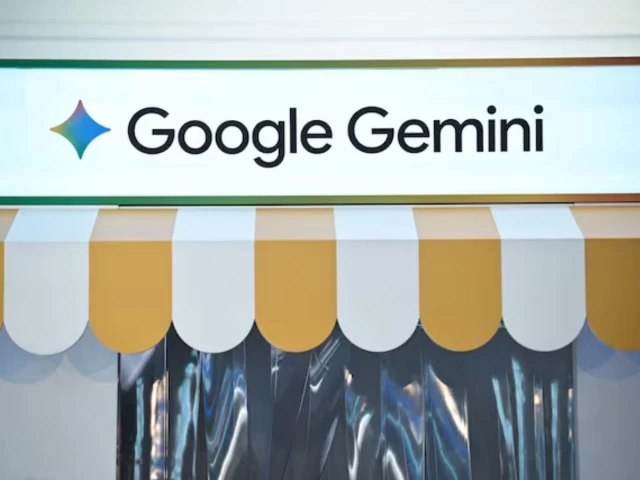
Google Gemini lettering, during the opening of Google’s new Artificial Intelligence (AI) centre in Berlin, Germany, March 5, 2026. REUTERS
Google announced its latest artificial intelligence (AI) model, Gemini 4 Carbon, on Wednesday, claiming significant gains in coding, autonomous agent tasks and cybersecurity defence.
Unveiled just two weeks after launching its Gemini 4 Argon model, the company described Carbon in a blog post as its strongest frontier model, with state-of-the-art cybersecurity and long-horizon capabilities.
Google attributed the rapid release timeline to its researchers and AI models “working hand in hand to advance capabilities faster.”
Read: Google announces Gemini 4 flagship AI model after months of delays
Introducing Gemini 4 Carbon, our latest frontier model.
Carbon delivers improved performance across domains — ranking #1 on v5.0 of the @ArtificialAnlys Intelligence Index and sets a new state-of-the-art in cybersecurity and long-horizon capabilities.
It’s rolling out starting… pic.twitter.com/oQrHzxvMSo
— Google (@Google) October 28, 2026
The company claimed that Gemini 4 Carbon ranks first on the updated version 5.0 of the Artificial Analysis Intelligence Index with a score of 59.
Based on user feedback from its previous release, Google said it improved the model across full-stack web development, scientific tasks and multimodal understanding, claiming an 89-point jump to fourth place on the WebDev Arena leaderboard.
In cybersecurity benchmarks, the tech giant claimed the model holds a “firm lead,” scoring 88.2% on SEC-bench Pro for finding vulnerabilities, 54.8% on ExploitGym for exploitation and 71% on CWE-bench for patching.
I did say we’d be releasing our models periodically…introducing Gemini 4 Carbon, our next frontier model.
Following Argon’s release just two weeks ago, Carbon shows the pace at which we’re pushing the frontier, it ranks #1 on the recently updated v5.0 of @ArtificialAnlys… pic.twitter.com/GN9LqZ7Zcf
— Sundar Pichai (@sundarpichai) October 28, 2026
“On internal benchmarks, Carbon drives a strong uplift in generating secure code, and in live coding environments with our own teams it shows reduced misalignment and fabrication rates,” the company said.
Addressing safety and alignment, Google claimed that internal testing showed Carbon cuts unsupported claims by approximately half compared to Argon, stating methodological caveats directly rather than fabricating missing evidence.
The company also claimed the model retrieves relevant sources and surfaces discrepancies to users when facing ambiguity, while reducing task overreach by 26% and under-service by 29% during multi-step workflows.
Google said Gemini 4 Carbon will first become available to cybersecurity defenders this week before rolling out more broadly to developers, businesses and consumers.
The company plans to offer introductory pricing of $2 per 1 million input tokens and $10 per 1 million output tokens, with cached input tokens discounted by 95%, before standard pricing rises to $4 per 1 million input tokens and $20 per 1 million output tokens.