
ONE year ago, Pakistan scored a big victory in the May war against India and a round of applause went up around the country for the valiant efforts of our armed forces. Today, Pakistan is on the brink of securing a historic peace deal between the US and Iran. This is an impressive roster of victories on the geopolitical stage for a country that everyone was ready to write off only a few years ago.
But as these successes roll in, it is worth our while to remember what a strong defence is all about. It is all about safeguarding people’s lives and livelihoods. With that in mind, when we look at the geopolitical successes and lower our gaze to see the foundation upon which they stand, it is impossible to escape the impression that much work remains to be done. The government has scored well on the diplomatic and defence front over the past one year. But these successes cannot mask its failure on the economic front.
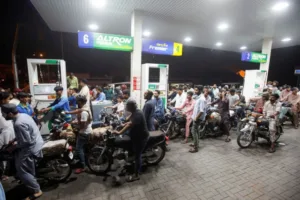
Let’s start with a few obvious observations. It has taken some doing to keep the oil supply chain going through these trying days. Timely price adjustments played a part in ensuring this continuity, due to which Pakistan has not seen the massive build-up of receivables in the oil supply chain or queues at pumps that snake on for more than a kilometre. But the unavoidable impact on prices is now cascading through the economy, and the State Bank has justifiably raised the discount rate, anticipating higher inflation in the months ahead.
Let’s pause here to notice that the State Bank is finally behaving like a real central bank. It is not making nonsensical arguments like ‘this is supply-driven inflation and therefore does not require a monetary response’, like it did during the artificial growth spurt following the Covid years. Prudent and proactive monetary tightening is the right thing when the outlook shows heightened inflationary risk.
The inability of the economy to supply and safeguard livelihoods is the real testing ground of this government.
The second obvious observation is the precariousness of the foreign reserves as the trade deficits gallop along. All through 2025 and in the opening months of this year, the trade deficit has remained elevated. This is natural since the economy has shown some signs of revival, and in more recent months, is posting slightly stronger signs of activity. But in the past, this is what has always done us in: a mounting trade deficit that eats away at the reserves. We are far from that right now, but the appearance of the same trend is a bad sign. It is a key dysfunction in our economy that it cannot grow without eating away at its foreign currency reserves. So whenever growth returns, however incipient, it is always necessary to ask whether it can be sustained. It is no different this time.
What usually happens when this sign first appears is that governments (in some cases, the State Bank) start making all kinds of excuses and performing clever little tricks to try and argue away the trade deficit. In the past, for example, governments have argued that the trade deficit will disappear once the machinery being imported is installed and leads to higher exports; or that high growth will itself solve the problem of a rising trade deficit; or that the deficit is due to temporary factors; or that it is due to high oil prices only and the ‘non-oil deficit’ remains in check.
All these arguments are specious. So long as the trade deficit is eating away at the reserves, it needs a corrective response. Our history teaches us to be cautious of specious arguments that try to spin the deficit away. Perhaps in acknowledgement of this, the State Bank has said in its most recent monetary policy decision that there is a “need for further strengthening in FX buffers”, given the uncertainties plaguing the economy and its outlook. For now, the external outlook is amply supported by workers’ remittances. But the real impact of the high oil prices is yet to be reflected in the trade data, since the March import data largely reflects oil orders placed in February. The months from April onwards will show the real impact of wartime oil prices in the trade data, and that is when a more realistic picture of the vulnerabilities of the external sector will emerge.
The biggest risk facing the economy is that it cannot afford to grow without giving rise to the very instability that the government fought hard to control for two years. The return of inflation and pressure on foreign exchange reserves would jeopardise the fragile stability that has been earned with so much sacrifice. But without growth, the economy cannot supply livelihoods on the scale required for a workforce swelling by almost two million new entrants every year. The government faced this dilemma in the opening months of 2025. It was trapped in a macroeconomic stabilisation it could not afford to break out of. And it could not remain stranded within this stability forever either.
Today, after scoring some impressive successes on the defence and diplomatic front, and rightly earning the admiration of leaders of foreign countries as well as the respect of its own citizenry, it is still faced with this dilemma. The inability of the economy to supply and safeguard livelihoods is the real testing ground of this government. And on this ground, it has yet to prove its mettle.
It would be remiss, though, to not mention some tactical successes scored along the way though. One of them is the timely adjustment of fuel prices, which has safeguarded the energy supply chain. Another is the nimble manoeuvring to get the $3.5bn replenished quickly once the UAE called in its deposits. PIA’s privatisation might be added to this list. But these are tactical successes at best. The reform strategy underlying a return to growth remains missing in action. And without that, everything else is a passing spectacle.
The writer is a business and economy journalist.
Published in Dawn, May 7th, 2026