ON paper, the Judicial Commission of Pakistan (JCP) meeting convened for April 28 was about a routine administrative matter: the transfer of a few high court judges under Article 200 of the Constitution.
In reality, however, the proceedings evolved into a foundational clash over judicial accountability, the limits of administrative authority, and whether the Constitution permits a quiet correction of conduct without invoking formal removal mechanisms.
The extraordinary pre-meeting documentation — including recorded objections by Chief Justice of Pakistan Yahya Afridi and a detailed report from the Islamabad High Court (IHC) — had already brought into the open a conversation that the superior judiciary usually handles behind closed doors: how to respond when a judge is perceived as professionally difficult, administratively overbearing or institutionally reluctant to hear certain cases.
The short answer, according to the report, is that Article 200 does not require reasons for a transfer. The more complex question now being weighed is whether a transfer can serve as a proportionate administrative response to conduct that falls short of impeachable misconduct under Article 209.
With IHC judges being transferred without formal proceedings or their consent, questions arise over judicial accountability and the limits of administrative authority
At the heart of the controversy lies a constitutional grey area. Article 200 empowers the president, on the recommendation of the JCP, to transfer a judge from one high court to another without requiring a formal inquiry. In contrast, Article 209 establishes the Supreme Judicial Council as a quasi-disciplinary forum for investigating incapacity or misconduct through a structured process.
The chief justice’s recorded objections — that the proposed transfers appeared “penal” in nature, deviated from a 2025 precedent based on federal representation, and could create administrative vacancies — were an attempt to introduce procedural safeguards.
The IHC report dismantles each ground with surgical precision, but in doing so, it raises a far more delicate question: if transfers are not penal, why was it necessary to record specific allegations of judicial reluctance, administrative interference and even a threat of imprisonment against a court officer?
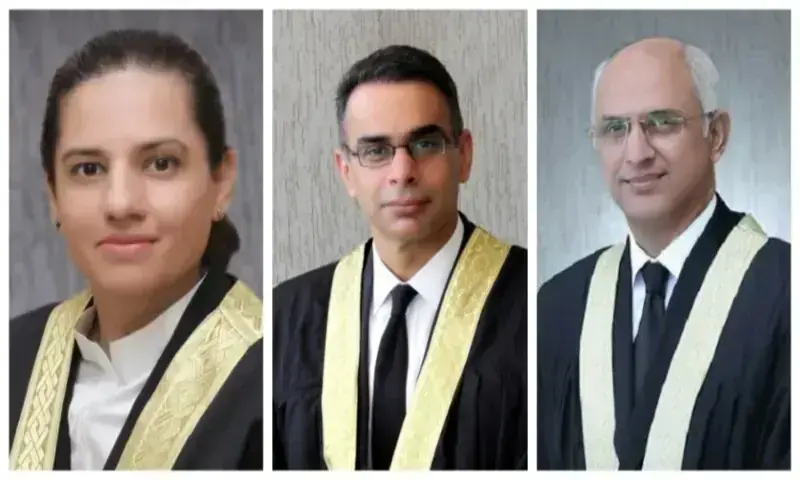
That is the central tension. The report insists that Article 200 requires no reasons, yet it provides voluminous reasons — naming judges, including Justice Mohsin Akhtar Kayani and Justice Babar Sattar, and detailing their alleged conduct.
For the careful observer, this is not a contradiction. It is a signal. The mover of the requisition is not hiding behind constitutional ambiguity; they are building a public record that the transfers are neither whimsical nor retaliatory but rooted in documented institutional dysfunction.
The report states that Justice Kayani, along with two other named judges, has “on various occasions, shown reluctance in hearing and finally adjudicating matters pertaining to taxation, fiscal liabilities and allied revenue disputes”.
Tax litigation, the document notes, frequently involves “substantial questions relating to public revenue, statutory interpretation, commercial obligations and fiscal governance, often concerning liabilities amounting to billions of rupees”.
No allegation in the response document carries more weight than the episode attributed to Justice Babar Sattar. To threaten a Deputy Registrar (Judicial) with imprisonment and lock-up “solely on account of the number of cases marked before the Bench” is not, by any measure, routine judicial demeanour. It touches the raw nerve of judicial administration, particularly the relationship between a judge and the court’s administrative machinery.
‘Victims of their own behaviour’
Legal experts note that such conduct, if proven, exists in a constitutional penumbra. It is unlikely to meet the high threshold of “misconduct” under Article 209, which has historically required evidence of corruption, moral turpitude or persistent disregard of judicial standards.
Yet, it is also not conduct that a chief justice or the JCP can comfortably ignore. The report’s solution is to treat it as a legitimate consideration for administrative reassignment — a transfer away from a court where that judge’s relationship with registry officers has, allegedly, become dysfunctional.
This is precisely what worries senior lawyers and bar associations. The Islamabad Bar Council’s statement, demanding a “structured, periodic and across-the-board rotation policy”, is not a naive call for bureaucracy.
It is an attempt to pre-empt exactly what is unfolding: case-specific, judge-specific transfers that, however well-intentioned, will inevitably be perceived as punitive by the judge in question and his supporters.
Perhaps the most revealing subtext of the current crisis is the absence of unanimity among the bar. The Islamabad Bar Council’s vice chairman and executive committee chairman issued a strong statement against the transfers, invoking “mala fide intent”.
But the council’s own chairman of the disciplinary committee, Hafeezullah Yaqoob, broke ranks spectacularly, stating that the transferred judges “became victims of their own behaviour” and that lawyers only require “patient hearing and respect”.
That public fracture within the bar is significant. For years, superior court judges have relied on an almost reflexive bar support whenever executive or judicial leadership moved against a colleague.
Yaqoob’s intervention suggests that a segment of the legal community, particularly practitioners who appear before the IHC on a daily basis, has grown weary of judicial conduct that makes their work harder: reluctance to hear tax or property matters, restrictive listing directions limiting benches to five or six cases a day, and open-court roster interventions that bypass institutional channels.
The response document explicitly cites these very issues: “directions…limiting matters to be fixed before certain Benches to only five or six cases per day” and “encroachment upon the administrative authority vested in the office of the Chief Justice”.
For the working lawyer facing backlogs measured in years, a judge who will not hear property disputes or criminal appeals is not a hero of judicial independence. He is a bottleneck.
The Islamabad High Court Bar Association adopted a more measured position, calling for transparency, uniformity and principled consistency without explicitly opposing the transfers.
Barrister Qasim Nawaz Abbasi, secretary of the IHCBA, said transfers should not be used as a tool for victimisation.
He added that if high court judges could be transferred on such grounds, then similar accountability standards should apply to the district judiciary, where complaints are often more serious.
Published in Dawn, April 30th, 2026