US strikes Iran for ninth day; Iran says two oil tankers in Strait of Hormuz exploded and immobilised
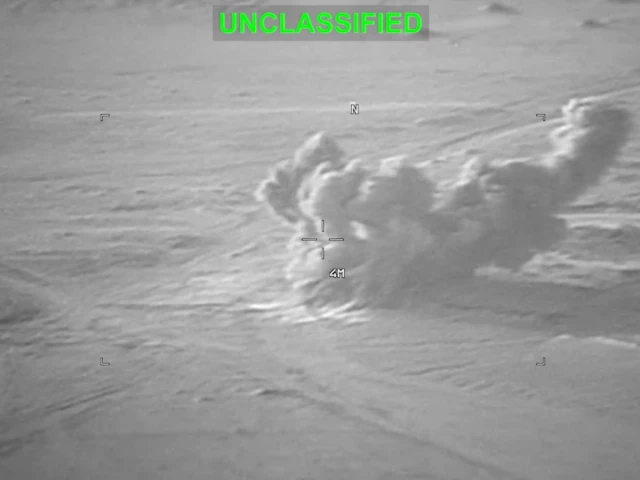
Smoke rises from an explosion at an unknown location, during what U.S. Central Command (CENTCOM) says are strikes on Iran, in this still image taken from a handout video released on July 19, 2026. PHOTO: REUTERS
The United States has informed Israel that it plans to intensify its military campaign against Iran over the coming days, the Israeli public broadcaster KAN reported on Sunday.
Citing unnamed Israeli and US security sources, KAN said Washington has told Tel Aviv that it prefers to keep Israel out of the current phase of the escalation, despite discussions over possible scenarios involving Iranian retaliation against Israel.
According to the report, assessments shared during strategic consultations between the two allies indicate that Iran could launch attacks on Israel, potentially triggering an Israeli strike inside Iran, a scenario that Washington is seeking to avoid for now.
KAN also said the US has strengthened its military presence in the region, sending additional equipment and munitions to Israel over the past 24 hours to support American warplanes.
More than 10 US aerial refuelling aircraft have arrived in Israel from Europe and Al Udeid Air Base in Qatar as part of preparations for possible Iranian attacks on American interests in the region, it added.
Separately, the Israeli news website Walla quoted an unnamed Israeli Air Force source as saying that the US military plans to deploy 100 aerial refueling aircraft to Israeli military bases and Ramon Airport in southern Israel.
The source said any further escalation in US attacks on Iran would require additional American refueling aircraft to be stationed in Israel.
Walla added that some of the aircraft could also operate from Ben Gurion International Airport near Tel Aviv, noting that 14 additional US refueling aircraft had already arrived in Israel over the weekend.
US strikes Iran for ninth day; Iran says two oil tankers in Strait of Hormuz exploded and immobilised
US forces hit Iran for a ninth consecutive day on Monday as concerns grew over shipping through the Strait of Hormuz after Iran said two oil tankers had exploded and been immobilised.
In a statement, US Central Command said it had begun “a new wave of strikes” aimed at “degrading” Iran’s ability to attack commercial vessels in the strait’s vital shipping lanes. It gave no further details.
The strikes are part of an escalating cycle of attacks between the US and Iran after an interim ceasefire agreement signed a month ago unravelled, deepening a struggle for control over the Strait of Hormuz that has disrupted energy supplies and stoked fears of global inflation.
Iran’s Tasnim news agency said US missiles struck several Iranian cities early on Monday.
Explosions were heard in Tabriz, Chabahar, Konarak, Bandar Mahshahr and Bandar Imam Khomeini, according to Tasnim.
US Secretary of State Marco Rubio said the United States would continue to target Iran while it attacked global commercial shipping.
“The Strait of Hormuz are international waterways, and they continue to launch against the ships in that international waterway,” Rubio said.
“As long as Iran insists on controlling an international waterway, we’re gonna have to respond to that. The United States always remains open to a diplomatic solution.”
Iran says attacked US bases, oil tankers damaged
For its part, the Islamic Revolutionary Guard Corps announced a surprise strike against “the enemy’s special operations headquarters in Syria’s Al-Tanf area.”
The Revolutionary Guards also said they targeted US aircraft at Jordan’s Aqaba airport with ballistic missiles.
Iran earlier conducted a drone attack on US military assets and equipment at Kuwait’s Al-Adiri camp and Ali Al Salem Air Base, Iranian state TV reported early on Sunday.
Kuwait’s government said a desalination plant was attacked for the second day running, causing a fire, in what it called a direct strike on vital civilian infrastructure.
Concerns about the flow of energy supplies through the Strait of Hormuz have persisted since the United States and Iran resumed open hostilities after accusing each other of repeatedly violating a ceasefire deal.
The United Kingdom Maritime Trade Operations said late Sunday that it received a report that a vessel was on fire not far from the Omani coast, although it had not verified a cause.
The Revolutionary Guards said on Monday that two oil tankers had exploded and been immobilised after attempting to transit what it described as an unsafe southern route through Hormuz, alleging the vessels had been encouraged by the US military to use the passage.
Reuters could not immediately verify the incident.
The statement gave no details on the vessels’ names, flags, crews or any casualties.
The Guards said the waterway would remain unsafe as long as what it called US “aggression” in the region continued, warning that “this passage will not be safe for the transit of petrochemical products, nor even a single drop of oil and gas.”
Four vessels made the transit through Hormuz on Sunday, down from eight the previous day, LSEG data showed. At least three oil products’ tankers and one Very Large Crude Carrier have entered the strait since Friday to load oil, the data showed.
Oil prices rose 2% to more than $90 a barrel on Monday.
In the latest American casualty reported in the war, the US military said on Sunday that a service member was killed on Saturday in northern Iraq, where the US has military bases, during a controlled detonation of what Central Command called unexploded ordnance on a downed Iranian attack drone.
The US military said earlier that two service personnel died in Jordan and that a third was missing in action. On Sunday, Central Command said that “unidentified remains” had been found at the site of Friday’s attack and that “an examination process to verify the remains is ongoing.”
The latest casualty announcements brought the total number of US military personnel killed since the war began to 17, with more than 420 others wounded.
The conflict, which began when the US and Israel attacked Iran on February 28, seeking to disable Tehran’s nuclear and missile programs and weaken its regional proxies, has killed thousands of people, mostly in Iran and Lebanon.