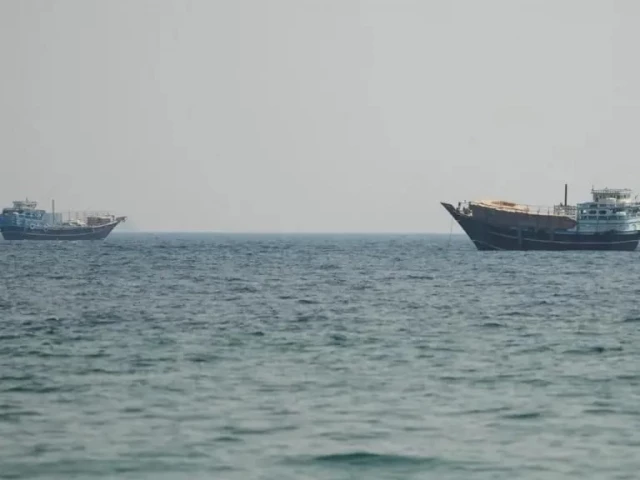
Reinstates Iran port blockade and imposes 20% charge on cargo passing through Hormuz
DUBAI/
WASHINGTONDC:
President Donald Trump said on Monday the United States was reinstating its blockade of Iranian shipping in the Gulf and would ensure the Strait of Hormuz stays open — for a fee — after the two sides exchanged more missile and drone attacks.
The latest hostilities followed an announcement by Iran at the weekend that it was closing the strait, and cast further doubt on the viability of an interim deal to halt the war and drove oil prices higher.
“The Hormuz Strait is open, and will remain open, with or without Iran. We are reinstating the Iranian blockade,” Trump said on Truth Social.
The Hormuz Strait is OPEN, and will remain OPEN, with or without Iran. We are reinstating the THE IRANIAN BLOCKADE, so named because it is only stopping Iran’s ships or customers from entering or leaving. All other countries will have fair and open use of the Strait. The U.S.A.… pic.twitter.com/m81hb9Nl3p
— Commentary Donald J. Trump Truth Social Posts On X (@TrumpTruthOnX) July 13, 2026
“The USA will be, from this point forward, known as ‘The Guardian of the Hormuz Strait’, but as such, and as a matter of fairness, will be reimbursed, at the rate of 20% on all cargo shipped.”
Iran’s top joint military command said the US had no role in determining the future of Hormuz and would not be allowed to intervene in the strait. Iranian Foreign Minister Abbas Araqchi wrote on X that Tehran was the guardian of the strait and would remain so “forever”, adding in response to Trump’s comments that: “20% is of course too much. We will be fair.”
POTUS is absolutely right. Whoever provides secure and safe passage of commercial vessels through the Strait of Hormuz should be compensated for this service.
Iran has always been the GUARDIAN of the Strait and will remain so FOREVER.
20% is of course too much. We will be fair
— Seyed Abbas Araghchi (@araghchi) July 13, 2026
The UN’s shipping agency pushed back against Trump’s proposal, stating that it opposes any fees for straits used in international navigation and emphasising that there is no legal basis for introducing mandatory tolls on strait transits.
Trump has previously suggested the US could charge tolls on shipping through the strait, but it has so far not done so and it was unclear if it would follow through on Trump’s declaration this time.
The US Navy-led Joint Maritime Information Centre said the blockade would take effect at 2000 GMT on Tuesday and apply to all vessel traffic regardless of flag, covering the entire Iranian coastline, including ports and oil terminals.
It said the measure would not impede neutral transit passage through the strait to or from non-Iranian destinations, and that humanitarian shipments would be permitted subject to inspection.
Before the conflict began in February, around a fifth of the world’s oil and gas traffic passed through Hormuz daily, delivering more than 15 million barrels of fuel to global markets worth at least $1.2 billion. If the US were to impose a 20% fee, it could generate around $250 million a day.
Iran has sought to establish a permanent fee and permit system of its own for vessels using the strait.
Both sides carry out more strikes
Thousands of people have been killed in the war, mainly in Iran and Lebanon.
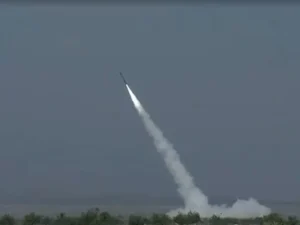
The US Central Command said on Monday its forces struck a submarine and ship maintenance facility in Iran on Sunday using one-way attack drones. Iran’s official news agency IRNA cited a local official on Monday as saying the US had attacked military sites in Qeshm, Bandar Abbas and Abadan in southern and southwestern Iran. It confirmed the deaths of two people in the Abadan attack.
Yesterday, using multiple one-way attack surface drones, CENTCOM forces successfully struck a submarine and ship maintenance facility in Iran. Three Corsair unmanned surface vessels hit the port at Bandar Abbas Naval Base, marking the first time American forces have employed sea… pic.twitter.com/bOM2kmgRxz
— U.S. Central Command (@CENTCOM) July 13, 2026
Iran’s Revolutionary Guards said they had targeted US military facilities in Bahrain and Kuwait, destroyed radar systems in Oman and hit fuel tanks and ammunition depots at Prince Hassan Air Base in Jordan in response to US strikes.
Bahrain said its air defence systems had intercepted several Iranian missile and drone attacks early on Monday.
The latest exchanges mark an escalation in both the pace and geographic reach of attacks over the past week, throwing into question an interim US-Iranian agreement signed last month to reopen the strait and halt hostilities.
Trump has said he considers the ceasefire over, while leaving the door open to further talks.
“We had a deal. It was a done deal, and then they broke it. They always break it. We’ve had 10 deals with these people, and so we’re just going to hit them very hard,” he said in a phone interview with Fox News on Monday.
Iran’s top negotiator, Mohammad Bagher Ghalibaf, struck a similarly forceful tone on X on Sunday: “The era of one-sided deals is over. We told you: keep your word or pay the price.”
The era of one-sided deals is OVER. We told you: keep your word or pay the price. Reality is knocking. pic.twitter.com/B97ogCYGaj
— محمدباقر قالیباف | MB Ghalibaf (@mb_ghalibaf) July 12, 2026
The war launched by the United States and Israel against Iran on February 28 has destabilised the Gulf and spread across the region, with Iran attacking US bases in multiple countries.
Saudi Arabia said it intercepted ballistic missiles fired at the country’s south by Yemen’s Houthi movement on Monday after the group accused Riyadh of striking an airport they control, testing a years-long truce in the conflict between the kingdom and the Iran-aligned group.
Oil prices jump
Control of the Strait of Hormuz has become one of the main battlegrounds of the conflict. Iran’s effective blockade of the strait has pushed up energy prices, and Tehran said on Monday it continued to control the channel.
Brent crude jumped by more than 5% after Trump’s latest comments and on fears of further disruption in the Strait of Hormuz, although prices remained below peaks reached earlier in the conflict.
NEW: The price of oil jumps more than 5% after President Trump declares on social media that the U.S. would be resuming its blockade on Iran and would be “reimbursed” for helping ships transit the Strait of Hormuz. https://t.co/pRSbNGWYDJ
— NBC News (@NBCNews) July 13, 2026
Higher energy prices, particularly gasoline costs, are politically sensitive for Trump before the congressional elections in November.
Iran’s Revolutionary Guards said in a statement on Monday that the only way to restore regular shipping traffic was to end US military interventions in the waterway.
Foreign Ministry spokesperson Esmaeil Baghaei said Iran was seeking to establish a joint mechanism with Oman to manage traffic through the strait, adding that US pressure on Oman had hindered discussions.
The US, which revoked a licence waiving sanctions on Iranian crude sales last week after earlier attacks on shipping, said its forces were positioned to safeguard freedom of navigation.
“Iran does not control the strait. Traffic is flowing,” it said.
US officials said around 20 vessels had been escorted through the strait in the previous 24 hours, although ship-tracking data showed little traffic moving. MarineTraffic said on Monday that vessel activity through the strait declined by about 52% over July 10 to 12 compared to the previous week.