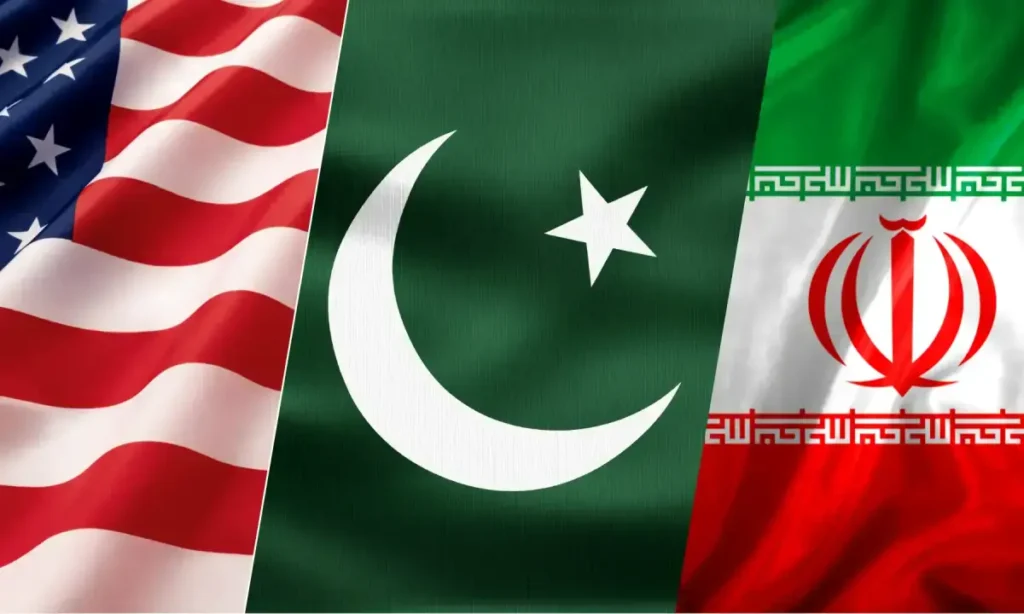
Islamabad’s mediatory role, as well as those of other countries, was in the limelight on Monday as world leaders welcomed a much-awaited agreement between Washington and Tehran to de-escalate tensions and eventually end a war that began more than three months ago and crippled the world economy.
The preliminary agreement, first announced by Prime Minister Shehbaz Sharif, is being hailed as a significant diplomatic breakthrough that could restore peace in the Middle East, reopen the Strait of Hormuz, and ease global economic pressures.
United Nations Secretary General Antonio Guterres congratulated the US and Iran for having reached a peace deal that provided for an immediate and permanent ceasefire, the reopening of the Strait of Hormuz, as well as a framework for further negotiations.
“This represents a critical step towards the peaceful settlement of the conflict,” Guterres remarked.
“My deep appreciation goes to Pakistan, Qatar, Egypt, Saudi Arabia, Turkiye, and other regional countries, for the constructive role played in supporting the negotiations that led to the peace deal,” he added.
Australian Prime Minister Anthony Albanese and Foreign Minister Penny Wong, in a joint statement, commended the efforts to date of Pakistan, Qatar, Saudi Arabia, Turkiye and other mediating countries.
They emphasised that Australia had long called for de-escalation, including in Lebanon, and welcomed steps toward reopening the Strait of Hormuz.
Turkish President Recep Tayyip Erdogan described the agreement as an “important development for establishing peace and tranquility in our region”.
He specifically thanked Pakistan for its exceptional mediation efforts and also appreciated the support provided by Qatar and Saudi Arabia.
Qatar’s Ministry of Foreign Affairs, in its statement, extended thanks to “our brothers in the Islamic Republic of Pakistan”, as well as to all regional and international parties that contributed to the agreement.
The statement highlighted Pakistan’s role in creating conditions for the memorandum of understanding on outstanding issues, including freedom of navigation in the Strait of Hormuz.
French President Emmanuel Macron, in a statement, said that the agreement was the result of a diplomatic effort to which several partners have contributed, and called for its rapid and complete implementation.
He said the deal also paved the way for comprehensive negotiations in for peace and security for all in the Middle East.
Japan’s Prime Minister Sanae Takaichi commended the efforts of the relevant countries that have played a mediating role to date.
“We welcome the agreement on this memorandum as a major step toward the resolution of the situation. This is the result of the parties concerned pursuing a diplomatic solution and engaging in persistent negotiations. At the same time, we highly commend the efforts of the relevant countries that have played a mediating role to date,” she said.
Takaichi expressed the hope that this memorandum will be steadily implemented, that free and safe navigation in the Strait of Hormuz will be actually ensured, and that a final agreement on Iran’s nuclear issue and other matters will be realised at the earliest possible date.
German Chancellor Friedrich Merz also welcomed the US-Iran deal and congratulated US President Donald Trump and the Iranian side on this diplomatic breakthrough.
“This can pave the way towards a reinvigorated global economy and a more secure Middle East. It is crucial to implement it with determination,” he added.
British Prime Minister Keir Starmer warmly welcomed the agreement, describing it as a hugely important step forward in ending the war, ensuring regional stability and reopening the Strait of Hormuz.
He specifically congratulated President Trump and the mediators from Pakistan, Qatar and elsewhere who have contributed to this breakthrough.
Starmer stressed the need for the full implementation of the memorandum of understanding to ensure permanent freedom of navigation in the Strait of Hormuz and to finalise details of the nuclear agreement.
UK High Commissioner Jane Marriott also thanked Pakistan for its “consistent, patient and impressive role” in bringing peace.
New Zealand Foreign Minister Winston Peters welcomed the deal, calling it a step towards reducing tensions and promoting stability in a region that is critical to global economic security.
Indian Prime Minister Narendra Modi welcomed the US-Iran agreement in a post on X, noting that the conflict “caused serious economic disruption across the world and led to loss of life in many countries”.
He expressed hope that the agreement would restore peace and stability, and “ensure the freedom of navigation and commerce.”
“We look forward to deliberations on the remaining issues reaching a sustainable final agreement,” he said.
A statement issued by Kuwait’s foreign ministry also commended Pakistan and Qatar’s efforts for peace.
In the statement, Kuwait welcomed that agreement and said it “stipulates an immediate and permanent cessation of military operations, ensures freedom of navigation in the Strait of Hormuz, and addresses a number of issues”.
The Netherlands said the agreement between the US and Iran was a “hopeful step toward stability in the region, including Lebanon”.
In a post on X, the Netherlands’ Foreign Minister Tom Berendsen thanked Pakistan, Qatar, Saudi Arabia and Turkiye and stressed for free passage through the Strait of Hormuz, adding that the Netherlands was “ready to contribute” to it.

European Union’s foreign policy chief Kaja Kallas called the deal “a major breakthrough,” adding that it could allow for “deeper negotiations on Iran’s nuclear programme and other critical issues”.
In a post on X, Kallas further affirmed that the deal’s implementation would ease the global energy crisis.
“From economic leverage to nuclear expertise and longstanding relationships with Gulf partners, the EU stands ready to contribute to a sustainable resolution,” she stated.

Italy’s Prime Minister Georgia Meloni thanked Pakistan and Qatar for helping broker the memorandum of understanding between the United States and Iran, calling it an “opportunity for peace that must be seized.”

China called for the immediate reopening of the Strait of Hormuz, while praising Pakistan’s role in mediating the negotiations.
“China welcomes the US and Iran reaching the agreement on the text of an initial memorandum of understanding and commends Pakistan’s mediation efforts,” Chinese Foreign Ministry spokesperson Lin Jian said in a media briefing.
“We hope the documents will be signed as planned and all relevant parties will stay committed to peaceful solutions,” he added.
Canadian Prime Minister Mark Carney welcomed the US-Iran agreement, saying his country was grateful to “Pakistan, Qatar and regional partners for their indispensable roles in facilitating negotiations.”
In a post on X, Carney wrote, “Canada has been clear that a durable ceasefire must both ensure safe and unimpeded transit through the Strait of Hormuz, and address the pervasive threat of Iran’s nuclear programme.”
He urged all parties to refrain from escalation and maintain good faith dialogue.
“Canada remains in close contact with partners and is ready to support efforts to bring stability and lasting peace to the region, including in Lebanon,” he said.

Saudi Arabia welcomed the US-Iran agreement, while urging both parties to begin detailed negotiations within 60 days to reach a permanent agreement, as reported by Anadolu.
In a statement, the Saudi foreign ministry also praised mediation efforts by Pakistan and Qatar and stressed the importance of restoring security and navigation in the Strait of Hormuz to the level that existed before February 28.
Saudi Arabia hoped peace would be achieved in a way that strengthens regional and global security.
The kingdom said a permanent agreement should take into account the security interests of countries in the region.