Analysis of 1,154 hospitalised patients links viral reactivation to greater disease severity
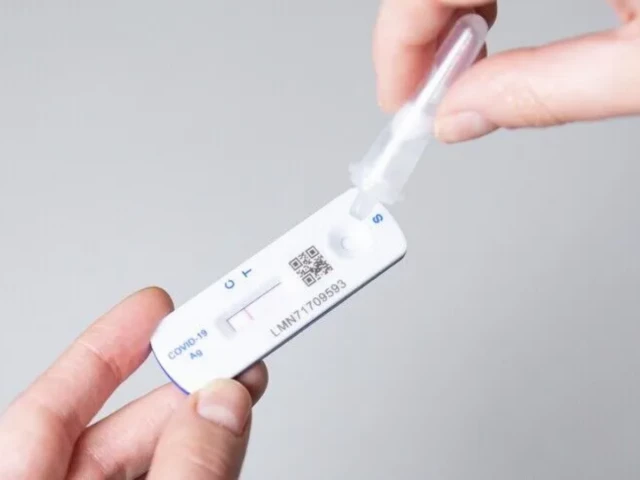
A covid test. PHOTO: ANADOLU AGENCY
Severe COVID-19 may reactivate viruses that have remained dormant in the body, with some of that activity associated with long-term symptoms, according to a study.
Researchers detected renewed activity from several common viruses in nearly half of the hospitalised COVID-19 patients they studied.
The findings, published in the journal Nature on Wednesday, showed that reactivation was associated with more severe COVID-19, increased inflammation and poorer clinical outcomes.
The researchers stressed, however, that the study did not prove that the reactivated viruses caused severe illness or long COVID.
More than 1,150 patients studied
The study examined 1,154 adults hospitalised with COVID-19 at 20 hospitals across the US between May 2020 and March 2021.
All participants were unvaccinated and had been infected before newer variants of the coronavirus became dominant.
Read: Fact Check: Hantavirus infection is not a confirmed side effect of Pfizer’s COVID-19 vaccine
Researchers analysed blood, nasal swabs and samples taken from the lungs of ventilated patients. Participants were followed during hospitalisation and for up to 12 months afterwards.
Evidence of at least one reactivated virus was found in 550 of the 1,148 patients with sufficient data, or 47.9%.
Most of those patients had only one additional virus detected during the acute stage of COVID-19.
The reactivated pathogens included members of the herpesvirus family, such as Epstein-Barr virus, cytomegalovirus and herpes simplex virus, as well as anelloviruses.
These viruses commonly infect people early in life and can remain in the body without causing symptoms because the immune system keeps them under control.
Viruses reactivated at different times
The researchers found that the viruses did not reactivate simultaneously.
Epstein-Barr virus activity was most common near the time patients were admitted to the hospital. Detectable viral material was found in 24% of participants during the first eight days after admission before gradually declining.
Anellovirus activity was also common early in hospitalisation and remained relatively steady until about day 20.
Read more: Covid-19 cases in India on the rise, with 2 new variants detected
Cytomegalovirus and herpes simplex virus generally reactivated later, peaking approximately three weeks after hospitalisation and appearing mainly in respiratory samples.
The researchers found associations between severe COVID-19 and the reactivation of Epstein-Barr virus, cytomegalovirus, herpes simplex virus and anelloviruses.
Patients with reactivated viruses also showed higher levels of inflammatory molecules and changes in immune cells, suggesting that the body was responding to more than SARS-CoV-2 alone.
The study found that the reactivations were not limited to patients taking immunosuppressive medicines. They also occurred frequently among people with otherwise functioning immune systems.
Possible link to long COVID
Anelloviruses were of particular interest because their activity after hospitalisation was associated with physical problems reported by patients with long COVID, including fatigue and reduced physical function.
This association remained after the researchers accounted for factors including age, medication-related immune suppression and the severity of the initial COVID-19 infection.
Anelloviruses are a large family of generally harmless viruses found in about 80% to 90% of the population.
Also read: Newly discovered bat virus shares the same entry method as Covid-19
The study did not find that Epstein-Barr virus activity during acute COVID-19 was more common among patients who later developed long COVID.
Researchers said the findings could eventually support new methods of predicting or treating severe COVID-19 and long COVID, including monitoring patients for the reactivation of latent viruses.
Existing antiviral medicines may also offer treatment options for some herpesviruses, but clinical studies would be required to determine whether treating reactivation improves patient outcomes.
The researchers cautioned that the findings might not fully apply to people with mild COVID-19, vaccinated populations or patients infected with more recent variants.
They called for further research to establish whether viral reactivation contributes directly to severe COVID-19 and long COVID or is mainly a consequence of the stress and inflammation caused by the disease.