
What seems like a petty street crime has far-reaching tentacles, with phones stolen in London often exported, reactivated and resold overseas within days.
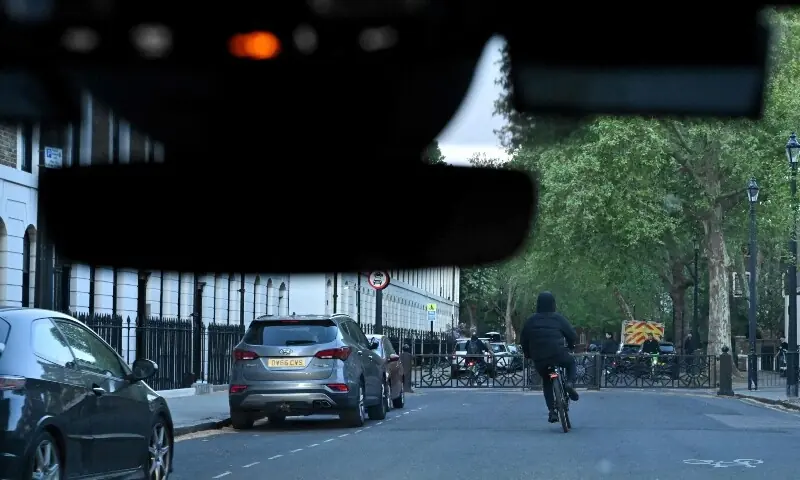
Balaclavas and e-bikes have become the armour of teenage boys zooming around London streets, snatching mobile phones from unsuspecting commuters and tourists.
As AFP joined a patrol on a sunny Friday night, police officer Hayden O’Connor spotted potential victims everywhere — people holding out phones to follow directions or listening to music.
“You see, your bus is in 20 minutes, you get your phone out, start scrolling Instagram, and before you know it, there’s a whizzy whirl of an e-bike coming towards you and your phone is gone,” he said.
O’Connor is part of the interceptor teams now driving around London in unmarked vehicles.
They follow reports of stolen phones, but the chances of getting one back are “really, really slim”, his colleague, police officer Hayley Carr, conceded.
London’s Metropolitan Police force has invested heavily in clamping down on the phenomenon, which has seen the city dubbed Europe’s phone theft capital.
Tackling phone theft has been made a priority, and extensive operations using drones, live facial recognition, and interceptor teams have led to some success.
Phone thefts fell by 12.3 per cent from 81,365 in 2024 to 71,391 in 2025, according to Met figures.
There were 13,000 fewer mobile phone thefts over the past financial year ending on March 31.
Aluminium foil wrap
What seems like a petty street crime has far-reaching tentacles, with phones stolen in London often exported, reactivated and resold overseas within days.
One of the most high-profile victims in recent months was Prime Minister Keir Starmer’s former top political aide, Morgan McSweeney, who had his phone snatched in October.
Last year, the Met dismantled one international gang suspected of smuggling some 40,000 stolen phones from the UK to China.
“In just one week, we cut e-bike-enabled crime, which is linked to phone theft, by nearly 40pc,” said Detective Superintendent Gareth Gilbert.
“Our message is simple: if you commit these crimes, we will catch you.”
AFP joined a Friday night patrol around London Bridge, as office workers enjoyed a pint and throngs of tourists explored the popular Borough Market.
The police control centre soon called with a stolen phone having been tracked to Deptford.
The unmarked car’s blue lights flashed on, and O’Connor hit the accelerator.
The team swerved through London’s snarled evening traffic, but the phone’s tracking signal was lost. Criminals wrap the precious booty in aluminium foil, the officers said, blocking the signal.
Organised crime
Beneath the balaclavas, the phone-grabbing bikers are usually just teenagers.
“Normally they’re 16, 18,” said O’Connor. On one recent patrol, he even caught a pair of 13-year-old boys.
“They are young teenage boys and they are recruited by larger organised crime groups,” Gilbert told AFP.
Even if the thieves think it’s just one “small, minor, individual isolated crime … it works into a bigger network”, he said.
“That leads upstream into organised crime groups and then actually worldwide.”
The thieves usually make between 100 and 200 ($135 to $270) per phone.
“That for a 13-year-old is a huge amount of money,” said Gilbert. But it can lead to links to gangs and wider criminality.
Police said later that six people were arrested around midnight on that Friday night patrol.
Police motorbikes have more success as the unmarked cars are in an impossible race against e-bikes, even if they run red lights.
Met commissioner Mark Rowley has urged manufacturers to help bust the thefts, setting a June 1 deadline to “design out crime” by making stolen phones worthless.
Otherwise, he will ask for the government to bring in legislation.
The best advice? Report a stolen phone swiftly and use tracking services like Find My iPhone. Don’t just report the theft later.
“Unfortunately, it doesn’t leave us in a position to do anything about it,” said O’Connor.