Says Afghan Taliban personnel abandon several posts after security forces responded
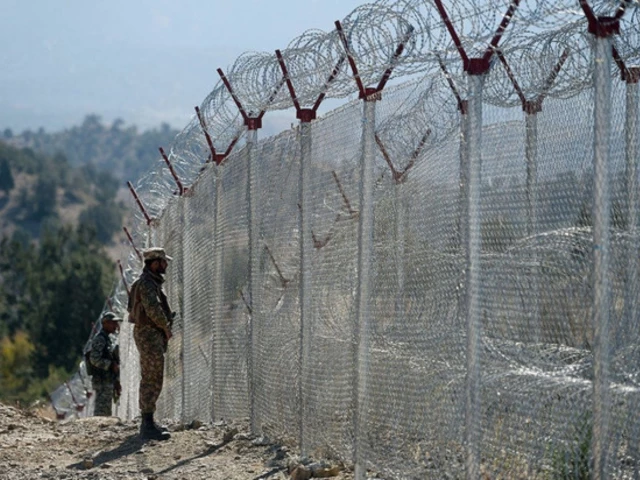
Pakistani soldiers keep vigil next to newly fenced border fencing along with Afghan’s Paktika province border in Angoor Adda in South Waziristan. Photo: AFP
Security forces responded to unprovoked firing from Afghan border posts near Angoor Adda in South Waziristan, forcing Afghan Taliban personnel to abandon their positions, Lower South Waziristan deputy commissioner said on Sunday.
In a statement on X, the deputy commissioner said Pakistani forces targeted several Afghan border posts, mortar positions and defensive positions in response to the firing.
انگور اڈہ، جنوبی وزیرستان | 1 نومبر 2026
افغان سرحدی پوسٹوں سے پاکستانی سرحدی چوکیوں پر بلااشتعال فائرنگ کا سلسلہ جاری ہے۔ پاکستانی سیکیورٹی فورسز نے فوری اور مؤثر جوابی کارروائی کرتے ہوئے متعدد افغان سرحدی پوسٹوں، مارٹر پوزیشنز اور دفاعی چوکیوں کو نشانہ بنایا۔ پاکستانی فورسز کے…
— Deputy Commissioner South Waziristan Lower (@dcswlower) November 1, 2026
He said Afghan Taliban personnel were forced to abandon their posts and flee following the intense response by Pakistani forces.
The deputy commissioner added that no casualties had so far been reported in the Pakistani border areas.
He further said Pakistani security forces were prepared to respond effectively to any form of aggression.
Also Read: Pakistan slams Afghan Taliban’s ‘latest fabrication of lies’ on Angoor Adda clashes
The latest development comes amid heightened tensions along the border in recent days.
Earlier this week, clashes near Angoor Adda along the South Waziristan border left one person dead and five members of a family injured.
Following the incident, the Pakistan Army said it had given an immediate, highly vigilant and strong response to the Afghan aggression by targeting Afghan Taliban checkposts.
It added that the military’s response to the attack on civilians was continuing.
Earlier in September this year, Pakistan carried out “calibrated” air strikes against terrorist hideouts near the Afghan border and conducted intelligence-based ground operations that killed a total of 37 terrorists following a series of deadly attacks in K-P.
The Ministry of Information and Broadcasting, in a statement, said that three targets were destroyed in precision strikes, including a training centre for suicide bombers. It said 28 terrorists, along with several suicide bombers, were killed, while large quantities of weapons and ammunition stored at the centres and hideouts were also destroyed.
On September 24, Information Minister Attaullah Tarar stated that Pakistan had carried out “precision” aerial and drone strikes against 10 locations in Afghanistan after drones launched from Afghan territory entered Pakistani airspace, describing the strikes as a response to a “deliberate and unlawful incursion”.
Pak-Afghan tensions
The development came amid fighting between Pakistan and Afghanistan that started in October 2025. Islamabad accuses the Afghan Taliban of harbouring militants who launch attacks in Pakistan, although Kabul denies this, calling the militancy its neighbour’s domestic problem.
Amid continued tensions between the neighbours, Operation Ghazab Lil Haq was launched around the end of February following renewed clashes along the Pakistan-Afghanistan border, after Afghan Taliban forces fired on multiple locations, prompting swift military retaliation by Pakistan.
The clashes intensified after Afghanistan launched a border offensive in response to Pakistani air strikes targeting terrorist positions. The two sides had agreed to a week-long ceasefire on the eve of Eidul Fitr on March 18, following requests from Turkiye, Saudi Arabia and Qatar.
Pakistan in April put forth three core demands to the Afghan Taliban during peace talks in Urumqi, China, including Kabul formally declaring the TTP a terrorist organisation, dismantling its infrastructure, and providing verifiable proof of the action. These demands form the basis of Pakistan’s negotiating position, which sources say has hardened amid persistent security concerns.