
• IT committee notes power outages affecting mobile towers, telecom services
• PTA claims 92pc smartphones in Pakistan locally manufactured or assembled
• Panel asks IT ministry to encourage Apple, other brands to assemble locally
• Electronic Transactions amendment bill deferred
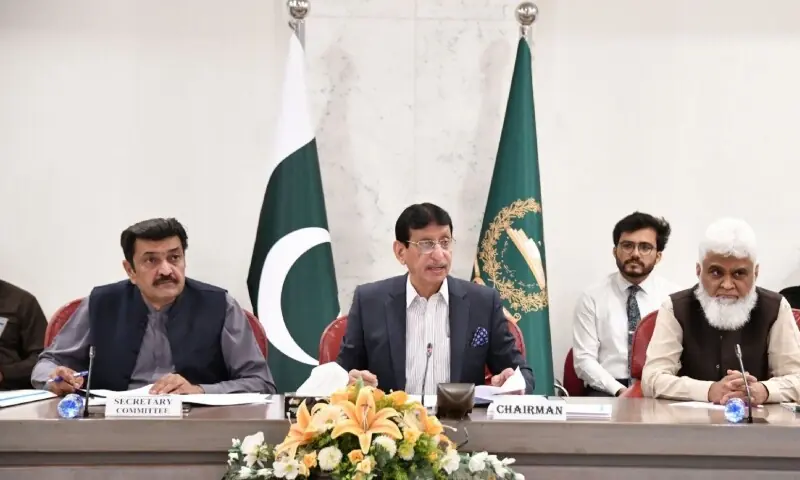
ISLAMABAD: The National Assembly Standing Committee on Information Technology and Telecommunication on Tuesday expressed serious concern over the unsatisfactory state of internet services in the country, noting that poor connectivity was affecting not only remote areas but also major cities such as Karachi.
Committee Chairman Syed Aminul Haque observed that users frequently experienced slow internet speeds and repeated call connection failures despite multiple attempts.
PTA Chairman Hafeezur Rehman briefed the committee that the total available spectrum in the country previously stood at 274MHz but had increased to 754MHz after the 5G spectrum auction.
He said telecom operators had launched 5G services in 22 cities. However, he said no new infrastructure had been deployed so far and 5G services had been enabled on existing mobile towers and network infrastructure.
He said new 5G infrastructure would be deployed gradually in subsequent phases, which would improve the quality and speed of internet services across the country over the next six to eight months.
The committee observed that one of the major challenges affecting the quality of mobile and broadband services was shortage of electricity for basic telecommunications infrastructure.
It noted that prolonged power outages adversely affected the performance of mobile towers, resulting in poor internet connectivity and disruptions in mobile services for consumers.
Members noted that in certain areas, loadshedding of up to 10 hours a day significantly affected telecom services.
The PTA chairman said the matter had been taken up with Nepra and the relevant power distribution companies, which had been brought on board to address the issue.
He said the prime minister had also constituted a high-level committee to devise a sustainable solution for ensuring uninterrupted power supply to telecom towers so that reliable telecommunication services could be provided to the public.
The committee proposed that alternative energy sources, particularly wind energy, should be utilised to power telecom infrastructure, noting that Pakistan possessed a significant wind corridor with considerable potential.
It also recommended that the ministry direct telecom operators to gradually install renewable energy infrastructure, including wind and solar power systems, at telecom sites.
Mobile phone tax
The committee also sought a briefing on taxes imposed on imported mobile phones.
Responding to a query, the PTA chairman informed the committee that around 92 per cent of smartphones currently being used in Pakistan were manufactured or assembled locally, while only 8pc were imported, primarily Apple iPhones and Google Pixel devices.
He said most other mobile phone brands were assembled within Pakistan and, therefore, were not subject to import duties, whereas taxes were applicable only to imported mobile phones.
The committee directed the IT Ministry to encourage Apple and other leading global smartphone manufacturers to establish local manufacturing or assembly facilities in Pakistan.
The PTA chairman clarified that taxes levied on imported mobile phones were not collected by the PTA. Instead, these taxes were deposited into the account of the Federal Board of Revenue, he added.
He stressed that once the applicable taxes were paid, the PTA only registered and whitelisted the device through its Device Identification, Registration and Blocking System (DIRBS), enabling its lawful use in Pakistan.
Bill deferred
The committee also took up the Electronic Transactions (Amendment) Bill, 2026 for consideration.
During deliberations, members belonging to the Pakistan Peoples Party expressed reservations, saying the proposed amendments had not yet been discussed with the party’s Parliamentary Legislative Committee.
The committee deferred approval of the bill after lawmakers raised objections over proposed changes that would shift certain powers from the federal government to the prime minister.
Committee Chairman Aminul Haque questioned whether the government had secured political consensus on the proposed legislation.
Minister of State for IT Shaza Fatima Khawaja acknowledged that there was no political consensus on the bill and assured the committee that it would not be approved without agreement among stakeholders.
Officials from the Ministry of Law told the committee that the proposed amendments involved only two words, replacing the term “federal government” with “prime minister”.
However, committee member Sadiq Memon argued that the changes would effectively transfer powers from the federal cabinet to the prime minister.
PPP lawmaker Sharmila Faruqui suggested that the Ministry of Law first provide the committee with a detailed briefing before any amendments were considered.
Responding to the concerns, Khawaja said administrative matters often faced delays because they had to pass through the federal cabinet, adding that the proposed change was intended to speed up administrative decisions.
Published in Dawn, July 15th, 2026