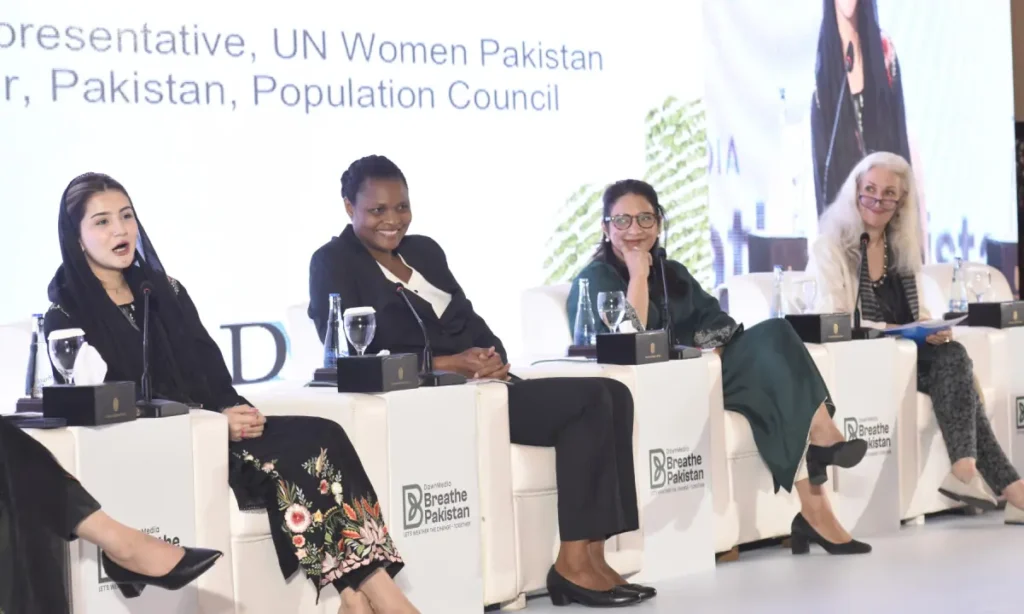
UN Women official calls for treating inclusion of women, girls and youth in climate policy-making as “a condition of survival”.
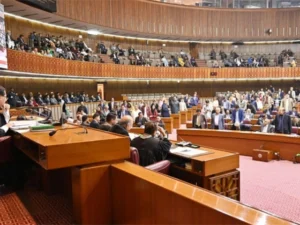
The second edition of the Breathe Pakistan International Climate Change Conference, organised by DawnMedia, concluded in Islamabad on Thursday after two days of deliberations on climate resilience, adaptation, energy transition, water security, urban planning, agriculture, climate finance and equitable policymaking.
According to a press release by Breathe Pakistan, the conference brought together policymakers, parliamentarians, international organisations, climate experts, corporate leaders, academics, development partners and civil society representatives to assess Pakistan’s climate vulnerabilities and the reforms needed to strengthen resilience.
It stated that across both days, speakers emphasised that climate change was no longer solely an environmental concern, but a broader economic and development challenge requiring coordinated implementation, regional cooperation and long-term planning.
On the first day, federal ministers, government officials, business leaders, and agriculture and water experts were among the various speakers who presented their perspectives on tackling the climate crisis.
Day two of the conference focused on Global South cooperation, climate-smart cities, clean energy transition, private-sector climate leadership, climate equity and provincial climate initiatives. Discussions highlighted the need for climate-responsive urban planning, investment in energy infrastructure, stronger inclusion of vulnerable communities in policymaking, and enhanced regional collaboration on shared environmental challenges.
The day featured addresses and discussions involving Khyber Pakhtunkhwa Chief Minister Sohail Afridi, Punjab Senior Minister Marriyum Aurangzeb, Romina Khurshid Alam, Mohamed Yahya, Shehzad Roy, Sharmila Faruqui, as well as representatives from the UN, UNEP, WHO, Unicef, IFAD, IRENA, IEEFA, SECP, and leaders from Pakistan’s banking, telecom, manufacturing and energy sectors.
In her closing remarks, DawnMedia CEO Nazafreen Saigol Lakhani thanked speakers, partners, guests and the media for contributing to the conference and helping bring visibility to climate issues.
“As we close the Breathe Pakistan International Climate Change Conference 2026, I extend my sincere thanks to our speakers, partners, distinguished guests, and the media. Your contributions have enriched these discussions and brought much-needed visibility to critical climate issues.”
She said the discussions over the two days reinforced that climate change was now a lived reality, with day one focusing on its impact on agriculture, water systems and livelihoods, while day two centred on implementation, resilience and equitable climate action.
Highlighting the role of journalism in climate discourse, she said: “At DawnMedia, we recognise that the role of media in this space is essential. Breathe Pakistan is not just about convening conversations but sustaining them and driving accountability.”
View the full agenda here.
5:30pm — Conference concludes
5:22pm — ‘Internal stability, regional calm, global cooperation needed to achieve climate agenda’
Senate Chairman Yousuf Raza Gilani, appearing for this year’s Breathe Pakistan as well, said Pakistan was braving the challenge with resilience and resolve.
He stressed that to achieve climate, food and economic security, “internal stability, regional calm, and global cooperation” were needed.
“Without peace, no climate agenda can succeed,” he said.
The Senate chairman declared, “Pakistan is leading by example. We are strengthening resilience across energy, food, and agricultural sectors, mobilising climate finance and expanding partnerships.”
“Climate resilience must reach the last mile, protecting farmers, families and communities, not just filling policy documents,” Gilani said, reaffirming the Senate’s commitment to advancing climate laws.
5:16pm — ‘Solutions clear, but need to be implemented, resourced and prioritised’
Unicef Pakistan’s Pernille Ironside, speaking on behalf of the United Nations in Pakistan, commended DawnMedia for organising Breathe Pakistan to discuss the climate crisis.
Ironside recalled that the two-day conference engaged a whole range of stakeholders — government, private sector, civil society, media, UN, development partners, and others, such as a 19-year-old activist.
“As we heard, those solutions are clear; they need to be implemented, resourced and prioritised.”
She affirmed the UN’s commitment to continuing to partner for such initiatives on climate action.
5:04pm — Focus on disaster-risk reduction in ‘age of adaptation’: UNEP’s Aban Marker
Aban Marker Kabraji, senior regional expert for Climate & Environment at UNEP Asia Regional Office, said the world was in a “coping scenario”.
Speaking at the last session, she said: “We’re no longer in ‘can we actually escape the impact of climate change’. It’s there. So we are now in the age of adaptation. […] We can prevent it from getting worse, but we probably can’t prevent the impact in a sense already programmed into the systems of weather and climate.
“So we are looking at disaster-risk reduction, adaptation and trying to ensure that fragmentation — that exists not just in Pakistan’s systems of government but most systems in most countries — is brought together.”
4:56pm — Climate finance is development finance at its core: UNEP official
Reflecting on the main takeaways of the conference, UNEP’s Aban Marker Kabraji noted the recurring topic of climate finance, which she said was “at its core was development finance”.
“The way we restructure our banks, insurance, allocations, and respective ministries,” she said, calling for integration for climate resilience.
She also stressed that moving forward, the solutions had to be “indigenous”, adding that indigenous solutions were what would “save us”.
WATCH: Sharmila Faruqui talks about importance of climate planning
4:48pm — ‘Protecting forests KP govt’s primary objective’
Shafi Jan, KP CM’s aide on information, called for protecting forests, asserting that it was the provincial government’s “primary objective”.
He said the KP government was ready to work with other provinces on climate change.
He stated that there was a total ban on deforestation, clarifying that some videos circulating recently and connected to the KP government’s “misgovernance” were from Dir and old.
Jan called for all governments to play their part and sought the inclusion of a climate component in the National Finance Commission Award.
4:44pm — KP CM aide details efforts undertaken by provincial govt
Special Assistant to KP CM for Information Shafiullah Jan detailed efforts undertaken by the KP government to mitigate the impacts of climate change.
He recalled that before the PTI-led KP government, the total forest cover in the province was “19.5pc, but today, it is 26.5pc”.
He also noted that glacial melt due to rising temperatures posed a threat to the province, as well as the rapid urbanisation of agricultural land.
He added that the government was taking action against the use of agricultural land for real estate, elaborating that the provincial government had formed a committee to monitor the situation.
4:38pm — KP CM calls for ‘serious efforts’ locally on climate change
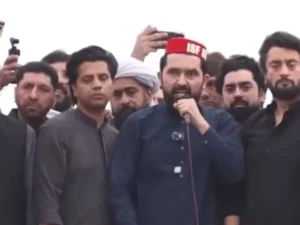
Khyber Pakhtunkhwa Chief Minister Sohail Afridi called for serious efforts on climate change, asserting that his provincial government was doing so already.
“This is not an issue of Sohail alone or any government alone, but it is Pakistan’s collective issue,” the chief minister emphasised.
“We are absorbing more carbon than we are producing,” he said, adding that the province could earn up to Rs100bn annually through carbon credits.
He called on the federal and provincial governments to invest in things that would benefit the country, so that the energy and climate crises could be tackled efficiently.
4:34pm — KP invested Rs650bn since 2017 in forest area: CM Afridi
KP CM Sohail Afridi, in a video message, applauded DawnMedia Group for organising Breathe Pakistan.
He highlighted that the government under ex-premier Imran Khan took various measures on climate change.
“Global warming and climate change are a global crisis, due to which temperatures are continuously rising,” he noted, contending that Imran took actions “before the effects materialised”.
CM Afridi recalled that the government started work on the “Billion Tree Initiative”, adding that 27 per cent of the province’s total area was forested.
He further said that the KP government has invested more than Rs650bn since 2017 in forest conservation and expansion.
4:30pm — 12th session begins
The conference’s second-last session, titled “On the Frontlines of Climate Change: Khyber Pakhtunkhwa” has now begun.
4:22pm — Zeba Sathar stresses need for data in mapping vulnerability
Pakistan Population Council’s country director Zeba Sathar stressed the need for using data to come up with solutions.
She suggested that “we should let data guide us to vulnerable populations”.
4:11pm — Political will required to really engage women, girls at every step: UN Women official
“What if half of Pakistan would not be able to breathe?” asked UN Women Pakistan’s deputy country representative Fahmida Khan, referring to the country’s female population.
“The women and girls of Pakistan carry the heaviest load of a fire they dd not ignite,” she said, calling for the “right systems” to be built to include women and girls within the processes of making and implementing documents.
“It will take a political heart and a will to really engage women and girls at every step, no matter whether it’s the PSDP, ADP, or PC-1,” she declared.
“Stop treating women, girls and youth’s inclusion as a favour and start treating that as a condition of survival,” Fahmida demanded.
4:08pm — Activist Fatima Faraz calls for better support for youth-led initiatives
Fatima Faraz, a youth advocate, stressed the need for youth-led climate-related initiatives and called on the audience to provide young people with platforms to speak about the environment.
She also emphasised that authorities must take action rather than make “empty promises”.
She asked, “Until how long will we be participating in conferences like these, because honestly, these conversations seem like empty promises to us?”
4:02pm — WHO official underscores public’s ‘vital role’ in taking steps to protect health
Speaking on how to mitigate the impact of climate change, WHO Pakistan Deputy Representative Ellen Mpangananji Thom stressed the need to improve hygiene and waste disposal (including in hospitals), have a climate-resilient design, and strengthen the surveillance system on climate-sensitive diseases.
“Each one of us as individuals has the vital role and responsibility to protect our health by being informed and following simple recommendations, such as wearing masks during pollution episodes, reducing our exposure to heat, and preventing mosquito bites,” she stressed.
3:57pm — WHO estimates 5m deaths between 2030-2050 due to climate-driven malnutrition, heat stress, others
WHO Pakistan Deputy Representative Ellen Mpangananji Thom said climate-driven malnutrition, malaria, diarrhoea, and heat stress alone were estimated to result in five million deaths between 2030 and 2050.
“The WHO estimates that between 2030 and 2050, we would register 5 million additional deaths worldwide, and that translates to 250,000 per year.
“The good news is that we are still on time to do something that can avoid these deaths,” she added.
3:53pm — Cambridge official calls for giving the youth a voice
Uzma Yousuf, country director for Cambridge, underscored the need to provide children across the board with high-quality material and research.
She highlighted that Cambridge had developed a “Climate Quest Activity”, which was free of charge and had case studies translated into Urdu, and was working with the Sindh government and the PM’s Youth Programme on it.
“The one thing that will change and equalise it across is if we give those who are impacted the most the most voice, and also give them the confidence and the encouragement.”
3:45pm — Panel talk begins
Kicking off an all-female panel discussion, Unicef Pakistan’s Pernille Ironside noted that climate shocks were increasing, straining health systems and disrupting learning.
3:40pm — Shehzad Roy calls on govts to tackle waste dumping
Zindagi Trust Founder & President Shehzad Roy, in his keynote address, noted that “around 400-600 million gallons of waste was being dumped into the rivers and seas”.
He called on the federal and provincial governments to “regulate industries and fix treatment plants”. “It’s a no-brainer,” he remarked.
“We can talk about climate change the whole, but why can’t we stop this?” Roy asked.
“Maybe if we had heads of four provinces and industries here, we could have asked them.”
3:34pm — Women, children ‘frontline responders’ but not represented at decision-making tables: Sharmila Faruqui
PPP MNA Sharmila Faruqui, presenting her address, pointed out that the climate crisis was still not “fully integrated into critical sectors like health, education, housing and social safety networks”.
She also noted there was a lack of data regarding the most vulnerable population that live the realities. The MNA said that vulnerable populations, including women and children, were not just the victims of climate change but also the “frontline responders” and were adapting with remarkable resilience.
“Yet, they are the ones who are the least represented at the decision-making tables,” Faruqui lamented.
3:30pm — Climate change ‘no longer abstract risk but lived reality’
PPP MNA Sharmila Faruqui stressed that climate change was not just a humanitarian crisis but also an equity crisis.
Recalling the 2022 and 2025 floods, she said that climate change “is no longer an abstract risk but a lived reality”.
3:28pm — 11th session begins
The conference’s 11th session, titled “Unequal Burdens, Shared Futures: Reframing Climate Action Through Equity”, is now underway.
3:25pm — Pakistan and India to ‘become uninvestable because of climate risk around water’: SECP official
Citing a study, SECP Commissioner (Securities Market Division) Ali Farid Khwaja said that it found that in 50 years, a lot of countries, including Pakistan and India, would “become uninvestable because of climate risk around water”.
He asserted: “The key point is that the discourse on climate change, especially in the financial market, needs to shift from just mechanical reporting and scoring, where you can comply just mechanically, to incorporating the risks in your fundamental research.
“This means when you’re forecasting the revenue, forecasting the cost-rate, the overall GDP growth and inflation numbers, the climate outcome will be directly incorporated in those forecasts.”
3:19pm — SECP warns against ‘green-washing’
The SECP Commissioner (Securities Market Division) objected to the “mechanical approach” he said companies often take when it comes to environment-related initiatives.
“CSR is treated as an extra cost; there is a problem with that approach because it leads to green washing,” Khwaja said.
He stressed that the “discourse in the finance sector needs to shift from mechanical reporting and scoring to incorporating the risks into your fundamental research, capital market assumptions”.
He added that Environmental Impact Assessments (EIA) should be “core” of business structure.
3:14pm — Companies to be mandated by 2031 to report on ESG action: SECP official
Ali Farid Khwaja observed that by 2031, all public companies, whether listed or not, will be mandated to report on their environmental, social, and governance (ESG) framework.
The first deadline for certain companies was 2029, he noted.
Khwaja noted there was a lot of data on the “ESG sustain portal” detailing what various companies were doing in that area.
3:06pm — Zong ‘first’ to restore mobile network during 2022 floods in affected areas: official
Najeebullah Khan, deputy director at Zong for network operations, highlighted that during the 2022 floods, Zong was the first operator to restore the network within 14 days.
“We were the first ones to get the network up in affected areas.”
Noting that Pakistan was heavily affected by monsoon rains and subsequent floods, Khan said Zong had its teams on the ground to “protect and secure our network”.
2:56pm — Pakistan Cables CEO warns of copper shortage in future
Pakistan Cables CEO Fahd Chinoy warned of a shortage of copper in the future due to the transition towards clean energy, suggesting there could be “a mismatch in the terms of demand and supply”.
“Renewables and EVs demand a lot more cabling; for example, an EV takes about 85kg of copper, so that has multiplied demand for copper,” Chinoy said.
He also noted that the “gestation period of copper mines was 17-18 years as it is deeper in the ground”, adding that copper was already trading at an “all-time high”.
However, he maintained that Pakistan, being a “mineral-rich” country and with “some of the largest copper mines in Balochistan”, could turn this into an opportunity.
2:50pm — Climate actions ‘now becoming mandatory’ for banks: Meezan Bank
Muhammad Raza, general services head at Meezan Bank, said banks were actively working towards promoting product innovations and developments regarding climate actions.
“The green bonds are in action […] With the passage of time, these actions are now becoming mandatory,” he noted.
He also cautioned against “greenwashing”, where projects were presented as green without knowing whether they actually were sustainable.
2:44pm — Inefficiencies in energy grid passed on to companies: Gul Ahmed official
Gul Ahmed Textile Mills Non-Executive Director Ziad Bashir said producing electricity was not companies’ responsibility, but they were doing so “because the government is not efficient or they have too many systemic losses”.
“These inefficiencies are passed on to us, in losses, in transmission. […] Everything is passed on to the manufacturer. How much can the manufacturer absorb?” Bashir said.
2:39pm — Gul Ahmed Textile criticises carbon levies
Gul Ahmed Textile Mills’ Ziad Bashir criticised the imposition of carbon levies in Pakistan, stressing that “we cannot afford to make expensive mistakes”.
He recalled that last year, the government “imposed a 60 per cent carbon levy on furnace oil”.
Due to this, he added, “Many of those who generated furnace oil had to shut down. Why?”
He maintained that “even European countries do not do that”, adding that Pakistan must “follow” rather than “lead” the change.
“We have to follow the leaders, because we can make a lot of mistakes and those mistakes can be very expensive.”
2:34pm — Coca-Cola Pakistan ‘using minimum water’ for treatment: official
Dr Faisal Hashmi, of Coca-Cola Pakistan & Afghanistan’s public affairs department, highlighted his company’s different initiatives for water conservation.
“Whatever water we are using for our product, we are giving more water back to the community and nature,” he said.
Hashmi explained that water was used as an ingredient and also for washing and treatment, among other things.
“With the help of sustainable development and technology, we are using minimum water for this part (treatment).”
2:30pm — Panel talk begins on climate action by private sector
A panel talk, part of the conference’s 10th session, titled “Why climate action should make business sense?”, has begun.
Nadia Rehman, member of the Board of Trustees of SBP’s Climate Risk Fund, is moderating the discussion.
1:40pm — Lunch break
1:35pm — Solar boom ‘not surprising, but rational’
A representative from the Global Renewable Congress, Ali Gülcegün, addressed the conference in a video message and said that Pakistan’s solar boom was not “surprising, but rational”.
He said that Pakistan’s official electricity registry showed “30,000 net meter solar installations”. However, he added that the “reality was different”.
Gülcegün added, “The vast majority of connections are unregistered,” pointing out that Pakistan’s energy planning “has been working with the wrong numbers”.
He further stated that Pakistan’s solar transition happened as a result of “the grid failing to deliver what people needed as well as soaring prices”.
With load shedding in temperatures of 45°C and reduced solar panel cost, the official said that “with these factors combined, the consumer decision was rational”.
1:28pm — ‘Many factors’, not financing, catalysed Pakistan’s energy revolution: expert
Lums Energy Institute Director Dr Naveed Arshad, speaking about Pakistan’s energy revolution, said, “We have not used probably a single dollar of climate financing in all this transition. There were many factors combined together.”
He noted that Pakistan witnessed “a very interesting revolution of the grid that we have not seen in any country”, adding that the transition was from a connected grid to a distributed grid.
1:21pm — Expert notes need for good policies, very smart financing mechanisms
People of Asia for Climate Solutions Founder Tom Xiaojun Wang noted that Pakistan and China have reacted to the fossil fuel prices differently.
“When we talk about energy anxiety, this is exactly where” new and already existing technology can be used, he said, mentioning the recent energy crisis resulting from the oil crisis.
“We are not really in shortage of technology, we are not really in shortage of even financing in many ways […] What we need to do is mobilise very good policies and very smart financing mechanisms,” Tom emphasised.
1:12pm — IRENA official calls for investment in solar infrastructure
Kamran Siddiqui, programme officer for energy and infrastructure at International Renewable Energy Agency (IRENA), speaking about Pakistan’s solar transition, said there was a “need for investment at the infrastructure level, particularly at the grid side”.
“We need to decide how the energy is going to be deployed, whether it’s behind the meter or net-metering.”
He also noted an increase in the import of solar batteries “over the past three years”. However, he added that the solar boom had also “created challenges for the government as the demand for grid supply has reduced”.
1:05pm — ‘Consistent decline in fossil fuel consumption over last 3-4 years’
Haneea Isaad, energy finance specialist at Institute for Energy Economics and Financial Analysis (IEEFA), noted that Pakistan was managing the ongoing situation resulting from the Middle East war relatively well, with no fuel shortages.
“Over the past three to four years, we have seen a consistent decline in fossil fuel consumption, whether it’s oil, gas or coal,” Isaad pointed out.
She highlighted Pakistan’s “rapid solarisation drive”, adding that the shift took place in 2022 after the Russia-Ukraine war broke out.
12:57pm — Panel talk on clean energy begins
A panel talk, titled “Empowering Pakistan’s Transition to Clean Energy”, is now underway.
National Credit Guarantee Company Limited CEO Ammar H Khan is moderating the session.
12:52pm — Must discuss impact of climate shock on urban poor: NED Pro-VC
Dr Noman Ahmed, Pro Vice Chancellor at NED University of Engineering and Technology, highlighted that since opportunities for livelihood were diminishing in rural areas due to climate risks, people moved to cities, where they “face ruthless evictions”.
“Their plight is not acknowledged,” he added, stressing that “anti-encroachment drives were anti-poor operations”.
He further stated that it was vital to discuss the impacts of climate shocks on the “poor, particularly the urban poor and see what can be safeguarded by the right type of policy and planned intervention”.
12:48pm — Largest cities of Pakistan facing ‘haphazard’ urbanisation
Dr Noman Ahmed noted that locations and hinterlands that were “not supposed to be urbanised” were undergoing urbanisation.
“The largest cities of Pakistan are basically shouldering the load of urbanisation in an extraordinary manner. And these are the cities that are under an enormous amount of duress […] so Karachi, Lahore, Faisalabad and all the largest cities of Pakistan are experiencing an extraordinary scale of sprawl,” he said, adding that it was leading to a “very haphazard type” of urbanisation.
12:36pm — Urbanisation not planned, but absorbed: IOM Pakistan official
Sumera Izhar, recovery advisor at IOM Pakistan, pointed out that in Pakistan, urbanisation was “not planned but absorbed”.
She noted that in the past, the main factor for migration was better job opportunities, but “now it is changing to climate-shock-induced” migration. She added that in Pakistan, “more than 13 million people were migrating internally due to climate shocks”.
She further added that the issue was being looked at as a “humanitarian one,” rather than through the lens of “climate mobility”.
12:29pm — Having data alone not enough: Urban Unit CEO
Urban Unit CEO Muhammad Omar Masud noted there was now a “political economy of urban planning”, terming it an issue.
He noted that about 45pc of Punjab’s population was urbanised. Masud added that data alone was not enough, observing that there was a need for governments to start sharing data with the public.
“You need to have those institutions that are going to transmit it all the way to policy.”
12:21pm — UN-Habitat official decries lack of urban planning
UN-Habitat Pakistan Senior Advisor and Programme Manager Jawed Ali Khan decried the lack of urban planning, which he said is “triggered more intensely by climate change”.
“Our planners have to be conscious; they must study the challenge and build necessary safety zones,” he said, recalling urban flooding in Islamabad and Lahore last year as well as Karachi’s heat island effect.
He stressed that urban planners must “design the infrastructure keeping in mind the challenges we are facing”.
12:14pm — Panel discussion begins
A panel talk, titled “Are Climate-Smart Cities Possible in the Developing World?”, has begun.
Climate adviser Dawar Hameed Butt is moderating the session.
12:10pm — UNEP official notes cities not directly engaging with financiers
Mirey Atallah, head of adaptation & resilience at United Nations Environment Programme (UNEP), noted that often, there was not a lack of funding, but rather accessibility of funding.
“Cities are not directly engaging with financiers. It’s always through the Ministry of Finance of the federal government,” she noted.
The UNEP official pointed out that countries like Pakistan, which have high indebtedness, were faced with barriers because the ministry may not be willing to give an NoC to cities for more loans to manage the overall debts.
12:06pm — Opportunity to ‘leapfrog’ through indigenous solutions: Mirey Atallah
UNEP Head of Adaptation & Resilience Mirey Atallah highlighted that there exists an opportunity to “leapfrog” through “innovation, creativity, and indigenous solutions”.
However, she noted that the opportunities were “challenged by speed,” adding that the “speed” was related to population increase and expansion.
12:00pm — Tariq Alexander Qaiser calls for Karachi’s islands not to be turned into ‘high-rise communities’
Architect Tariq Alexander Qaiser said, “The days of mega corporations and globalisation are dying. It is and has to be about local benefit.”
He called for more mangrove plantation work to be done on Karachi’s coastal islands and its western delta.
Qaiser called for the preservation of Karachi’s coastal islands, mainly Bundal Island and Khiprianwala. “The city requires them to be covered in mangroves, not human commercial enterprises,” he added.
“These islands should not be developed into high-rise communities or industrial zones. They need to become protected areas for nature reserves and inter-titled biodiversity,” he asserted.
“For our progeny to live healthy, productive lives, we need our cities to exist in this intersection — the nexus of man and nature. That is the only way forward,” Qaiser added.
11:56am — ‘Cities divided into those with access to clean water and those who don’t’
Qaiser spoke of the effluent being washed away into the sea, stating that it was not going “into treatment plants or solid waste facilities”.
“Draining systems get clogged; they are built upon [..] disease vector spread,” he added, stressing that the city was divided into “those with access to clean drinking water and those who did not”.
“Our cities, our lives suffer from deep inequity; this is overwhelming, and it should be for all of us.”
11:49am — Environmentalist notes need for new laws with ‘holistic understanding’
Tariq Alexander Qaiser, an architect and founder of TAQ Associates, underscored the need for new laws. “New ones are needed, ones that will be accepted by all.”
He noted that science and humanities had been separated and were studied in silos, wondering why philosophy had been “put aside”.
Qaiser emphasised the need for a “holistic, integrated and deeply sensitive understanding of issues” in today’s world.
11:40am — Punjab ‘case study’ for rest of world
Marriyum Aurangzeb said that with the provincial government’s interventions, Punjab has become a “case study” in terms of environmental protection for the rest of the world.
“A lot of countries have approached us,” she said, adding that the government was working in collaboration with the “environment sector, legislative lawyers”.
“We have the test policies, test legislation, it is just time to act, bring them together and make them work,” she added.
11:36am — Punjab minister underscores importance of collecting data
The Punjab senior minister underscored the importance of collecting data, saying, “We can’t govern what we can’t measure.
“We have mapped the entire industry, we have mapped the sectors. We have data now available with us and that is being used in our spatial planning,” she added.
11:31am — About 35pc of PM2.5 reduced over past 1.5 years: Punjab minister
Marriyum Aurangzeb mentioned various steps and initiatives being undertaken by the Punjab government, including a smog mitigation plan.
She said, “With all what we have done in a year and a half or two years, about 35 per cent of PM2.5, according to the international website, we have reduced over the last year and a half.
“So whatever we are doing seems to be working and having an impact, but a lot needs to be done, of course, in other areas and sectors also,” the minister acknowledged.
Aurangzeb said that the launch of a climate observatory was also being planned, which would have satellite offices across Punjab.
11:20am — Environmental protection, urbanisation not opposing forces: Marriyum Aurangzeb
Punjab Senior Minister Marriyum Aurangzeb spoke of Punjab’s actions on moving from “a vulnerable province to more of an environment, climate-resilience leadership”.
Aurangzeb said she did not see environmental protection and urbanisation as opposing forces.
She maintained that if the decision-making takes into account the protection of ecological balance, climate resilience, and infrastructure, “urbanisation can be made inclusive, sustainable and responsible”.
She emphasised that Punjab had taken a “more of an ecosystem approach”, using a multisectoral lens.
The minister mentioned the launch of public buses and the environment protection force as some of the steps to transition towards an environment-friendly urban city.
11:12am — Climate crisis demands solidarity: Maldives’ envoy to Pakistan
The Maldives’ high commissioner called on the Global South to go beyond negotiations and focus on sharing knowledge, technical cooperation and capacity-building.
“Climate crisis demands not only urgency, but solidarity,” he emphasised, affirming that the Maldives remained committed to working with Pakistan and the Global South on the issue.
11:09am — Maldives, Pakistan ‘stand on the frontline of climate vulnerability’
Mohamed Thoha, High Commissioner of the Maldives to Pakistan, spoke about climate challenges faced by his country.
“Both our countries are different in geography and scale, but we have to stand on the frontline of climate vulnerability,” he said.
Thoha explained that the Maldives faced rising sea levels and coastal erosion, threatening long-term sustainability. He added that the Maldives was committed to transitioning 33pc of its energy consumption to sustainable and clean resources.
10:58am — Melting glaciers ‘shared vulnerability’ for countries like Nepal and Pakistan: envoy
Rita Dhital, Ambassador of Nepal to Pakistan, noted that melting glaciers were a “shared vulnerability” for countries like Nepal and Pakistan.
She highlighted that Glofs hampered tourism, agriculture and hydropower generation in Nepal, recalling that her country has experienced “major Glofs” since the 1970s that resulted in significant loss of lives.
Dhital spoke about Nepal’s actions to tackle glacial melting, including using engineering to lower lake levels and identify lakes that pose a potential threat of outbursts.
10:51am — Opportunities lie in Global South: private sector adviser
Seed Advisory Group Principal Seema A. Khan, speaking about the private sector’s role, explained the concept of “patient capital”.
She highlighted that it was the Global South where opportunities were present.
“Patient capital is in negotiations with the people who are around this group to discuss where the intersection is between money, policy and national development, because that’s the most profitable,” she said.
“One of the areas that I have found to create the most resilience is the evolution of sovereign capital to look at all of these resources as ways to create banks that then benefit the people,” Khan further said.
10:38am — Romina Alam notes ‘nothing happened’ on Loss and Damage Fund
“What about the Loss and Damage Fund? Where is that fund? Nothing happened,” Romina Khurshid Alam pointed out.
She called for everyone to work together, including the development and private sectors.
“Justice is right now very much important, but more important is survival,” the PM’s coordinator said.
“No blame, no shame. Just take action,” she said.
10:31am — PM’s coordinator highlights need for ‘regional solution’
Romina Khurshid Alam, coordinator to the Prime Minister on climate change, stressed the need for a “regional solution” rather than a global one, as every region had its different issues.
“This region is suffering. Our children are suffering. We are not in a state of crisis. We are in a state of war with climate change,” she said.
“The developing countries’ people are resilient nations. If you talk about Pakistan, we have proved in the floods that we are not looking for aid; we are looking for trade because this is not something we created.”
10:20am — Goal is to advance resilience in development: climate expert
Renato Redentor Constantino, international policy adviser at Climate Vulnerable Forum, noted that many people think of climate change as an environmental issue, but “we are in the middle of a development crisis”.
He stressed, “Our goal is not to reduce emissions, per se. Our goal is to advance resilience in development.”
10:08am — Expert highlights concept of ethical leverage
Dr Erum Sattar, a water law and policy expert, said, “Pakistan sits where the transboundary water-sharing is very, very complex. There is India in the East and the Kabul River.”
She said that Pakistan sat at the intersection of complexities that affected many nations. She also referred to the concept of ethical leverage.
“Pakistan can experiment at all of these scales,” she said.
10:06am — UN official says Pakistan’s experience not unique
Mohamed Yahya, the UN Resident and Humanitarian Coordinator in Pakistan, said, “Pakistan’s reality is unmistakable; from floods to prolonged droughts to glacial melts. This experience is not unique to Pakistan. It reflects a reality across South Asia.”
He said that the panel’s discussion would be how South Asia can help itself, saying that regions had to work together.
10:00am — IFAD official says climate change shaping agriculture in Pakistan
Lamichhane said that climate change is already shaping agriculture in Pakistan. “There’s no denying it, we have to act on it. But this is also a chance to modernise and build resilience,” she said.
She went on to say that resilience was achievable when solutions were integrated, financed and designed for scale. She also said that partnership was a multiplier effect.
9:50am — IFAD official says climate ambition not constrained by ideas
Lamichhane has said that the Asia Pacific is IFAD’s most dynamic and largest portfolio.
She said that across the region, five things were given priority: climate resilience; technology and productivity; strong value chains and private sector engagement; inclusion of youth, women and indigenous communities; and a shaded approach that matches solutions to country context.
“Pakistan, facing high climate risk, sits at the intersection of these priorities. We cannot dissect climate from other priorities; it has to go hand in hand,” she said.
“Climate ambition is not constrained by ideas … it is constrained by finance and delivery systems,” she said.
9:50am — IFAD official says Pakistan on the frontline of climate change
Anupa Rimal Lamichhane — the International Fund for Agricultural Development lead for regional climate change — has said that Pakistan is on the frontline of climate change.
“Agriculture contributes 23pc to GDP,” she said. Agrifood systems and farmers are not just the victims but they are also a major part of the solution, she said.
“Yet, globally, only 0.8pc of climate financing reaches farmers,” she said.
9:50am — 7th session begins
The seventh session, titled ‘Collaboration of the Global South Towards Climate Action’, has now begun.
9:46am — 2nd day of climate conference begins
The second day of the Breathe Pakistan International Climate Change Conference has begun in Islamabad.
Header image: The Breathe Pakistan conference is underway at Serena Hotel in Islamabad on May 7, 2026. — White Star/Muhammad Asim