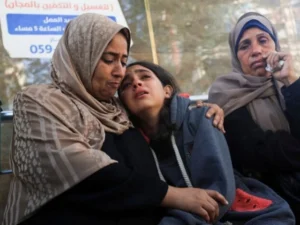
An expose by the BBC has revealed that “serious malpractices” in the children’s ward of a government hospital in Punjab’s Taunsa continued months after the facility was linked to an outbreak of HIV among children, the British broadcaster said.
A surge in HIV cases at Taunsa Tehsil Headquarters Hospital was reported in late 2024.
“Punjab authorities promised a crackdown – but months later, secret filming by BBC Eye Investigations found that children’s lives were still being put at risk,” the broadcaster said in a press release.
The revelations were made in a documentary podcast and have also been detailed in a written report.
The BBC said that months after 106 children were infected in Taunsa, health authorities promised a ‘massive crackdown’ and suspended the medical superintendent of THQ in March 2025, but an insider working in the hospital told the broadcaster that nothing had changed.
“Acting on evidence provided, the BBC went undercover inside the children’s ward in late 2025. Filmed covertly over several weeks, the BBC’s investigation reveals repeated and serious breaches of basic infection control,” the BBC said.
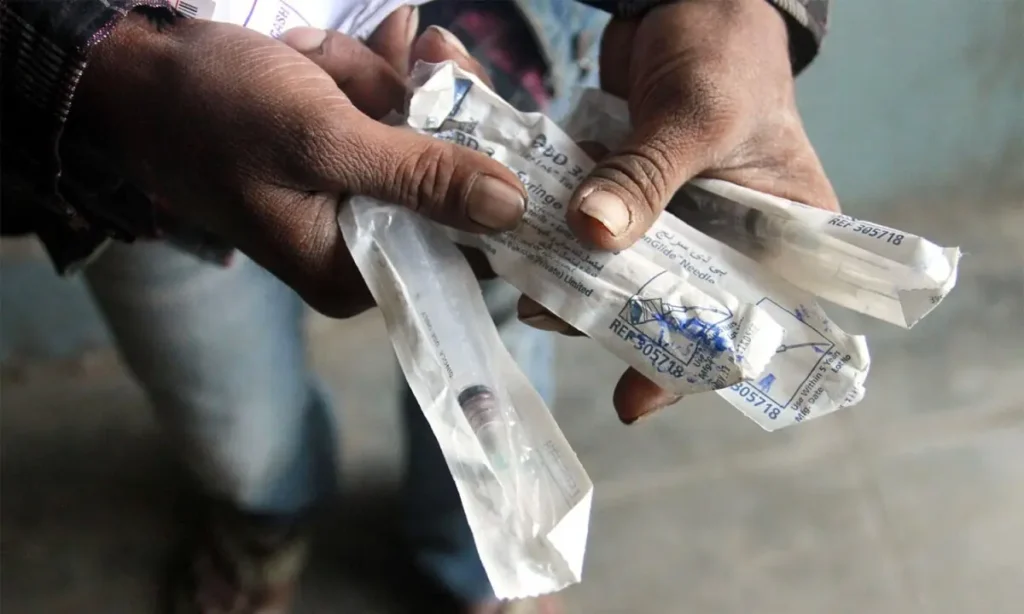
“The footage shows nurses injecting patients through their clothes, handing over dirty syringes for re-use, and unqualified volunteers injecting child after child from a blood-contaminated vial of liquid medicine.”
The undercover filming also captured “wider problems: staff handling medical waste with bare hands, syringes and needles left exposed, and unqualified volunteers — who were officially banned from the children’s ward — operating without supervision”.
Staff shortages and supply problems appeared to be contributing to the situation, according to the BBC’s findings.
In some cases, families were asked to buy their own medicines, the BBC reported, adding that “under pressure, staff reused equipment or shared medication between patients to make limited supplies last”.
The broadcaster further reported that at least 331 children in Taunsa tested positive for HIV between November 2024 and October 2025.
“Of their parents who also agreed to be tested, fewer than one in 20 were HIV-positive. Infections continued even after the government intervention in March 2025”.
The BBC also spoke to Dr Altaf Ahmed, a consultant microbiologist and an expert on infectious diseases, who reviewed the broadcaster’s undercover footage and “confirmed that the malpractice recorded at THQ carries a high risk of infecting children with blood-borne diseases, including HIV”.
“The chances [of infection] are very high,” he said, “because the vial is contaminated.”
It also showed the undercover footage to the new medical superintendent of the hospital, Dr Qasim Buzdar.
“Dr Buzdar said the video must have been recorded before his tenure. When informed that the malpractice took place on his watch, Dr Buzdar claimed it might have been staged,” BBC reported.
“Infection prevention controls are followed at THQ Taunsa,” he was quoted as saying.
The report also had a statement by the local government that said “no validated epidemiological evidence” had “conclusively established THQ as a source” of the outbreak.
The previous Medical Superintendent of the hospital, Dr Tayyab Chandio, also denied responsibility, the BBC reported.
“The team discovered that just weeks after he was suspended from THQ in March 2025, Chandio was re-appointed to another government clinic in Punjab, where he continues to treat children.
“The local government told that ‘no inquiry outcome has legally barred’ Dr Chandio from practice. Dr Chandio said THQ hospital was not the cause of the outbreak,” the broadcaster said.
According to the BBC’s findings, HIV infections among children in Taunsa are still being detected. “Nineteen new cases have been identified in the past four months. To date, nine of Taunsa’s children have died after contracting the disease,” the broadcaster reported.
Punjab govt’s rebuttal
In a rebuttal to the BBC’s investigation, the Punjab health department referred to a report by an international media outlet, without naming it.
The health department said all cases mentioned in the report were reported in December 2024 or in 2025, for which action had already been taken.
It further claimed that the media outlet had been provided with details of the “comprehensive measures” taken by the health department after the outbreak, claiming that it had not been included in the report.
“This goes against the principles of responsible journalism,” the statement said.
It added that following the diagnosis of AIDS in 11 patients from Taunsa at the Teaching Hospital in Dera Ghazi Khan in March 2025, the health department constituted a Joint Mission in that same month.
The mission included the Joint United Nations Programme on HIV and AIDS (UNAIDS), United Nations Children’s Fund (Unicef), World Health Organisation (WHO) and Common Management Unit (CMU).
“A door-to-door screening of a population [of] 50,000 was conducted, which continued till August 2025,” the statement said, adding that “34 AIDS cases were identified in seven union councils. Of these, 331 patients were reported to be under the age of 12”.
In March 2025, it said, a centre for HIV screening and treatment was established at the THQ hospital. A total of 5,000 individuals had been screened at the centre so far, and screening and treatment services were being provided there daily, the statement said.
It added that according to the joint mission, the cases could be a result of “unscreened use of blood or repeated use of syringes” at unregistered clinics or facilities run by quacks.
The health department said auto-disable syringes had been provided to all government hospitals.
“These syringes cannot be used more than once.”
It said 82 cases were identified in April 2025 and 95 in August that year as a result of screening, and after necessary measures were taken, the case tally was recorded at four in December 2025.
The statement said the health department, along with the Healthcare Commission, had sealed 240 clinics run by quacks, and nine first information reports had been registered.