Ashrafi says some of his statements have been presented ‘out of context’, including on Osama Bin Laden, blasphemy
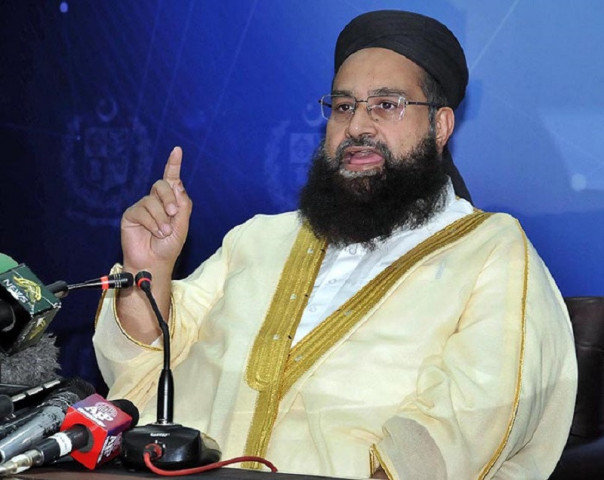
Special Assistant to Prime Minister on Interfaith Harmony Maulana Tahir Ashrafi addressing a press conference. PHOTO: APP
LAHORE:
Lambeth Palace, the London residence and office of the Archbishop of Canterbury, has withdrawn the Hubert Walter Award for Reconciliation and Interfaith Cooperation 2026, days after presenting it to Pakistan Ulema Council Chairman Hafiz Muhammad Tahir Mahmood Ashrafi, citing previous comments over Osama bin Laden.
Ashrafi was presented with the award on the 25th anniversary of 9/11 at a ceremony held at Lambeth Palace in London in recognition of his services to interfaith reconciliation and cooperation.
Read: Tahir Ashrafi receives Hubert Walter Award for reconciliation, interfaith cooperation in London
The comment that led to the withdrawal dated back to 2007, when Ashrafi said he would confer the title “Saifullah”, meaning “Sword of God”, on then-Al Qaeda chief Osama bin Laden — the orchestrator of the Sept 11 attacks — in protest against Britain awarding a knighthood to writer Salman Rushdie, whose book he described as blasphemous.
In a video statement posted on X regarding the withdrawal, Ashrafi said some of his statements had been presented “out of context” and that the decision to withdraw the award was based on them. He alleged that an “Indian and Ahmadi lobby” had played a role in the decision.
حافظ محمد طاہر محمود اشرفی نے کہا: “ہم ناموسِ رسالت ﷺ، عقیدۂ ختمِ نبوت اور اپنی اسلامی اقدار پر قائم تھے، قائم ہیں اور قائم رہیں گے؛ اور اسی مضبوطی کے ساتھ امن، مکالمے، بین المذاہب ہم آہنگی اور ہر انسان کے جائز حقوق کے لیے اپنی جدوجہد بھی جاری رکھیں گے۔ ایوارڈ ہونا یا نا ہونا… pic.twitter.com/TUfgq4tz8r
— TahirMahmoodAshrafi حافظ محمد طاهراشرفى (@TahirAshrafi) September 17, 2026
He said the Office of the Archbishop of Canterbury had sought clarification from him before withdrawing the award over several matters, including Pakistan’s blasphemy law, Salman Rushdie, Osama bin Laden and his wife’s hijab.
Ashrafi said he had clarified that he supported retaining the blasphemy law but opposed its misuse.
Explaining an earlier statement about Osama bin Laden, he said he was opposed to the use of religion for terrorism and had cited “Saifullah” as an example at the time.
Regarding his previous remarks about Salman Rushdie, Ashrafi said he could not retract the statement and would not withdraw from his views.
Read More: Religious leadership must play active role in ending wars, global peace: Ashrafi
A statement issued by Lambeth Palace on Sept 17 said interfaith dialogue and cooperation required engagement “across deeply-held differences”.
“It is a longstanding principle of interfaith dialogue and co-operation that we must engage with one another across deeply-held differences, and that remains the case,” it said.
“However, previous comments made by Imam Ashrafi have come to light that have led Lambeth Palace to reconsider this award, and we can now confirm today that the award has been withdrawn.”
Church of Pakistan honours Ashrafi
Earlier, the Church of Pakistan honoured Ashrafi last Friday with a Global Peace Award for his services to peace, interfaith harmony and religious tolerance.
President of the Church of Pakistan Bishop Azad Marshall presented the award to Ashrafi at a ceremony in Lahore.
According to the Church of Pakistan, the award recognised his services in promoting peace, religious harmony, dialogue among followers of different faiths and protection of the rights of non-Muslim citizens.
Church of Pakistan honours Hafiz Muhammad Tahir Mehmood Ashrafi with Global Peace Award https://t.co/1RPXQeHCdT
— TahirMahmoodAshrafi حافظ محمد طاهراشرفى (@TahirAshrafi) September 18, 2026
Bishop Marshall said Ashrafi had continued to play a role in promoting dialogue and harmony among followers of different religions in Pakistan. He also appreciated his efforts for interfaith peace and harmony at national and international levels.
After receiving the award, Ashrafi thanked the Church of Pakistan and Bishop Marshall.
He said that under Bishop Marshall’s leadership, the Church of Pakistan was working with leaders of different religions and Muslim schools of thought for peace, national security and stability in Pakistan.
Ashrafi said joint efforts by Muslim and non-Muslim religious leaders through the National Paigham-e-Peace Committee would further strengthen peace, interfaith and sectarian harmony and national unity in Pakistan.
He also expressed his resolve to continue working for peace, religious harmony and the protection of the legitimate rights of all Pakistanis.