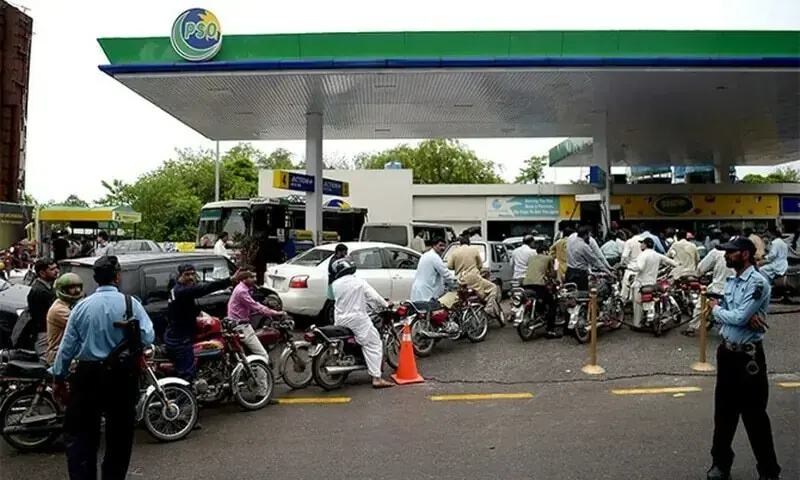
The federal government has increased the commission paid to petroleum dealers by Rs1.34 per litre after accepting one of their longstanding demands.
At first glance, the increase in dealers’ margin appears modest. However, when applied to the billions of litres of petrol and diesel consumed every year, its effect extends well beyond petrol pumps.
For consumers already grappling with the highest fuel prices since March 2026 due to the war in the Middle East, the decision raises an important question: who ultimately bears the cost of higher dealer margins?
The increase was announced on the public holiday of August 14, soon after petroleum dealers threatened a countrywide strike. The timing has drawn attention because the government had already addressed one of the dealers’ major concerns by reducing the dealers’ discount rate on debit card transactions by about 70 per cent, lowering their operating costs.
The latest decision reflects not only a response to industry demands but also a policy choice with lasting implications for fuel pricing and household budgets. The government, however, did not accept the dealers’ principal demand for shifting from daily to monthly or quarterly fuel price adjustments.
Instead, it agreed to increase the dealers’ margin, a cost that will be passed directly on to consumers through the retail prices of petrol and diesel. The decision helped avert a nationwide strike but shifted the financial burden to motorists and households already facing rising living costs.
The government’s approach has also drawn comparisons with its handling of other transport-related disputes. Goods transporters have remained on strike for the past eight days, yet their demands have not been accepted. In contrast, the government moved quickly to address one of the petroleum dealers’ longstanding demands to avert a nationwide shutdown of fuel stations.
The two strikes involve different issues. The increase in dealers’ margin has a direct financial impact on consumers because it is built into the retail price of fuel. At the same time, it is believed that influential business and political figures are among the owners of petrol pumps, meaning an increase in dealers’ margins could benefit a broad group of investors as well as ordinary pump owners.
To understand why the increase matters, consumers need to know how the retail price of petrol and diesel is determined. Every litre sold includes several fixed charges and levies, including the oil marketing companies’ margin, dealers’ margin, inland freight equalisation margin (IFEM), climate support levy, petroleum levy and customs duty.
The Aug 14 pricing structure showed that, excluding customs duty, the retail price of petrol already includes Rs108.99 per litre in fixed charges, including the petroleum levy, climate support levy, oil marketing companies’ (OMCs) margin and dealers’ margin. For high-speed diesel, these charges amount to Rs104.42 per litre. Consumers pay these charges regardless of fluctuations in international oil prices.
With the latest increase, the dealers’ margin has become one of the largest fixed components of the retail price. Unlike taxes and levies, which may change with government policy or international oil prices, the dealers’ margin remains a fixed payment on every litre sold. As a result, consumers continue to pay it regardless of whether fuel prices rise or fall.
Based on Pakistan’s average monthly petrol consumption of about 660,000 tonnes, or 926.64 million litres, the Rs1.34-per-litre increase will cost consumers an additional Rs1.24 billion every month, or nearly Rs15 billion a year, assuming consumption remains unchanged.
Similarly, Pakistan’s average monthly diesel consumption of around 600,000 tonnes, or 714 million litres, means consumers will pay an additional Rs957 million every month, or nearly Rs11.5 billion annually.
Combined, consumers will bear an additional burden of about Rs2.2 billion every month, or more than Rs26 billion a year, assuming fuel consumption remains at current levels. The additional cost will be embedded in fuel prices and ultimately borne by motorists, businesses and households.
Dealers’ margin
A dealer’s margin is the commission paid to petrol pump owners for selling fuel. It is built into the retail price of petrol and diesel, meaning consumers pay it with every litre purchased. The latest increase of Rs1.34 per litre, taking the margin to Rs9.98 from Rs8.64, was one of the key demands of the Pakistan Petroleum Dealers Association (PPDA), which had been pursuing the issue for the past three years.
Newly elected PPDA Chairman Malik Khuda Buksh said resolving the pending increase in the dealer margin was his top priority after assuming office 14 days ago.
“This Rs1.34-per-litre increase in our margin is a three-year-old demand,” Buksh told Dawn, adding that his association had succeeded in securing most of its immediate demands.
Besides the increase in the margin, the association sought changes to charges on digital transactions. Buksh said the government had agreed to replace the dealers’ discount rate of 0.8pc of the transaction value on debit card payments with a fixed charge of Re1 per litre, a move he described as providing dealers with nearly 70pc relief. He said the association would now press the government to eliminate the charge altogether.
The government did not, however, accept the dealers’ demand to replace the daily fuel price adjustment mechanism with monthly or quarterly revisions. Even so, the strike threat strengthened the association’s position in discussions on petroleum pricing.
“One of our demands is to be recognised as a stakeholder in any future policy change,” Buksh said.
The PPDA chairman also said the association had persuaded the government to abandon its earlier plan of linking higher dealer margins with mandatory digitisation of petrol pumps.
“We have successfully de-linked this demand of the government,” he claimed.
Despite securing the increase, Buksh said the PPDA would continue to pursue its principal demand of linking the dealers’ margin to the retail price of fuel by fixing it at 8pc of the selling price instead of the current fixed amount per litre. If accepted, dealer earnings would automatically increase whenever petrol and diesel prices rise.
Higher transport costs
Higher fuel prices inevitably increase transport costs. Freight operators, public transport providers and businesses generally pass the additional expense on to consumers.
As a result, prices of vegetables, milk, groceries, medicines and manufactured goods are likely to rise, while public transport fares may also increase.
Although the increase in dealers’ margin appears small on a per litre basis, its effect spreads across the economy because fuel is an essential input for the movement of goods and people.