
ISLAMABAD:
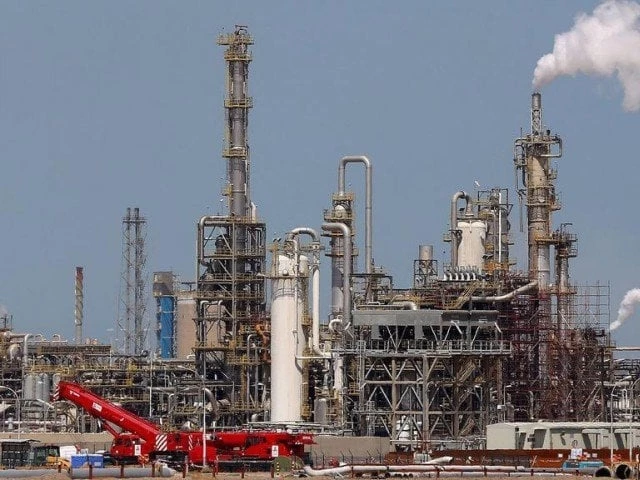
The government has become active again amid the US-Iran conflict, taking measures to implement the new oil refinery policy to make the country self-sufficient in oil supplies.
The Special Investment Facilitation Council (SIFC) is pushing the relevant ministries to resolve the General Sales Tax (GST) waiver issue. Owing to the GST concession, refineries and oil companies have faced losses of billions of rupees.
In a recent high-level meeting, the implementation of refinery policy was taken up again as it had been pending for the last two years, sources said.
The refining industry argues that it has long operated in the shadows of controversy, much of it is manufactured, some of it misunderstood and nearly all of it shaped by competing economic interests.
“In recent years, a narrative has emerged that paints local refineries as inefficient relics, resistant to modernisation and overly dependent on state protection. Yet, beneath this surface lies a more complex story, one of structural neglect, policy inconsistency and an entrenched import lobby that has quietly shaped the discourse,” it said.
“This lobby, driven by commercial incentives tied to the import of refined petroleum products, finds little alignment with the growth of domestic refining capacity. The result has been a subtle but sustained undermining of local refineries through policy inertia,” said the industry.
Against this backdrop, the policy direction has taken a contrasting turn. On Thursday evening, the government announced an increase in diesel prices by adding Rs28 per litre through the petroleum levy. Among the industry, it raised fresh questions about the sustainability and intent of pricing decisions. “While consumers initially benefited from reduced prices, the growing reliance on the petroleum levy suggests that fiscal considerations may be overtaking structural reform,” it said.
The outcome of recent decisions has left several refineries, particularly those in the southern region such as Pakistan Refinery, Cnergyico and National Refinery, operating on thin margins, with cumulative losses of approximately Rs50 billion over the past five years.
The refining sector emphasised that the situation has since evolved into a form of indirect subsidy. “To maintain lower diesel prices earlier, the government effectively reduced refinery margins to near break-even levels. In April alone, the refining sector absorbed an estimated Rs35 billion in costs to support consumer pricing, a figure that underscores both its capacity and its vulnerability. Now, with the levy being increased, the burden appears to be shifting yet again, this time directly onto consumers.”
It mentioned that successive governments had recognised that a robust domestic refining base was critical for energy security, balance of payments stability and industrial growth. “Yet, despite this recognition, implementation has lagged.”
A case in point is the long-delayed refinery policy, which remained in limbo for nearly seven years. “Had this policy been executed in a timely manner, enabling refineries to upgrade to Euro-V standards and expand capacity, Pakistan today could have transitioned into a net exporter of refined petroleum products, earning billions of dollars annually,” said the industry.
Instead, the country remains heavily reliant on imports, exposing itself to global price shocks and currency pressures. The opportunity cost of this delay is not merely financial; it is strategic.
“Refineries are not merely industrial units; they are strategic assets. Their viability determines the country’s ability to manage supply disruptions, control pricing volatility and reduce dependence on imports. Undermining them, whether through policy neglect or narrative manipulation, risks deepening Pakistan’s reliance on external markets at a time when global energy dynamics are increasingly unpredictable,” it argued.