Financial breathing space is valuable, but is no substitute for institutional reform
ISLAMABAD:
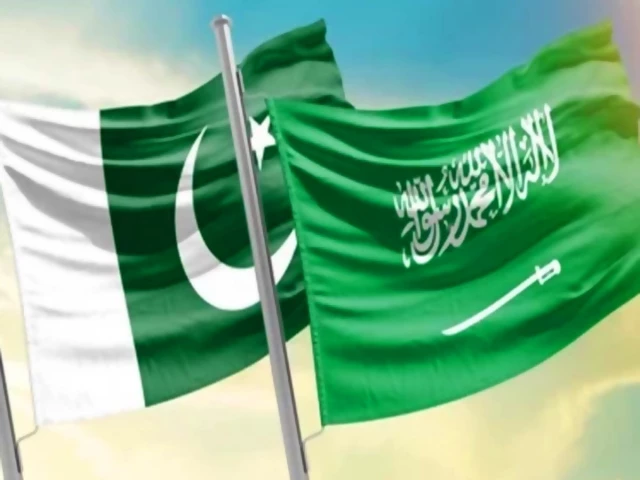
Saudi Arabia’s decision to increase its financial support to Pakistan by replacing the deposits withdrawn by the United Arab Emirates (UAE) under the ongoing International Monetary Fund (IMF) programme deserves sincere appreciation. At a time when geopolitical uncertainty has intensified across the Middle East and global financial markets remain volatile, Riyadh has once again reposed its confidence in Pakistan. Such support reflects the depth of bilateral relations and reinforces Saudi Arabia’s role as one of Pakistan’s most dependable strategic partners.
Gratitude, however, should not prevent us from asking uncomfortable but necessary questions. Does another rollover signify that Pakistan’s external sector has become stronger, or does it merely postpone the next balance-of-payments crisis? Temporary liquidity should never be confused with sustainable solvency. Financial breathing space is valuable, but it is no substitute for institutional reform.
Under a 37-month Extended Fund Facility (EFF) of $7 billion, approved on September 25, 2024, the IMF asked Pakistan to secure assurances from Saudi Arabia, China and the UAE that they would maintain approximately $12.5 billion in deposits with the State Bank of Pakistan (SBP) until the programme expires.
When the UAE decided not to continue its previous arrangement, Saudi Arabia stepped forward and increased its exposure to $8 billion. The IMF programme remained intact, and Pakistan avoided an immediate shock to its external account.
Official announcements naturally focus on the level of foreign exchange reserves. The SBP currently reports gross official reserves exceeding $17 billion, while total liquid foreign reserves, including commercial banks, exceed $22 billion. These figures create an impression of increasing financial strength. However, the more fundamental question is: how much of these reserves actually belong to Pakistan?
This distinction rarely receives attention in official statements. Deposits placed by Saudi Arabia, China and other friendly countries remain liabilities. They are not Pakistan’s permanent assets. Likewise, foreign currency deposits maintained by individuals and businesses in Pakistan’s banking system are obligations of the banking system. These funds belong to depositors and must remain available whenever withdrawals are demanded. They cannot honestly be treated as the government’s own disposable wealth.
Once these liabilities are separated from the headline reserve figure, the picture changes dramatically. The approximately $12.5 billion in bilateral official deposits alone represent a substantial proportion of Pakistan’s gross reserves. If one further considers reserve-related liabilities and foreign currency obligations, Pakistan’s net international reserve position becomes far less reassuring.
Indeed, the IMF itself measures programme performance not through gross reserves but through the Net International Reserves (NIR) – defined as usable reserve assets after deducting reserve-related liabilities. Under Pakistan’s IMF programme, the NIR benchmark has remained negative, even while improving against programme targets.
This distinction between gross reserves and usable reserves lies at the heart of Pakistan’s external account autonomy. Governments often celebrate gross numbers because they appear politically attractive. Markets, however, assess the balance sheet rather than the headlines. Credit-rating agencies examine liabilities alongside assets. Investors evaluate net positions rather than accounting presentations. Sustainable economic strength depends upon assets that are genuinely owned, not those temporarily parked by friendly governments or financed through additional borrowing.
Pakistan’s external financing strategy has unfortunately become predictable. When reserves decline, the country approaches the IMF. The IMF requires assurances from friendly countries. Saudi Arabia, China or other strategic partners extend deposits or refinance existing obligations. International markets regain confidence. Immediate default risks diminish. Structural reforms are postponed until another crisis emerges. The cycle then repeats itself.
This recurring dependence should not be viewed merely as a consequence of temporary fiscal stress or adverse international conditions. It reflects much deeper institutional weaknesses. Pakistan continues to operate under a tax system that overburdens documented businesses while allowing substantial segments of wealth and economic activity to remain outside effective taxation.
Fiscal federalism envisaged by the Constitution has steadily weakened. Provincial revenue mobilisation remains inadequate. Multiple tax authorities create uncertainty rather than compliance. Short-term revenue extraction has repeatedly displaced long-term economic growth.
Our policymakers continue to measure success by increasing tax collection without asking whether productive investment, exports, industrial competitiveness and employment are simultaneously expanding. A country cannot indefinitely tax its productive sectors into stagnation while expecting sustainable external stability. Foreign exchange reserves ultimately grow through production, exports, investment and confidence – not through repeated emergency financing.
Saudi Arabia’s expanding partnership with Pakistan provides an opportunity to move beyond this crisis-management model. The proposed long-term concessional oil financing facility, investments in energy, mining, logistics, refineries and strategic infrastructure have the potential to generate productive capacity rather than merely strengthen reserve statistics. Such investments create employment, expand exports, transfer technology and generate durable foreign exchange earnings. Deposits merely buy time.
Pakistan should redefine its engagement with friendly countries. Strategic partners should become long-term development partners instead of recurring lenders of last resort. The objective should be to eliminate the need for repeated rollovers rather than celebrate each new extension as an economic achievement.
Saudi Arabia has once again demonstrated confidence in Pakistan when others exercised greater caution. That confidence deserves acknowledgement and gratitude. The greater responsibility, however, rests upon Pakistan itself.
Economic sovereignty cannot be borrowed, refinanced or rolled over indefinitely. It must be earned through constitutional governance, genuine fiscal federalism, predictable economic policies, productive investment and institutions capable of generating prosperity from within.
Friendly nations can provide valuable support during difficult times, but no country can permanently outsource the foundations of its economic independence.
The writer is the Advocate Supreme Court, Adjunct Faculty at Lahore University of Management Sciences, member Advisory Board and Visiting Senior Fellow of PIDE