Early gains fade over high oil prices amid renewed uncertainty over Strait of Hormuz
KARACHI:
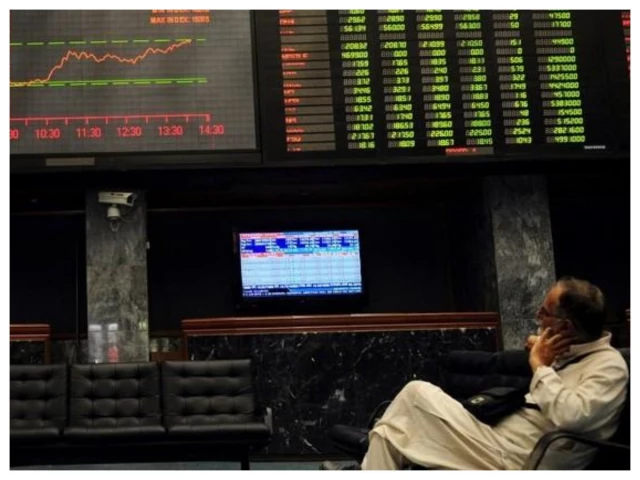
The Pakistan Stock Exchange (PSX) slipped into negative territory by midday on Tuesday as early buying in automobiles, cement, commercial banks, fertiliser, oil and gas exploration companies and oil marketing companies failed to sustain the benchmark’s opening gains.
The KSE-100 Index had risen 324.35 points, or 0.19%, to 170,749.97 by 9:38am, but later reversed course as investors turned cautious. The index was hovering around 170,363.09, down 62.53 points, or 0.04%, in the latest market snapshot, with an intraday high of 170,944.34 and a low of 170,319.05.
Trading volume stood at 73.34 million shares, while turnover was recorded at around Rs4.49 billion against the previous close of 170,425.62.
The reversal came as global markets remained sensitive to developments in the US-Iran conflict and uncertainty over a possible diplomatic breakthrough.
US and Iranian officials are pursuing separate talks through mediators, with Qatar seeking a deal to end the conflict and reopen the Strait of Hormuz, while Washington also seeks commitments on Iran’s nuclear programme.
Read: PSX wobbles as Hormuz uncertainty persists
Meanwhile, oil prices rose for a second straight session on Tuesday as concerns over disruption to Middle Eastern supplies outweighed signs of recovering regional exports.
The higher oil prices remain an important concern for Pakistan because prolonged energy-market pressure can add to import costs and external-sector pressures, keeping investors cautious ahead of developments on the domestic economic front.
At the same time, formal talks between Pakistan and the visiting International Monetary Fund (IMF) mission have begun for the fourth review under the $7 billion Extended Fund Facility and the third review under the Resilience and Sustainability Facility. The mission has held discussions with officials from the finance ministry, FBR and other departments.
The IMF discussions are taking place against a backdrop of pressure on Pakistan’s fiscal and external accounts from the regional conflict and higher energy costs, keeping the review a key domestic market focus alongside developments in global oil prices and the US-Iran situation.