Selling preasure sweeps across oil marketing companies, automobile assemblers while oil prices slip in Asian trading
KARACHI:
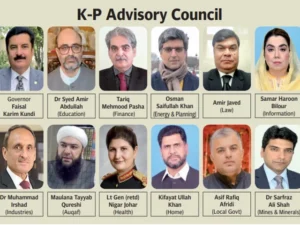
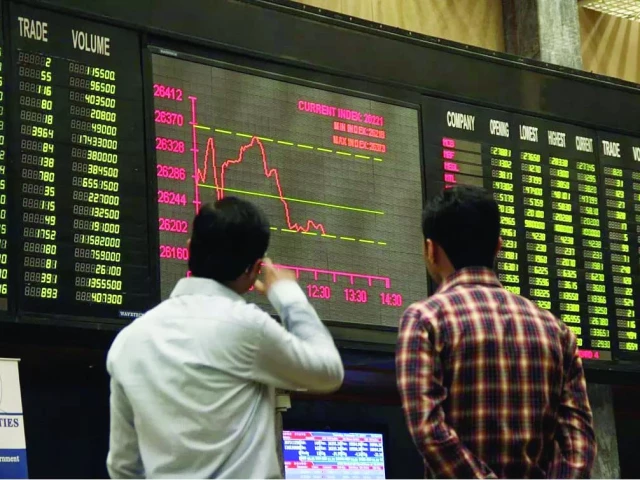
The Pakistan Stock Exchange (PSX) came under pressure on Monday as political turmoil in Khyber-Pakhtunkhwa (K-P), following the imposition of governor’s rule and reports of a police crackdown, stirred fresh alarm among investors at the start of the trading week. The benchmark KSE-100 Index dropped 752.13 points or 0.45% to 166,337.14 by midday as the developments fuelled fears of an escalation in the country’s political landscape, keeping market sentiment fragile.
The index had shed 305.64 points, or 0.18%, to 166,783.63 by 9:43am. It touched an intraday high of 166,988.32 and a low of 166,002.23 while trading volume stood at 54.39 million shares and traded value reached Rs3.87 billion.
Selling pressure swept across oil marketing companies, automobile assemblers, cement, power, commercial banks and oil and gas exploration companies.
Meanwhile, oil prices slipped in Asian trading on expectations of increased Russian supplies after United States President Donald Trump said Ukraine and Russia had agreed to halt attacks on each other’s energy facilities following a US diesel-supply deal with Moscow. However, hopes of easing supply concerns offered little comfort, as a Houthi attack on Riyadh’s international airport stoked fears of a wider regional conflict.
Read: No straight path for markets
“The market was down 1,065 points, extending its weakness amid geopolitical uncertainty and heightened tensions in K-P, where emergency rule had been imposed in some areas,” Fawad Basir, head of research at KTrade, told The Express Tribune.
While June 2026 corporate results in the listed space were better than expected, elevated commodity prices continued to keep inflation high despite the base effect, potentially influencing the monetary policy decision later this month, he said.
Basir added that the general consensus following the last Monetary Policy Committee (MPC) meeting was that if the policy rate remained unchanged, a 100-basis-point increase could follow at the next meeting.
He stated that the International Monetary Fund (IMF) staff mission’s visit last week for the tranche review had brought exchange rate parity and interest rates into focus, as both remained critical to navigating the ongoing Middle East crisis.