
K-P policy, laws and management plans must be revised to value non-timber benefits
ISLAMABAD:
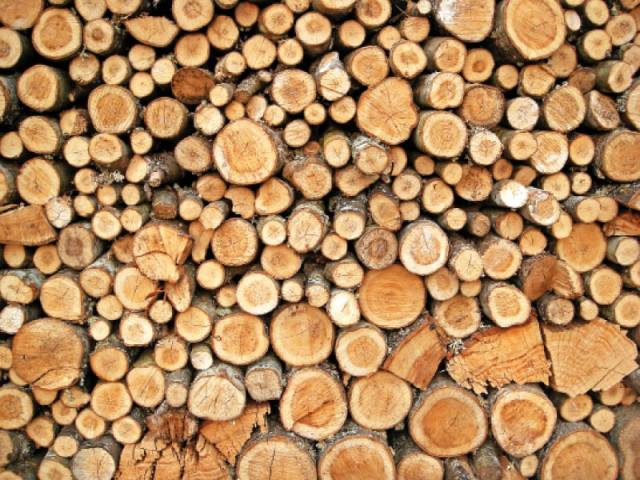
With a view to compensating private forest owners, a comprehensive strategy has to be devised and implemented. The existing forest policies, laws, management plans and strategies are based on timber harvesting, and foresters are trained in how to grow forests and then harvest them to generate revenue for the public sector as well as for the forest owners, although after the ban on forest harvesting in 1992, the forest department of Khyber-Pakhtunkhwa (K-P) could not figure out ways and means to devise and implement forest policy and plans based on non-timber forest benefits during the past over 40 years.
The ban on forest harvesting led to more damage to forests, not only because of increased illicit cutting of forests but also because of deprivation of forest owners and lack of income generation opportunities for the mountain-dwelling communities at large. The new forest policy and strategy must be based on financial compensation for preserving trees rather than harvesting them for timber.
As standing trees provide more annual value in various environmental services, the forest department shall focus its policy and plans to help society internalise these costs to incentivise conservation under a market mechanism.
As a first step, the new forest policy for K-P must revise the forest management plan code to include all the current-day forestry goods and services as benefits of forest to the respective ecosystem and society. Forest laws must also be revised based on the revised forest policy. The curricula for fresh forestry graduates must also be revised at the Pakistan Forest Institute (PFI) to train graduates in the new and emerging areas. Similarly, the forest guard and foresters’ courses at the training school at Thai Abbottabad must also be revised and aligned to the evolving forestry role.
The K-P’s forest policy shift from pure timber extraction should focus on sustainable ecosystem management, climate resilience and local livelihoods through the valuation of diverse forest goods and services. The ecosystem services shall be based on non-timber forest benefits such as oxygen generation, carbon sequestration, watershed protection and wildlife habitat; promotion of Non-Timber Forest Products (NTFPs) and sustainable harvesting of medicinal herbs, wild honey and resins to support rural incomes; and introduction of eco-tourism, wildlife sports and safari, and guided tracking in the wild.
Participatory forest management involving local and indigenous communities in shared governance and co-management aimed at community awareness, empowerment and organisation in support of the new forest policy shall be ensured. Training and capacity building for new foresters and the existing staff using the new and emerging forestry dynamics has to be included in the training manuals and curricula. Means of implementation of the new policy, particularly financial resources, has to be included and clearly spelled out.
Revised forest management plans (FMPs) shall focus away from single-yield timber extraction to multi-functional ecosystems and must assess the value of various forestry goods and services for various forest types and ranges. The modern and sustainable forest management frameworks in fact balance traditional wood commodities with vital non-timber goods, climate mitigation and regulatory environmental services.
The revised FMPs shall focus on ecosystem services and climate integration, including carbon accounting, biodiversity valuation and credits, and mainstream carbon sequestration measurements and climate risk reduction directly into harvesting schedules; watershed protection through management of riparian zones, strict soil and watershed management to preserve water quality and hydrological balance; biodiversity preservation and prioritisation of high conservation value forests (HCVFs) through targeted in-situ protection; support sustainable collection of medicinal plants, resins and fodder for local communities; engage indigenous and rural stakeholders through co-management models; and broaden economic valuation beyond direct public timber sales to include eco-tourism and green jobs.
Also, they should use Geographic Information Systems (GIS) and remote sensing for real-time inventory tracking along with drone-based surveillance and access to remote forest areas; and ensure periodic plan revisions based on innovative and dynamic ways of ground-level monitoring rather than rigid, outdated extraction quotas.
The core of the revised FMPs code would be payment for forestry services by the beneficiaries. Listing of all the beneficiary communities upstream and downstream of the forestry ecosystem shall be made for selling quantified services of the forests that the K-P forest department manages. A mechanism to collect such revenue shall be devised, either by establishing an authority through legislation or a board of directors and endowment fund to manage the resources for its distribution among landowners and other communities as compensation for raising and maintaining forestry resources. This is how sustainable forest management can be ensured while keeping trees standing and harvesting their benefits in line with social, economic and environmental goods and services.
THE WRITER HAS A PHD IN FORESTRY AND HAS SERVED PROVINCIAL, NATIONAL AND INTERNATIONAL AGENCIES RELATED TO FORESTRY, CLIMATE CHANGE AND ENVIRONMENT