
• CPI rises nearly 11pc year-on-year in April
• Transport costs, perishable food prices jump by over 15pc
ISLAMABAD: Consumer inflation returned to double digits for the first time in 21 months, with prices rising by nearly 11 per cent year-on-year in April, driven by sharp increases in transport costs and essential food items, official data showed.
The last time inflation was above 10pc was in July 2024, when the Consumer Price Index (CPI) was recorded at 11.1pc.
For consumers, the April spike reflects a growing squeeze on daily expenses, as higher fuel and transport charges, along with rising prices of perishable food items, continue to erode purchasing power, even as some relief in wheat and flour prices offers only limited respite.
The continued increase in monthly inflation, measured by the CPI basket containing several goods and services, has pushed it beyond the earlier comfort range as domestic energy tariffs registered a sharp rise in April.
Energy prices rose sharply during the month due to the continued blockage of the Strait of Hormuz, through which most of Pakistan’s energy imports are routed. Prime Minister Shehbaz Sharif has already stated that the weekly oil import bill has jumped to $800 million from $300m before the US-Israel war began on Feb 28.
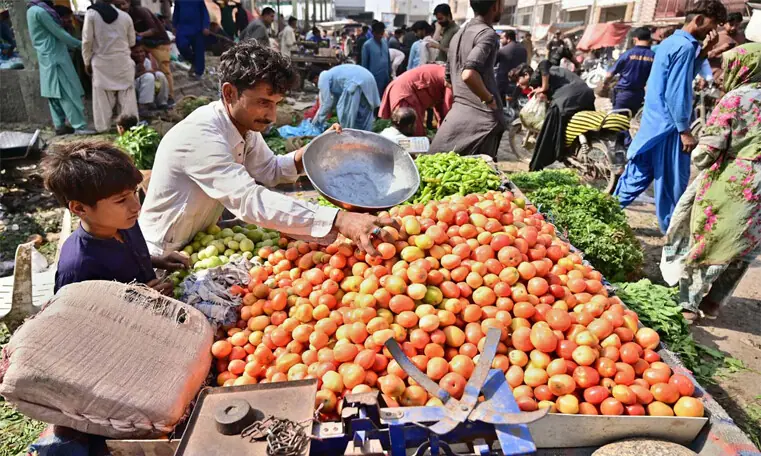
The increase in prices during April was largely driven by a steep rise in transport, which surged by 15.47pc over the previous month at the national level. Perishable food items also recorded a sharp increase of 15.25pc, highlighting volatility in essential commodities. Housing, water, electricity, gas and fuels registered a 2.43pc increase, adding further pressure on household budgets.
The State Bank of Pakistan (SBP) increased its policy rate to 11.50pc from 10.50pc in response to rising inflation. The central bank had kept the policy rate at 10.5pc unchanged, effective from Dec 16, 2025.
Former economic advisor Dr Ashfaq H. Khan has criticised the central bank’s decision to increase the interest rate. He said the United States triggered the global energy crisis through war in the Middle East, followed by Iran blocking the Strait of Hormuz, pushing up energy prices and fuelling global inflation. Despite this, the US Federal Reserve kept its policy rate unchanged, as inflationary pressure stemmed from supply shocks rather than demand.
In contrast, the SBP raised its policy rate by 100 basis points to 11.5pc, even though price pressures were driven by higher oil, gas and commodity prices, he said, questioning whether the move made economic sense.
He said interest rates are a demand-side tool, effective when demand exceeds supply. In a supply-driven inflation environment, tightening policy raises production costs, shifts supply inward and leads to higher prices and lower output, a situation described as stagflation.
Dr Ashfaq termed the rate hike a wrong decision, saying it was taken to meet commitments made to the International Monetary Fund.
On a month-on-month basis, prices increased by 2.48pc in April compared to the previous month, according to data released by the Pakistan Bureau of Statistics on Friday.
The data showed that urban inflation stood slightly higher at 11.11pc compared to 10.56pc in rural areas on an annual basis. On a monthly basis, urban prices increased by 2.75pc, while rural inflation rose by 2.09pc.
Inflation between July and April was recorded at 6.19pc in 2025-26, up from 4.73pc in the corresponding months last year. This higher rate is despite the high base effect from last year.
The government has projected an inflation target of 7pc for the current fiscal year.
Food inflation in April increased by 6.9pc in urban areas and 7.3pc in rural areas. On a month-on-month basis, food prices increased 2.3pc in urban areas and 0.9pc in rural areas. Non-food inflation was 13.8pc in urban areas, and 13.6pc in rural regions. This indicates that non-food inflation has remained very high and steadily on the rise in the past few months.
In April, core inflation — excluding volatile food and energy components — stood at 8pc in urban areas and 8.5pc in rural areas.
Urban food items that saw notable month-on-month price increases included tomatoes (57.10pc), fresh vegetables (40.67pc), eggs (14.38pc), onions (9.23pc), potatoes (4.43pc), beverages (4.07pc), milk products (3.54pc), milk fresh (2.89pc), chicken (2.69pc), meat (2.66pc), bakery and confectionary (2.64pc), pulse mash (2.61pc), readymade food (1.07pc) and rice (0.99pc).
Non-food categories also witnessed significant price hikes, including motor liquified hydrocarbons (38.34pc), transport services (27.86pc), motor fuel (18.22pc), postal services (7.54pc), medical tests (3.06pc), education (3.03pc), construction input items (2.03pc), hosiery (1.66pc), woollen cloth (1.60pc), house rent (1.40pc), major tools and equipment (1.32pc), dupatta (1.04pc) and household equipment (0.93pc).
Published in Dawn, May 2nd, 2026