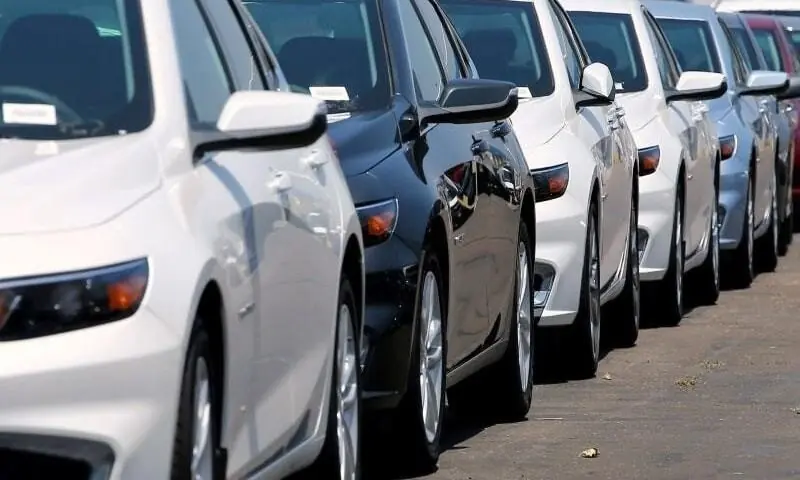
The next automobile policy will test the ability of policymakers to reconcile competing commercial interests while keeping the country’s broader economic, industrial and environmental objectives in view. In more than one way, the new policy will be the most consequential industrial policy document Pakistan has produced in years.
Every major stakeholder is lobbying aggressively for protecting their commercial interests through a policy that was supposed to be announced before the expiry of the previous one on June 30. Legacy assemblers want protection for their existing internal combustion engine (ICE) portfolios. Hybrid and plug-in hybrid manufacturers seek extension of tax incentives that expired with the 2021-26 policy. The electric vehicle (EV) manufacturers want a policy that accelerates adoption of electric mobility in accordance with the government policy that commits to boost EV share in new sales to 30 per cent of the total by 2030, 50pc by 2040 and 100pc of new sales by 2050, with a net-zero transport-fleet ambition by 2060.
Auto parts manufacturers are demanding stronger localisation requirements from new Chinese hybrid and EV brands, and an immediate reversal of the tariff liberalisation introduced in the current year’s budget. Their argument is that reduced protection for the local auto industry — assemblers and parts manufacturers alike — significantly slashes the incentive for localisation, encourages the import of completely built units (CBUs), and drains foreign exchange. It merits serious consideration.
The government must somehow accommodate these conflicting demands without losing sight of the larger objective: building a competitive automobile industry capable of producing 500,000 vehicles annually. This target has appeared in successive auto policies but has never been achieved.
The objective should not be protection for its own sake nor liberalisation for ideological reasons
Pakistan has come close only twice, producing slightly above 300,000 units before macroeconomic instability, exchange rate depreciation, import restrictions and collapsing consumer financing reversed the gains. The recurring failure suggests the problem is structural.
The legacy Japanese assemblers, who dominated the market for decades, are understandably cautious about rapid electrification. Their investments remain concentrated in conventional vehicles, and an accelerated shift towards electric mobility would require substantial capital expenditure while threatening their existing product lines.
Hybrid vehicle assemblers occupy a different position. Having invested in hybrid technology in recent years, they argue that an extension of policy support is essential to protect those investments. The debate surrounding the government’s reported proposal to reduce sales tax on hybrid and plug-in hybrid vehicles reflects this tension.
Supporters argue that hybrids reduce fuel consumption and emissions. Critics question whether scarce fiscal space under Pakistan’s International Monetary Fund programme should subsidise vehicles that largely sell above Rs10 million, benefiting relatively affluent consumers while the broader population continues to bear higher taxation and inflation. The issue for them, therefore, is less about whether hybrids deserve encouragement and more about whether tax incentives should be targeted according to environmental gains, affordability and national priorities.
Chinese EV manufacturers have introduced another, and more critical, dimension to the debate. Their rapid technological advances in battery electric vehicles (BEVs) and range-extended electric vehicles (REEVs) are reshaping global markets. Pakistan is witnessing the same transformation as Chinese brands rapidly expand their presence here, forcing established assemblers to reduce prices, introduce financing schemes and launch newer models.
Most experts agree that Pakistan cannot ignore electrification. The country imports billions of dollars worth of petroleum annually, making transport electrification attractive from both energy security and environmental perspectives.
The vendor industry perhaps faces the greatest uncertainty. Parts manufacturers argue that previous auto policies overwhelmingly favoured vehicle assembly while neglecting localisation and technology development. They fear that reduction in tariffs on CBU imports under the National Tariff Policy could undermine decades of investment in domestic manufacturing.
Billions of rupees have been invested in component manufacturing, employing tens of thousands of workers across Pakistan. If imported vehicles become significantly cheaper without corresponding localisation requirements, many vendors fear their investments could become commercially unviable.
Hence, they want the policymakers to place localisation at the centre of the new policy and expedite its finalisation to end prolonged uncertainty that has delayed fresh investment decisions. Their argument that, while assembly operations expanded over the past decade, vendor development failed to receive comparable policy support, despite accounting for the overwhelming share of employment generated by the industry, deserves serious attention.
Localisation itself cannot remain confined to conventional vehicles. The new energy vehicle — hybrid plug-in hybrids and electric — assemblers will also have to support the part manufacturers in acquiring new capabilities in electronics, advanced wiring systems, battery components, specialised tyres and software-integrated systems.
The policy debate has also become intertwined with tariff reform. Proponents of lower protection believe greater competition will improve quality and reduce prices. Domestic manufacturers counter that premature liberalisation risks de-industrialisation before local firms achieve sufficient scale.
Both arguments contain elements of truth. Pakistan’s automotive sector undoubtedly needs greater competition. Consumers have long paid high prices for limited model choices. But competition that simply replaces domestic production with imports creates little industrial value, limited employment and minimal technology transfer. The objective should therefore not be protection for its own sake nor liberalisation for ideological reasons.
Instead, the policy should reward firms that progressively increase localisation, invest in technology, expand exports and deepen domestic value addition. For policymakers, therefore, the challenge is to tackle reasons obstructing the expansion of the domestic market size, stopping Pakistan from becoming part of the global auto supply chain, and retarding the pace of the journey towards electrification of transport.
They must carefully choose which technologies deserve preferential treatment and for how long. That requires a policy that simultaneously encourages competition, accelerates electric mobility, deepens localisation, develops vendor capabilities and provides a predictable investment framework.
Reconciling those objectives will not be easy, requiring careful calibration of incentives. Ultimately, the success of the new auto policy will be judged by whether Pakistan finally makes faster headway in electrification of transport, achieves scale by breaking through the long-elusive production ceiling of half a million vehicles annually, and creates a globally competitive manufacturing ecosystem.
Published in Dawn, The Business and Finance Weekly, August 10th, 2026