THE brutal slaying of a judge and his guard in Mastung is the latest in a series of blood-drenched events that have rocked Balochistan since the start of this month. Both state functionaries and ordinary citizens have been killed in these acts of terrorism.
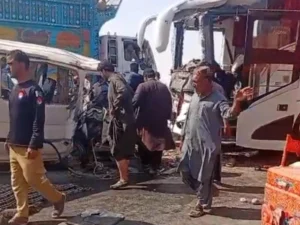
Judge Abdul Hakeem Kakar was travelling from Quetta to Mastung with another judge and security personnel when their vehicle came under attack. The judge and his guard Muhammad Zaman did not survive. Some unverified reports indicate the IS-K claimed responsibility for the assault. IS-K has been active in the province for some years, and if its role is confirmed, it would mean it is expanding its targets. Before the judge’s martyrdom there was the Mangi Dam attack, claimed by the banned TTP, as well as a deadly assault on a Karachi-bound bus in the Khud Kocha area, and the killing of workers originally hailing from Punjab in Mashkhel.
The recent wave of violence indicates the complexity of the threat in Balochistan, where terrorists belonging to different ideological backgrounds have unleashed a reign of terror on ordinary citizens, as well as security personnel and officials. The federal interior minister has indicated there is an alliance between Balochistan-based terrorist groups and the TTP. IS-K’s role in this equation is difficult to determine, as in the past the terrorist group has not enjoyed good relations with the BLA. Have these violent groups decided to bury the hatchet and work together against the state? Better intelligence must break any nexus, while the possible resurgence of other terrorist organisations should alert the state to take preventive action.
After the Mangi Dam attack, the nation’s top civil and military leadership — including the prime minister and chief of defence forces — met in Quetta and, along with the provincial leadership, vowed to end the wave of terrorism. Yet as the events of the past few weeks have shown, the terrorists continue to wreak havoc. A new strategy is required to bring peace to Balochistan.
The CDF on Thursday vowed to restore peace to the troubled province. However, bloodshed in the province has been ongoing — with varying levels of violence — for over two decades, and peace remains elusive. The immediate need is to neutralise terrorist groups of all persuasions so that they are unable to threaten the state or citizens. Hostile foreign actors who may be providing terrorists succour also need to be exposed.
In addition to a kinetic response, a complementary political effort is essential. This needs buy-in from the province’s genuine political representatives and all groups that renounce violence. Together with counterterrorism efforts, Balochistan needs compassion and dialogue to restore trust between the state and its people.
Published in Dawn, July 25th, 2026