Islamabad says any Taliban order to halt TTP attacks must be ‘concrete, visible, verifiable’
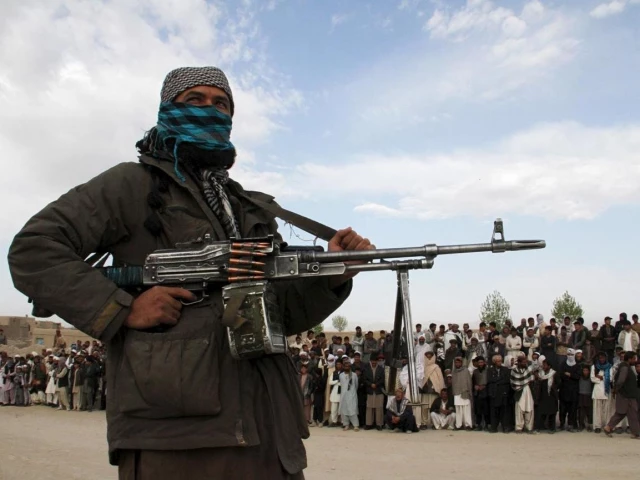
A photo of a TTP member. PHOTO: FILE
ISLAMABAD:
Pakistan has called for a clear and public statement from Afghanistan’s Taliban leadership regarding reported instructions to the banned Tehreek-e-Taliban Pakistan (TTP) to halt attacks, cautioning that media reports cannot be treated as official commitments, sources said.
The response followed a recent report in The Express Tribune suggesting that Taliban Supreme Leader Hibatullah Akhundzada had directed the TTP to stop cross-border attacks against Pakistan.
However, sources stressed that Islamabad cannot base its national security policy on unverified or unofficial accounts.
“Pakistan can welcome any positive signal, but a media story is not a security guarantee,” a source said, adding that any such directive must be stated publicly by senior members of the interim Afghan government, such as the foreign, interior or defence ministers.
According to sources, Pakistan’s position remains that any assurance must be “concrete, visible and verifiable,” rather than conveyed through informal or unattributed channels.
Read: Pakistan, Afghanistan officials meet in Urumqi for China-brokered talks: sources
The sources also questioned the substance of the reported directive, suggesting that any instructions may be limited to relocating TTP fighters away from border regions rather than dismantling the group’s operational capacity. “Relocation is not counter-terrorism,” a source said. “Moving militants from one district to another does not address recruitment, financing, weapons, or command structures.”
Islamabad maintains that meaningful action would require disarmament, arrests, closure of training camps, disruption of logistics networks and a complete halt to cross-border infiltration.
Despite reported warnings to the TTP, Pakistani authorities say there is no evidence of a reduction in militant activity. “As of today, attacks continue, infiltration continues, and facilitation continues,” a source said, adding that Afghan nationals continue to appear in militant networks and that weapons left behind after the withdrawal of foreign forces are still being used in attacks inside Pakistan.
Sources also pointed to a contradiction in Kabul’s stance, noting that Afghan authorities have consistently denied that their territory is being used against Pakistan. “If Afghan soil was never being used, then why was a warning issued to the TTP?” a source asked. “Denial and warning cannot coexist.”
Read More: Pakistan questions UN experts over TTP presence in Afghanistan, cites multiple reports
Sources further recalled past commitments made by the Taliban, including an understanding reportedly reached in the United Arab Emirates, under which assurances were given regarding the TTP’s disarmament, relocation and funding restrictions. These commitments, sources said, were not implemented.
In this context, expecting Pakistan to accept an unattributed report without tangible action would be unrealistic, they added.
They also raised concerns about what they described as a broader “hostile ecosystem,” including anti-Pakistan rhetoric, online disinformation campaigns and alleged operational space for TTP and Baloch militant networks inside Afghanistan.
They also pointed to recent engagements between the Taliban and India, suggesting these developments have added to Islamabad’s concerns.
Also Read: Afghan Taliban decapitation not off the table for Pakistan
While reaffirming that Pakistan seeks stable and cooperative relations with Afghanistan, officials emphasised that the country has no dispute with the Afghan people. “Pakistan has hosted millions of Afghan refugees and shares deep historical, cultural and religious ties with Afghanistan,” a source said. However, it noted that “good neighbourly relations cannot come at the cost of the safety and security of Pakistani citizens.”
According to sources, any improvement in ties would depend on the Taliban leadership taking decisive and verifiable action against militant groups operating from Afghan soil.
Further, sources also underscored that in both Islamic teachings and regional traditions, commitments carry moral and religious weight. “Fulfilment of promises is a fundamental obligation,” a source said, citing the Quranic injunction that “promises will be questioned.”
Until such commitments are publicly articulated and implemented on the ground, Pakistan is unlikely to alter its cautious approach, the sources added.