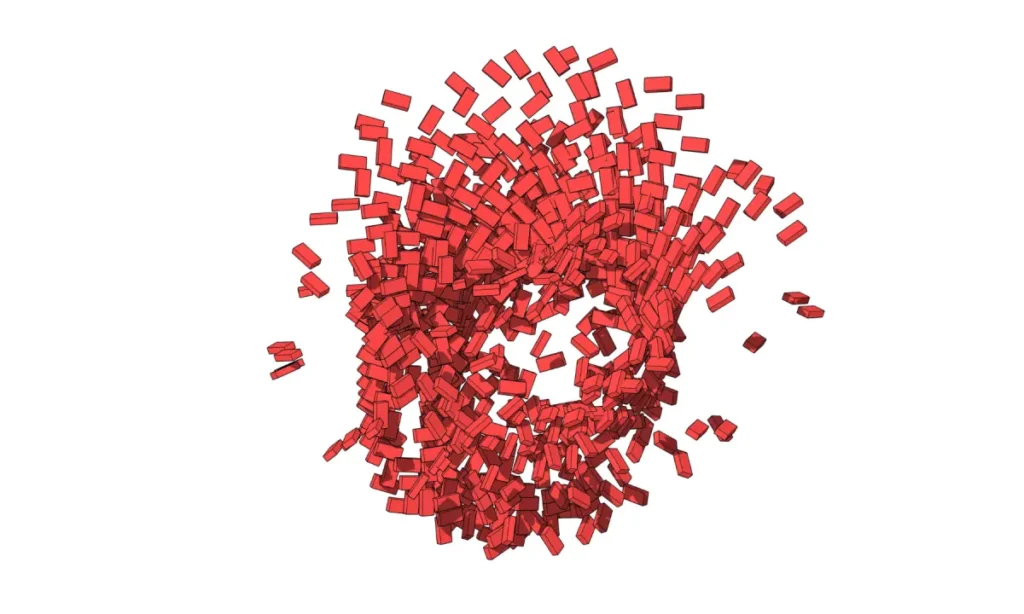
Karachi’s great experiment with new construction materials is testing the limits of water damage to roads.
For at least two decades, Hijri Road has been a nuisance for the people who live in Gulshan Town’s Metroville Colony.
So when UC 6 chairman Nasir Ashfaq managed to get the Karachi Development Authority to fix the inner neighbourhood service lane, they insisted on paver blocks this time. Three years later, sewerage still overflows from time to time, but at least by the time they clean it up there is still a road underneath the muck.
“When we installed pavers, we’ve seen that the lifespan of the road increases,” said the UC chairman. “The problem hasn’t resurfaced.”
Neighbourhood after neighbourhood is switching to the newer technology. End of last year, Mayor Murtaza Wahab even announced a Rs281 million push to redo roads in District Central alone.
“Paver work … is now a preferred option for local union council level leadership because of its sustainability,” Wahab told Dawn.
The success of an experiment at a nasty spot on the well-worn 26th Street persuaded the city government it was making the right choice. And if you take the FTC flyover from Gora Qabristan and exit on to Sharea Faisal, you’ll notice the difference there too.
These two spots would keep ponding no matter how many times the city patched them up. But since these strips were done over in blocks in 2022, there has been a marked difference.
A bigger experiment for an entire underpass at Gulistan-i-Jauhar was undertaken a year later. The decision raised eyebrows at the time, but the mayor defended it as a solution to persistent water damage. But when should pavers ideally be used in Karachi, and is this construction material actually a solution to one of this city’s worst problems: potholes?
Why pavers in the first place?
Pavers became popular when clay bricks fell short as Europe patched itself back together again after WWII.
The Netherlands introduced them in 1951, Brazil has relied on them for entire favelas, and use has doubled in the United States every five years. And according to Farhad Jatoi, the managing director at Magnacrete, pavers have long been tested in far more demanding environments such as ports and steel mills.
Karachi began using them under very different pressures. When a road is not designed or levelled properly, rainwater or sewerage tends to sit on it. This eats away at the top coat of asphalt. Potholes appear in days, even on new roads.
The engineers needed to keep the city’s roads in working condition and could not keep repairing them every time a gutter overflowed. They couldn’t wait for Karachi’s entire drainage to be fixed either.
And so when the Umar Sharif underpass was repeatedly breaking down, they decided to fix it once and for all by patching it with pavers. The same approach was taken for Jehangir Road, which would keep flooding with sewage because it is about 2 feet lower than its surrounding areas.
“We only install them in places where there’s subsoil water, leaking sewerage lines, or underground cross-connections causing repeated damage,” said one of the city government’s senior engineers, Ishrat Rehan. Pavers are the response to chronic drainage failures, even if they are a “majburi” for a city with few workable choices.
As per the Karachi Metropolitan Corporation’s latest progress report of the district Annual Development Programme, at least Rs4.2 billion were sanctioned for paver-related work in the city, with District Central seeing the largest share of around Rs1.13bn. The data, however, did not include figures from Districts Malir and Keamari.
The science of soil failure
Judge a road’s strength not by what you can see, but what lies beneath.
The roads you see in Karachi are built a little like Caked Alaskas. You scoop out the ground and refill the length of the strip with layers of soil or aggregate (crushed stone, gravel, sand, or recycled material).
This layer is pressed down by rollers. In the end, a thin layer of smooth, durable black asphalt is spread evenly over the top. The stronger the compression or compacting, the better the road.
As any Karachi meme will inform you, the trouble is that flooding and sewage sit on the roads, eventually seep into the compacted layers below and turn this base into mush. Naturally, if the lower layer is wobbly, the hard top coat can crack when cars and trucks pass over it.
“The failure appears on the surface—but the real failure is happening underneath,” explains Ashar Lodi, executive director at Exponent Engineers, which has worked on the Karachi Transport Master Plan, the Malir Expressway and the BRT Red Line most recently.
This is why proper drains are critical to road design and why engineers give their surface a slight slope so water runs off.
The science of drainage hinges on permeability: the ability of water to seep into the ground. Soil can absorb a lot of rain, but if you cover it with asphalt or concrete, you need proper drainage to respond.
“If water cannot percolate into the ground, it has to be carried away,” said Lodi. “Without a functioning drainage network, it will inevitably accumulate on the surface.” Pavers, he said, marginally improve permeability, but they cannot handle the volume of water generated during heavy rainfall, especially when runoff from surrounding areas converges on a single point.
Paver roads are far simpler engineering of relatively thin, loosely compacted soil, over which the blocks are fitted. It is because these roads don’t have the deep, well-pressed lower layers that they are not considered to have the same ability to take heavy loads as asphalt. Pavers are convenient for smaller roads in neighbourhoods where tankers and trawlers don’t move.
They work as a localised fix but are no substitute for a proper road network.
Professor Noman Ahmad of NED University considers using the blocks a departure from standard road-building practices. Pavers are, according to him, better suited to low-velocity traffic and pedestrian movement (think schoolchildren, pushcart vendors and motorcycles), instead of roads carrying buses, dumper trucks and rush-hour cars.
Lego pieces
The science of topography, engineering and hydrology do not, however, account for the reality of trying to deal with Karachi’s civic institutions.
Pavers are a much less fussy material to install if the city government isn’t taking your calls. This is what many frustrated neighbourhoods have discovered.
Amir Khusro Road had trouble for years with the leaks of a 48-inch and a 24-inch water line.
“For the past 15 years, we’ve written to the water board multiple times, but they’ve always said they don’t have the budget to fix it,” said Jinnah Town Municipal Corporation chairman Rizwan Abdus Sami of the Jamaat-i-Islami.
“So we had no choice: we first laid concrete on the road and then installed pavers on top. The water lines are still leaking underneath. But since there’s now a thick layer of concrete above, the water is just dispersing somewhere below. Where exactly it’s going, only God knows.”
KWSC disputed this characterisation. Its Chief Communications Officer, Naveid Siddiqui, said that in the past six months, nine complaints (4 leaks, 4 line bursts, 1 line damage) had been reported and resolved from Amir Khusro Road and its neighbourhood.
An average Karachi road often sits on 13 different lines (sewerage, water, PTCL, internet, gas, K-Electric, Safe City project), which develop faults frequently. When you dig up an asphalt road and then repair it, the uniformity is sacrificed, and bumps appear. Machines lay asphalt roads, but post-digging repairs are done manually and never match the original quality or lifespan.
KDA’s Chief Engineer Abdul Samad Jamlani added that his department usually asks KWSC to fix its lines before they build roads. “But they usually address only small sections,” he said.
“Ideally, if we are constructing a 2,000 or 3,000-foot road, the entire pipeline beneath it should be replaced. But that rarely happens.”
The executive engineer at TMC Safoora, Imdad Solangi, felt that at least with pavers, you can remove and reinstall them, unlike asphalt. As engineer Lodi put it: “They’re like Lego pieces. If one part fails, you can just remove a few blocks, fix the base, and put them back.”
Cities need hydrological planning, but Karachi’s ad hoc paver solution to waterlogging and damage just signals institutional resignation, if you ask Envision Engineering’s managing director, Sameem ul Islam.
“It means that they are saying, ‘We cannot fix drainage, we have given up’,” he told Dawn.
But is it cheaper?
The standard paver in Pakistan is 100mm by 200mm, with two common thicknesses of 60mm (most used) and 80mm. The common grey ones with a compressive strength of 6,000 PSI typically cost Rs135 per unit. (PSI is pounds per square inch, or how much crushing force the block can handle before it breaks). Pavers may be cheaper, but experts argue comparing prices isn’t enough.
Engineer Rehan presented this math: The wearing course for asphalt (the top layer of the road that comes in direct contact with traffic) costs about Rs150 per square foot. The binder layer (the base that provides structural support) is around Rs95. That comes to Rs245 per square foot. Pavers, on the other hand, cost around Rs230.
The assumption that pavers are a cheaper alternative is challenged. Urban planner Bilal Khalid argues that you may save initially, but in the long run, maintenance will still set you back.
“The initial cost of pavers is roughly 50pc to even 100pc higher than asphalt,” said Khalid. “If we assume they are cheaper in terms of maintenance, the issue is that wear and tear of bricks also increases, especially if they are subjected to loads beyond their design capacity.” Repeated cracking and displacement, he suggested, could undermine any perceived savings.
Pavers can last 8 to 10 years if they have a compressive strength of 5,000 to 7,000 PSI. But if you go to lower PSIs, those blocks can wear out quickly. Well-installed pavers (7,000 PSI) with proper interlocking and consistent bedding can take heavy vehicular loads.
A study by Denmark’s Aalborg University has found that while pavers can help manage surface runoff, they are not the longest-lasting or cheapest options for roads. They can require significant maintenance and, in some cases, partial reconstruction within six to seven years, a lifespan many people consider too short compared to conventional road surfaces.
As an alternative, Khalid suggested reviving the city’s own asphalt production and maintenance capacity. “Today, those plants are dysfunctional,” he said. “Reactivating them, either through public resources or public-private partnerships, could provide a more sustainable solution”
Gulistan-i-Jauhar’s underpass experiment
Public opinion, as far as a quick street survey could reveal, is mixed on whether paving the Gulistan-i-Jauhar underpass was a good decision.
Some people who use it, such as Muhammad Owais, have road snobbery. He reached the conclusion that you shouldn’t use paver blocks if you want to make a “proper” road. Pavers are just meant for footpaths.
“I went through [the Gulistan-i-Jauhar underpass] once, and my bike ended up in such bad condition that I never used it again,” he said, explaining that he just uses the overhead bridge despite traffic congestion.
Rickshaw driver Kifayatullah who uses the route, was more blunt: “This underpass isn’t right,” he said. “Vehicles and bikes are getting damaged here.” He claimed to have witnessed an accident in which two children died.
The primary complaint is that pavers create an uneven surface that is unstable for motorcycles. The vehicle vibrates, its handlebars shake and riders can’t drive in a straight line.
This ‘wobbling’ sound is caused by the friction between the wheel and the paver, explained Professor Noman. This can make pavers shift from their position, which can leave gaps that can derail a vehicle. Another hazard is loose pavers or kerb blocks at the end of the median or when the edges are not tightly fitted.
Bykea rider Muhammad Jan dismissed the criticism entirely as a frequent user of the underpass. “It’s completely fine; first class,” he said. “There’s no problem at all.” Others felt it saved time, and at least even after the recent rains, you did not have potholes that gave you punctures.
The project engineer, who requested anonymity, said the decision to use paver blocks was driven by site conditions, particularly water flow and gradient.
“Standing at Jauhar Chowrangi and looking towards Samama, [you will see] there is a significant height difference of around 22 feet,” he told Dawn.
“When rainwater flows down from that height, its velocity is very high. If we had used asphalt, the force of that water would have stripped it away in the first heavy rain.”
They chose pavers because they are more resistant to water damage and can withstand high-velocity runoff. “We’ve used 8,000 PSI strength pavers here,” he added. “Nothing will happen to them for 20 to 25 years.”
The project’s contractor, Sherjan Mosakhail, did not respond to a request for comment.
“Residents are avoiding the underpass, which is supposed to be a faster, signal-free corridor, and opting for longer routes instead,” he wrote. “In essence, the millions, if not billions of rupees spent on the underpass are being under-utilised at best and wasted at worst.”
Speaking to Dawn, Toheed suggested that contractors, instead of need-based assessments, sometimes influence infrastructure decisions.
“The contractor says that this road should be built again, and the same contractor is awarded the project,” he alleged, adding that the sudden visibility of certain materials and suppliers raises questions about procurement practices.
Quality control
Pavers undergo standardised tests before use, with compressive strength being the most commonly assessed indicator of quality.
Engineers typically rely on three major parameters: compressive strength, split tensile strength, and water absorption. A lab will test the quality of three to five samples rather than what is installed on the ground, which is the responsibility of the on-site engineer.
It is ‘abrasion resistance’ or how much wear a surface can endure under repeated traffic cycles before its thickness begins to reduce that is key to look out for.
According to Amir Nizam, the principal laboratory engineer at NED University’s Civil Engineering department, it is an expensive and important but less frequently conducted test. Labs will basically do a scratch test and see how much powder the sample will shed if ground down. High-end companies should be able to provide a certificate.
Compressive strength is where new companies can cut corners, so testing this parameter is recommended.
Paver blocks manufactured in Pakistan typically range between 5,000 and 10,000 PSI in compressive strength.
“Big companies like Hubcrete, Envicrete and Magnacrete produce blocks in the range of 7,000 to 8,000 PSI and above,” Nizam said. But the market is expanding, as in the last year alone, the NED lab has tested products from around 25 new companies. Many newer manufacturers have shown inconsistent quality, often achieving only 3,000 to 6,000 PSI.
Outdated construction standards are to blame for dodgy quality as well.
We still adhere to the British Standard 6717 for precast, unreinforced concrete paving blocks, but this was withdrawn in 2005. Farhad Jatoi of Magnacrete said newer benchmarks, such as BS EN 1338, that prioritise testing tensile strength and abrasion resistance over compressive strength should be adopted.
In other parts of the world, they have laws that a concrete block being used in construction cannot have strength less than, let’s say, 1,000 PSI.
“And if we find a single concrete block at a construction site that is less than 1,000 PSI, we’re going to shut down that construction site,” he added. He claimed he had reports of blocks as low as 400 PSI.
Header art by Zuhair Omer.