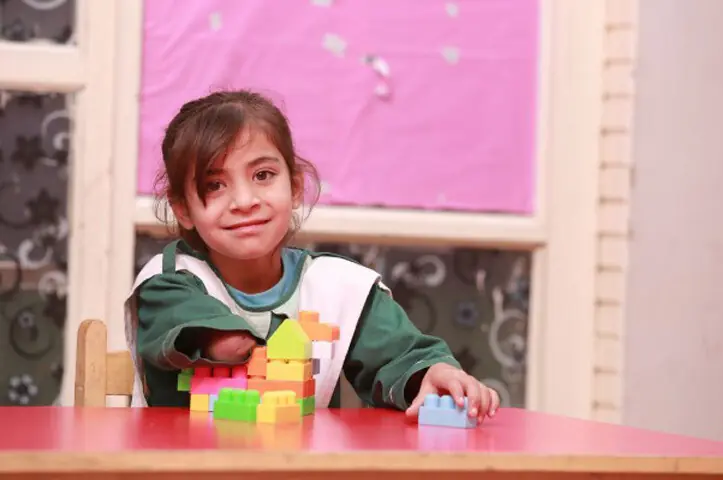
KARACHI: Until two years ago, Gul-e-Haya was a quiet child. Born with a congenital amputation — her right forearm never developed — she rarely mingled with other children at home or in her class at a small private school in Hyderabad.
Her father, 35-year-old Syed Waqas, hoped that she would become more expressive as she grew older. But Gul-e-Haya’s performance at school suggested the opposite, as she retreated into a shell.
Even if he knew about them, Waqas — making minimum wage and a father of five — did not have the means to send his second-born to a special needs school.
During this time, he had also registered his daughter with Sindh’s Department of Empowerment of People with Disabilities (DEPD).
Over 500 differently abled children across Sindh go to school in vehicles contracted by NOWPDP
Not long after, Waqas tells Dawn on the phone, a team arrived to verify the disability. They also informed him of a school for special needs children where his daughter could be enrolled. “They have been providing everything since — from uniform to stationery, school fee and transport,” he adds.
The team was from the Network of Organisations Working for People with Disabilities, better known by its acronym NOWPDP. Established in 2008, NOWPDP provides a host of services to those with special needs, including education and vocational training, while also facilitating the issuance of special identity cards that enable people with disabilities to access various facilities, such as employment and educational quotas or tailored government programmes.
Now eight, Gul-e-Haya is one of a dozen children in an inclusivity classroom at Moriro Markaz Model Special Education School Hyderabad, run by NOWPDP. The school has 125 special needs kids.
Waqas says that the impact on Gul-e-Haya has been profound. “She is more expressive, wants to study hard, even plays with her siblings and told her mother recently that she wants to be a doctor,” he says. It has also given Waqas hope that one day a similar intervention might help his daughter obtain a bionic limb.
But those dreams are now in danger due to events far away and out of control of both Waqas and NOWPDP.
The source of the threat is neither local nor predictable. The ongoing US-Israel war against Iran has disrupted fuel supply globally — Iran being a major regional oil producer and the Strait of Hormuz a critical shipping lane — with effects felt in Pakistan in the form of multiple fuel price hikes.
The most crippling took place on April 2, when petrol price was increased by 43 per cent and diesel by 55 per cent. Since then, the government has also slashed prices following heavy protests.
The price hike has a direct impact on transport activities. NOWPDP is also affected as it has contracted over 50 vehicles operating mostly across Sindh, to take around 550 children to school and back home.
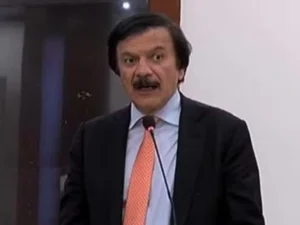
A large proportion of these children hail from small outposts, says Omair Ahmed, the CEO of NOWPDP. On average, a child travels 20-25 kilometres.
Omair says that the sudden and unexpected fuel price increase is now threatening their educational plan. “It also didn’t help that this took place towards the end of the fiscal year [which ends on June 30], so we can’t really even divert funds,” he adds.
NOWPDP gets the majority of its funding from Sindh’s DEPD on the basis of assessed operational needs at the start of each fiscal year. He says that the department is extremely accommodating and flexible with partner organisations.
“With austerity measures also kicking in, we have no option but to scale down some of our operations,” continues Omair. The organisation has cut down activity by 50 per cent at its largest vocational training centre in Karachi. “We don’t want children’s education to be impacted as it’s time-critical,” he says, adding that any disruption in the programme could completely nullify the incremental and compounded gains made by children over the years.
Omair adds that efforts are afoot to rally private donors so the organisation doesn’t have to scale down essential programmes. A resolution to the war could also help stabilise fuel prices.
But until that happens, the sword of uncertainty will continue to shadow the future of not just Gul-e-Haya but thousands like her.
Published in Dawn, April 24th, 2026