
A data-driven examination of global temperatures shows heat waves have surged in size and frequency since the 1960s
Heat storms intensify wildfires. Here, a tree burned in Mandra, Greece, in July 2023, when heat storms struck the area for most of that month. Photo: REUTERS
Heat waves have evolved from sporadic, isolated episodes to massive, cascading weather events that can blanket vast swaths of the planet for months or even years at a time.
To continue calling such sprawling phenomena “heat waves” would be like calling a monsoon a rain shower. To understand the new reality of these immense expanses of heat, Reuters consulted with two dozen climate researchers and analysed temperatures around the globe for every hour of every day since 1960. From those results, we developed a new concept: the “heat storm.”
Scientists and researchers often discuss global warming in the context of risks that will arise if the planet’s average global temperature rises more than 2°C (3.6°F) above pre-industrial levels. What is an ordinary person to make of that? Not much.
Heat waves are the connective tissue between the science of global warming and our everyday experience.
But supersized heat waves used to be rare. No longer. Now they swarm the planet.
2020s: The 10 largest heat storms mark a new era, with massive, cascading heat events touching virtually every person on the planet. Illustration: Reuters
Naming events is “a powerful way for people to understand that something is happening,” Anthony Leiserowitz, director of the Yale Program on Climate Change Communication, told Reuters. Yet “we don’t currently do that with heat waves,” he said, even though heat has been estimated to kill almost half a million people a year.
These are the key findings of the Reuters investigation, The Age of Heat Storms:
What is a heat storm?
There is no universal definition of a heat wave. So, in consultation with climate scientists, we have defined an ordinary heat wave as five or more consecutive days of abnormally high temperatures. We call the largest heat waves – those that at their peak cover at least 1% of the globe, roughly half the size of Canada – heat storms.
More and bigger
Heat storms were rare in the 1960s, when they averaged about five active storms per year. This decade, heat storms have averaged about 102 a year. One of them caused this summer’s deadly heat in Europe.
Read: Heatwave in Karachi leaves eight dead, rescue confirms
Biography of a 367-day heat storm
The largest heat storm on record, named Heat Storm Vera, lasted for 367 days over 2023-2024 and swept over nearly 85% of the globe. Reuters tells the story of how Vera impacted every corner of the world, from a football player going to the hospital in Texas, to Amazonian river dolphins dying in a “circus of death,” to a cocoa farmer whose livelihood was destroyed in Ivory Coast.
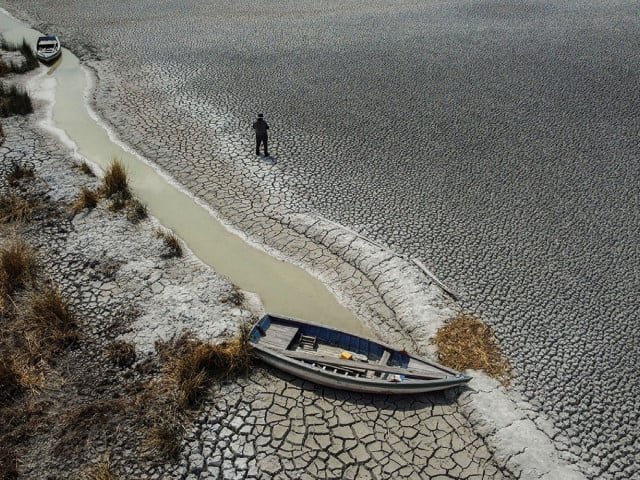
After heat storms battered Bolivia in October 2023, Lake Titicaca, one of South America’s largest lakes, edged towards record low levels. Photo: REUTERS
Greenhouse gas emissions
As greenhouse gas emissions have increased, so too have heat storms and ordinary heat waves. From the 1960s to this decade, the amount of carbon dioxide in the atmosphere has increased by more than 30%. Over that time, the average portion of the planet likely to be covered by heat storms and heat waves has risen more than 12-fold.
18 years without a break
Another new phenomenon we identified: heat storms that run consecutively, simultaneously, or both – heat storm cascades. The duration of these cascades swelled from an average of roughly two months in the 1960s to nine months in the early 2000s.
Then, on July 6, 2008, a cascade started – and still has not stopped. For more than 18 years straight, at least one heat storm has been roiling the planet, and often more than one.
We are in a heat storm now
The world is now in the grip of Heat Storm Raimundo, which broiled Europe and stoked massive wildfires in Spain and France this summer. Since its inception on February 28, 2026, Raimundo has touched almost three-quarters of the planet’s surface.
Live tool to track heat storms
As part of this series, Reuters has created an online Heat Storm Tracker that names and follows heat storms in real time. This is now a feature of the Reuters Climate Monitor, which offers several ways to understand major weather events and measure how the planet is warming.