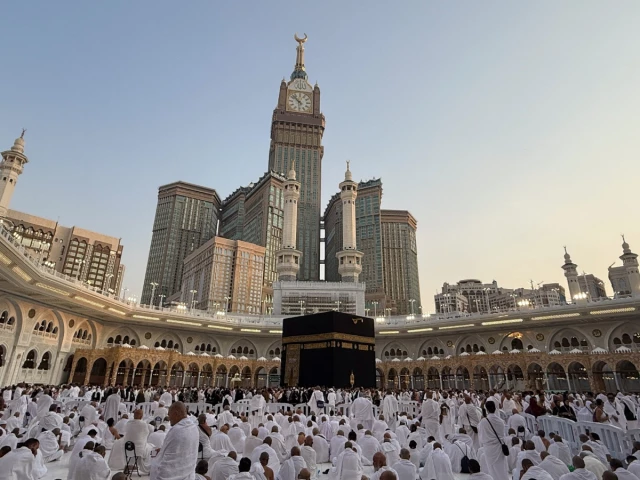
Muslims perform Umrah at the Grand Mosque in the holy city of Makkah, Saudi Arabia on September 14, 2026. PHOTO: REUTERS
The Organisation of Islamic Cooperation condemned what it called Houthi attacks on Makkah and the Madinah region, calling them “heinous attacks” intended to “terrorise civilians” and violate the sanctity of holy sites and mosques, according to Al Jazeera.
Saudi air defences intercepted and destroyed a drone said to be launched by Yemen’s Houthi group near Makkah early on Wednesday, according to the Saudi-led coalition.
Coalition spokesman Turki al-Malki said the drone was intercepted around 6:50pm local time (2050 PKT) Tuesday before entering restricted airspace, with its wreckage falling south of the city.
Al-Malki described the incident as the Houthis’ second attempt to target Mecca, citing a ballistic missile launched toward the city on July 27, 2017.
He said the security of the Two Holy Mosques and pilgrims was a “red line,” vowing that the coalition would take measures to deter further attacks.
The incident came a day after the coalition said 13 civilians were injured in missile and drone attacks by the Houthis on Khamis Mushait, Abha and Taif, with seven homes and two vehicles damaged.
Read: ‘No longer managing’ Iranian threat, US is ‘ending it’: Bessent
Confrontations between Yemen’s internationally recognised government’s forces and the Houthis have escalated since early July following years of relative calm.
The country has been engulfed in war since the Houthis seized the capital Sanaa and several provinces in 2014 before a Saudi-led Arab coalition intervened in 2015 in support of the government.
US Treasury chief says Washington waging ‘greatest economic isolation campaign’ on Iran
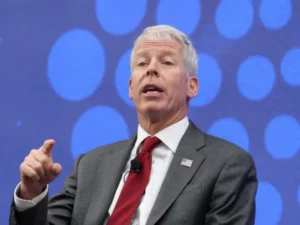
US Treasury Secretary Scott Bessent said Tuesday that Washington is carrying out what he called the “greatest economic isolation campaign” against Iran and its enablers, arguing that the pressure is taking a growing toll on the Iranian economy.
“The strength of our economy has allowed the United States to wage the greatest economic isolation campaign in history against the Islamic Republic of Iran and its enablers,” Bessent said in opening remarks before the House Financial Services Committee. The committee held its annual hearing with the Treasury secretary on the state of the international financial system.
Bessent said President Donald Trump had taken action against Iran that previous administrations had deferred.
“Under his leadership, America is no longer managing the Iranian threat; we are ending it,” he said, adding that US economic strength was allowing Washington to exert pressure “from a position of strength.”
Bessent later said Iran’s economy was in “dire straits,” citing what he described as a collapse in the currency, surging inflation and long lines for gasoline.
“We have seen the currency collapse, we have seen inflation through the roof,” he said, claiming that Iranians were facing three- to four-hour gasoline lines because the country had to import fuel.
Bessent attributed the pressure to a combination of the US blockade on Iran and Operation Economic Outcast, a Treasury campaign launched in August to target Iran’s financial connections and entities accused of helping Tehran evade US sanctions.
“Economic Outcast is possible because of the blockade,” he said, adding that Treasury had spent months mapping nodes in payment networks used by Iran.
Treasury launched Operation Economic Outcast on August 24, saying its aim was to sever financial channels used by Iran to sell oil, evade sanctions and generate revenue.
Bessent also said Washington would intensify enforcement against entities accused of facilitating Iranian trade and helping Tehran circumvent sanctions.
He said measures targeting such facilitators would “start biting” on Sept. 23 and would be fully enforced.
“We know, for those of you who are enabling the regime, you know who you are, we know who you are,” Bessent said, adding that Treasury would exercise its sanctions authorities “very vigorously.”
Bessent said the UAE had announced steps to cut financial transactions and trade with Iran. He also said Treasury had sanctioned branches of an Egyptian bank in Dubai that transferred more than $1.8 billion to Iran since 2025.
“With China, we have had some very good private discussions,” Bessent said, adding that he expected them to continue when he meets Chinese Vice Minister Liao Min this weekend and during Chinese President Xi Jinping’s planned spring state visit.