.
ISLAMABAD:
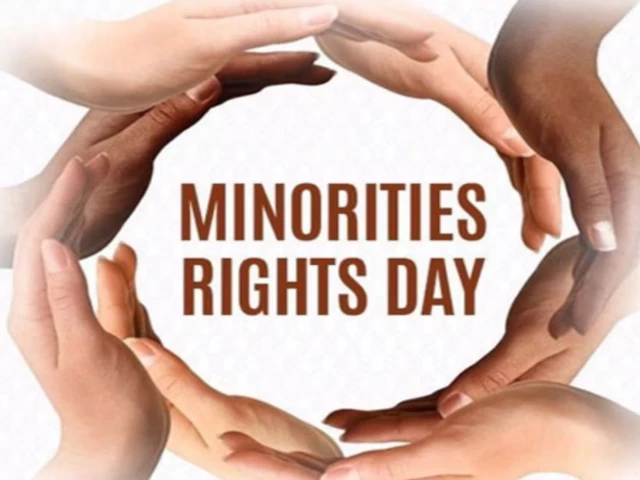
President Asif Ali Zardari and Prime Minister Shehbaz Sharif on National Minorities Day reaffirmed Pakistan’s commitment to equality, religious freedom, tolerance and the protection of minority rights, while highlighting the contributions of minority communities to national development.
In separate messages issued on the occasion, President Zardari called for renewing the commitment to making Pakistan a country where justice, equality, tolerance and service to humanity were the defining features, while PM Shehbaz said the government was taking steps to strengthen constitutional and legal safeguards for minorities, including through the National Commission for Minorities Act, 2025, the Interfaith Harmony Policy 2025 and the National Action Plan for Human Rights 2026.
On the occasion of National Minorities Day, the president conveyed warm greetings to all Pakistanis, especially their ethnic and religious minorities, on the historic day.
He said religious minorities in Pakistan had contributed prominently in conflicts, wars, health, education and other domains of life and continued doing so even today alongside their fellow citizens.
“The entire nation is proud of their national services, patriotism and significant contribution to the country’s holistic progress and development,” he added.
The president said the day reminded them that the foundation of a strong, peaceful and stable state rested not only on economic growth but also on justice, equality, mutual respect and the protection of human dignity.
“Pakistan’s true strength lies in its people who, setting their religious, cultural and traditional differences aside, stand united under one national flag. I firmly believe in the equality of every citizen, regardless of religion or faith, before the state,” President Secretariat Media Wing, in a press release, quoted the president as saying.
Seventy-nine years ago on this day, he said, the Founder of Pakistan, Quaid-e-Azam Mohammad Ali Jinnah, had explained his future vision of Pakistan while addressing the first Constituent Assembly of Pakistan.
His words provided them guidance about the heart and soul of the republic even today, he said, adding that the Constituent Assembly created the first national consensus Constitution almost a quarter of a century later in 1973, effectively incorporating all major guidelines of the great Quaid, brilliantly narrated in this speech delivered 79 years ago on this day, barely three days before the formal Declaration of Independence.
Similarly, PM Shehbaz Sharif said Pakistan commemorated National Minorities Day every year with a firm resolve to acknowledge the invaluable presence of minorities, their inclusion in the national mainstream and their significant contributions to national progress and prosperity.
In his message, the prime minister said minorities living in Pakistan were an integral part of the national fabric and reflected the true beauty of the country’s diverse social and cultural landscape.
He recalled that on August 11, 1947, while addressing the historic inaugural session of the Constituent Assembly, Quaid-e-Azam Muhammad Ali Jinnah had unequivocally affirmed the rights of minorities in Pakistan, declaring that people were free to go to their temples, mosques or any other place of worship, and that religion, caste or creed had nothing to do with the business of the state.
The prime minister said these historic words of the Quaid-e-Azam held an enduring and unforgettable place in Pakistan’s social order, system of governance and religious ethos.
He said the day also served as a reaffirmation of Pakistan’s unwavering commitment to unity among different segments and communities of society, peaceful coexistence, mutual respect and equal opportunities for progress for all, adding that Pakistan was a diverse society where people belonging to different faiths, cultures, nationalities and traditions lived together in harmony.
The prime minister noted that from the Pakistan Movement and the creation of Pakistan to the present day, minority communities had played a pivotal role in the country’s progress and national development, rendering invaluable services in the economic, educational, social, cultural and political spheres.