• Agents deducting Rs1,500 to Rs2,000 from payments, say beneficiaries
• BISP introduces Social Protection Wallet to reduce dependence on agents
WHEN Koonj Jhanjhanjo finally received Rs12,500 from a Benazir Income Support Programme (BISP) agent, she had little choice but to accept that Rs11,620 of the amount due to her had been withheld.
Along with her husband, Saghir, she spent an entire afternoon in the scorching heat, hoping to receive the remaining amount after the device operator — an agent authorised by BISP and a partner bank to make disbursements — refused to pay what was owed to her.
“When we insisted, the operator replied arrogantly that the rest of the amount would be paid later. We objected but finally received the money (despite the massive deduction), after an agonising wait in scorching heat,” her husband told Dawn.
Koonj, whose husband is a daily-wage earner, is a BISP beneficiary from the Husri area of Hyderabad. Her entitlement includes financial support under the Benazir Taleemi Wazaif and Benazir Kafaalat programmes, the latter being BISP’s principal social protection arm.
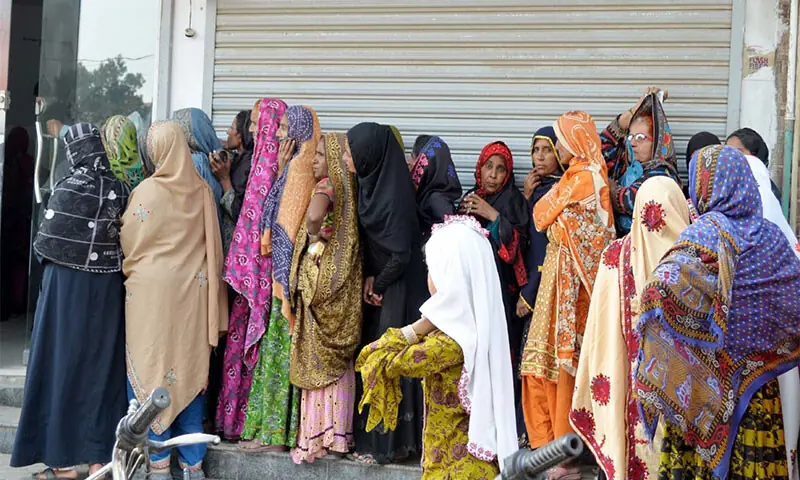
Agents authorised by banks and BISP to distribute money through biometric verification usually tell women beneficiaries to take what is being offered or leave it, according to beneficiaries. The deductions are generally lower than in Koonj’s case, usually ranging between Rs1,500 and Rs2,000.
Even if her case is an outlier, the scale of smaller deductions is huge. Hyderabad alone has around 44,000 beneficiaries. If Rs2,000 is taken from each beneficiary, agents could potentially pocket an estimated Rs88 million in a single disbursement cycle in just one district.
Rehana Keerio from Tando Allahyar and Hasina from Hyderabad faced similar ordeals.
Rehana’s son Rafique said he complained to BISP after his mother received Rs17,000 out of an entitlement of Rs19,000.
“Agents don’t pay the full amount despite protests by women in every disbursement,” said Hasina’s husband, Ameer Ali, in Hala Naka.
The Benazir Kafaalat Programme provides an unconditional quarterly stipend of Rs14,500 to each beneficiary, up from Rs13,500 in the previous two disbursement cycles, according to BISP officials.
Yet many women continue to complain of arbitrary deductions while receiving regular tranches under the flagship social welfare programme, which has a budget of more than Rs722 billion.
The programme covers 10.2m beneficiaries nationwide, including 2.6m in Sindh, providing socioeconomic support to some of the country’s most vulnerable households.
A married woman is registered after a socioeconomic survey. After receiving her first Kafaalat stipend, she can apply for the conditional Benazir Taleemi Wazaif programme for her children. Meanwhile, the Benazir Nashonuma programme seeks to address stunting and maternal malnutrition.
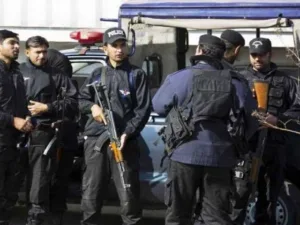
An FIA officer associated with a crackdown on illegal deductions acknowledged that many BISP beneficiaries came from remote areas and found it difficult to pursue complaints or even approach the agency against such malpractices.
Unending deductions
For quarterly disbursements, BISP partners with six banks to distribute cash through “campsite” and “retail shop” models.
Retail shops are operated by private agents, while campsites are temporary BISP facilities established in government buildings, where beneficiaries receive cash in the presence of officials.
However, women have complained of unfair deductions at both campsites and retail shops. Under the retail model, partner banks provide agents to BISP through their franchises in different areas.
Agents work on a commission-based arrangement and are provided devices by banks exclusively for BISP transactions, a banker said, adding that the device remains with them unless they are blacklisted.
Agents disburse money from their shops after securing “BISP rights” from a partner bank, which is supposed to provide BISP with lists of agents for physical verification. The lists are shared 48 hours before disbursement, a BISP official said.
The verification process is meant to keep blacklisted agents out, but officials allege that it is sometimes compromised, allowing agents with blacklisted records to return to the system.
However, the banker disputed the banks’ role in the problem, saying disbursement procedures were finalised by BISP.
There is also an Integrated Grievance Management System for registering complaints, but officials said the relatively new system did not contain details of payments made to beneficiaries during the July disbursement.
An official said the absence of payment details in the system left BISP officials without an effective means to verify allegations of deductions during that cycle.
Cashless model
The authorities have now introduced a Social Protection Wallet in an attempt to curb illegal deductions, although the problem has persisted during the transition towards a cashless payment system.
Under the programme, SIMs are provided to beneficiaries, who become bank clients with digital accounts.
According to a bank official, the system is expected to substantially reduce the role of agents and middlemen and, as a result, the unfair deductions faced by BISP beneficiaries.
“Around 30pc of SIMs are activated, whereas 94pc of beneficiaries have so far received SIMs,” Sindh BISP Director General Nasrullah Rind said.
“A woman can draw the whole or part of a stipend from any bank. The amount will remain in her account,” he added.
Published in Dawn, August 9th, 2026