Latest revision takes petrol to Rs327.62 per litre and HSD to Rs380.86 per litre under the new pricing system
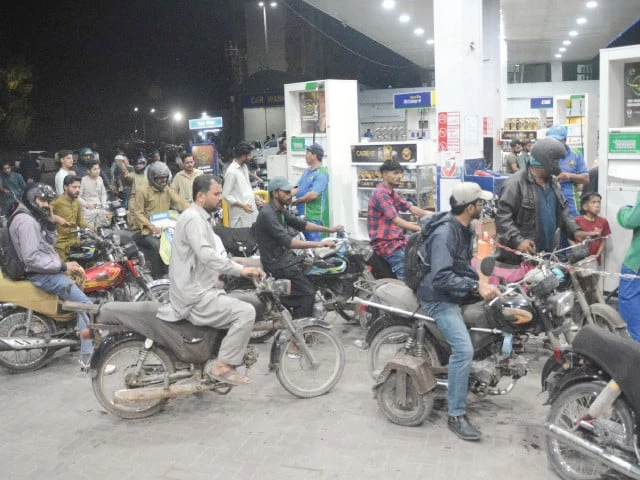
As the city runs on fumes, motorcyclists line up at a petrol pump in Karachi, waiting their turn amid surge in fuel prices. Photo: Jalal Qureshi / Express
The federal government on Friday reduced the prices of petrol and high-speed diesel (HSD) by Rs2.20 and Rs1.50 per litre, respectively, for the next three days, until August 10.
According to a notification issued by the Ministry of Petroleum, the price of petrol has been fixed at Rs327.62 per litre, while HSD will now cost Rs380.86 per litre.
The latest revision comes a day after the government decreased petrol by Rs3.19 and HSD by Rs1.50 per litre for Aug 7.
READ: Govt reduces petrol price by Rs3.19, HSD by Rs1.50 for August 7
On July 17, the government introduced a daily fuel price review mechanism amid volatility in global oil prices following renewed hostilities in the Middle East.
The daily fuel prices are based on a seven-day average of international market rates to align with international standards.
According to the Pakistan Economic Survey 2024-25, petroleum products constitute one of the country’s largest import categories, making the economy highly vulnerable to changes in global crude oil prices. Domestic refineries satisfy only part of national demand, while the remainder is met through imports of crude oil and refined petroleum products. Consequently, every increase in international oil prices raises Pakistan’s import bill, pressures foreign exchange reserves, and contributes to inflation.
Pakistan previously exercised significant government control over petroleum pricing through subsidies and administrative interventions. While these measures temporarily protected consumers, they imposed substantial fiscal costs. During periods of elevated global oil prices, successive governments delayed passing price increases to consumers, creating financial pressures for oil marketing companies, refineries, and the national budget. Large fuel subsidies widened fiscal deficits, increased public borrowing, and weakened macroeconomic stability.
Global geopolitical developments continue to pose significant risks. International oil prices are influenced by decisions taken by OPEC+, conflicts in the Middle East, sanctions on oil-producing nations, and disruptions in critical shipping routes such as the Strait of Hormuz and the Red Sea. Any interruption in these supply chains can immediately increase crude oil prices and freight costs. Since Pakistan imports the majority of its petroleum requirements, these developments quickly translate into higher domestic fuel prices.
READ MORE: Proposed Hormuz deal would give Iran control of inbound traffic, sources say
The revision came as oil prices rose by more than $3 a barrel on Thursday following reports that an Iranian parliamentary committee was reviewing a bill to ban US and Israeli vessels from the Strait of Hormuz and fine violators up to one-fifth of the value of their cargo.
Brent crude futures gained $3.09, or 3.89 per cent, to $82.54 a barrel by 12:37pm EDT, while US West Texas Intermediate futures rose $2.49, or 3.31pc, to $77.71.
“Crude traders remain focused on the US-Iran agreements, and the longer the delays, the more prices will move higher,” said Dennis Kissler, senior vice-president of trading at BOK Financial.
Before the Iran conflict began in late February, about one-fifth of global daily oil and liquefied natural gas supplies flowed through the Strait of Hormuz.